Trump Hosts Black History Month Reception Amidst Recent Controversy
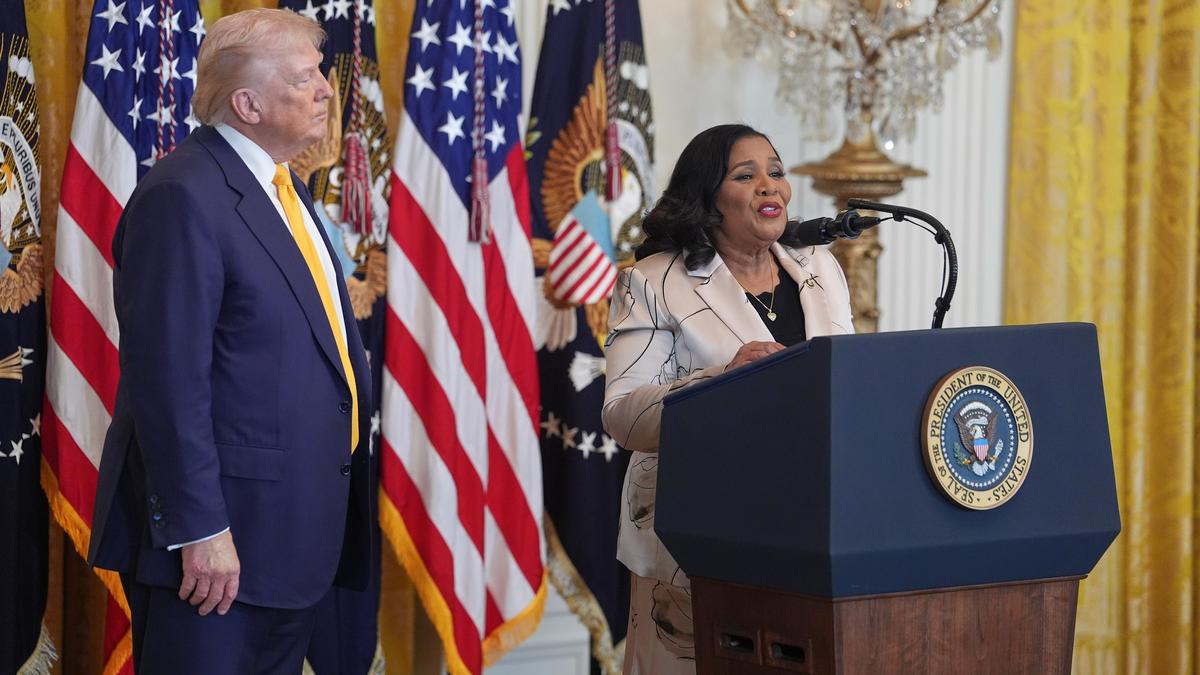
Washington D.C. – U.S. President Donald Trump hosted a Black History Month reception at the White House on Wednesday, February 18, 2026, a move occurring less than two weeks after significant criticism arose from a social media post he made. The post, which depicted former President Barack Obama and his wife, Michelle Obama, in a manner widely condemned as racist, sparked a bipartisan outcry. Despite the recent controversy, the reception aimed to celebrate the achievements and contributions of African Americans throughout history. The event underscores a complex dynamic, as the President attempts to engage with the Black community while simultaneously facing accusations of racial insensitivity.
The reception took place in the East Room of the White House, a historically significant space often used for significant national events. While President Trump did not directly address the earlier social media post during the event, he affirmed his commitment to recognizing Black History Month, stating, “We celebrate Black History Month. We honor the memory of those who came before us by continuing their legacy.” He also chose not to reference Barack Obama directly, but instead highlighted the accomplishments of other prominent African Americans, signaling a deliberate shift in focus. This event is part of a broader tradition of presidential recognition of Black History Month, a practice that began officially in 1976, though its roots trace back to the late 19th century with the work of historian Carter G. Woodson.
The President’s remarks included specific praise for individuals within his sphere of support, notably boxer Mike Tyson, whom he acknowledged for publicly defending him against accusations of racism. He also complimented rapper Nicki Minaj, focusing on her appearance, stating her skin was “so stunning” and commenting on the length of her fingernails. These personal acknowledgements, while intended as gestures of goodwill, drew attention for their unconventional nature and sparked further discussion regarding the tone and messaging of the event. The focus on individual supporters, rather than broader systemic issues, has been a recurring theme in the President’s public engagements.
Administration Officials Highlight Trump’s Policies
Several members of the Trump administration were brought onstage during the reception, including Housing and Urban Development Secretary Scott Turner and Alice Marie Johnson, appointed as the White House pardon czar. Johnson, who herself received a presidential pardon in 2018 after serving over two decades in prison for a non-violent drug offense, delivered a passionate endorsement of the President. “As you appear out upon this sea of Black Americans, this president hears you. This president cares for you. Don’t let anyone tell you that this president right here, Donald Trump has not — is not for Black America,” Johnson stated, adding, “Since he is.” Her remarks were intended to counter the narrative of racial animus surrounding the President and to emphasize his perceived support for the Black community.
President Trump outlined several policies he believes have benefited African Americans, including a recent law eliminating federal income taxes on tips, a measure intended to provide economic relief to service industry workers. He also cited the deployment of National Guard troops to cities with significant Black populations, such as Washington, New Orleans and Memphis, Tennessee, framing it as a measure to “bring back safety.” The effectiveness and impact of these policies remain subjects of debate, with critics questioning whether they adequately address the systemic challenges faced by Black communities. The deployment of National Guard troops, in particular, has raised concerns about potential for increased militarization of civilian spaces and its impact on community relations.
Recent Social Media Controversy and Response
The Black History Month reception followed closely on the heels of a social media post by President Trump that drew widespread condemnation. On February 6, 2026, he shared a video depicting former President Barack Obama and his wife, Michelle Obama, portrayed as primates in a jungle setting. The video was quickly deleted following a significant backlash from both Democrats and Republicans, with many labeling it as overtly racist and deeply offensive. The incident reignited long-standing criticisms of the President’s rhetoric and its potential to exacerbate racial tensions. The Hindu reported on the initial outrage surrounding the post.
When questioned about the video during a press briefing on Wednesday, President Trump stated he would not apologize for posting it. This refusal to express remorse further fueled the controversy and intensified calls for accountability. The following day, February 19, 2026, he posted another message on social media proclaiming he has been “falsely and consistently called a Racist by the Scoundrels and Lunatics on the Radical Left,” in what appeared to be a tribute to the recently deceased Reverend Jesse Jackson. White House Press Secretary Karoline Leavitt defended the President, stating, “There is a lot this president has done for all Americans, regardless of race. And he has absolutely been falsely called and smeared as a racist.” This response underscores the administration’s consistent defense of the President against accusations of racism, often framing such criticisms as politically motivated attacks.
The Legacy of Reverend Jesse Jackson
The timing of the President’s social media post referencing Reverend Jesse Jackson coincided with the news of the civil rights leader’s passing. Jackson, a prominent figure in the Civil Rights Movement and a two-time presidential candidate, dedicated his life to fighting for racial equality and social justice. His work with the Southern Christian Leadership Conference (SCLC) and his advocacy for the poor and marginalized left an indelible mark on American society. The President’s attempt to connect his tribute to Jackson with his own defense against accusations of racism was met with skepticism by many, who questioned the sincerity of the gesture given the recent controversy. Reverend Jackson’s legacy continues to inspire activists and advocates working towards a more just and equitable society.
The reception and the surrounding context highlight the ongoing complexities of race relations in the United States. While the President’s administration has implemented certain policies aimed at benefiting Black communities, such as the elimination of federal income taxes on tips, these efforts are often overshadowed by controversial statements and actions that raise concerns about racial sensitivity. The incident with the social media post serves as a stark reminder of the deep-seated racial divisions that continue to permeate American society. The event also underscores the importance of continued dialogue and understanding in addressing these challenges.
Looking ahead, the political implications of this event and the ongoing controversy surrounding President Trump’s rhetoric will likely continue to unfold. The upcoming midterm elections will serve as a crucial test of public sentiment and could provide further insight into the electorate’s views on race and social justice. The administration’s response to future incidents involving racial sensitivity will also be closely scrutinized. The ongoing debate surrounding these issues underscores the need for continued vigilance and a commitment to fostering a more inclusive and equitable society.
Key Takeaways:
- President Trump hosted a Black History Month reception at the White House despite recent controversy over a racially charged social media post.
- The President did not apologize for the post but defended his record on issues affecting the Black community.
- The event featured remarks from administration officials and supporters who emphasized the President’s perceived commitment to Black Americans.
- The reception took place amidst a national conversation about race and social justice, following the death of Reverend Jesse Jackson.
This represents a developing story. We will continue to provide updates as they become available. Please share your thoughts and perspectives in the comments below.
Keep reading