
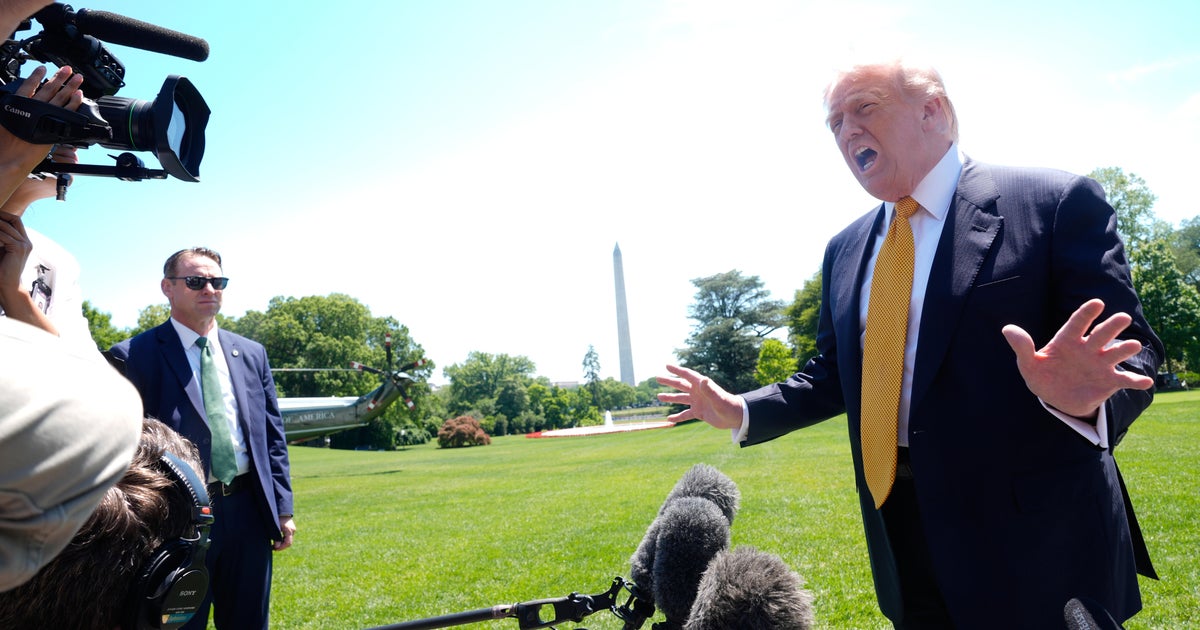
President Donald Trump has sparked significant debate over the intersection of national security and domestic economic stability after stating that the financial struggles of American citizens are not a motivating factor in his diplomatic negotiations with Iran. Speaking to reporters on Tuesday, the president emphasized that his singular focus in dealings with Tehran is the prevention of Iran acquiring a nuclear weapon, a priority he described as the “only thing that matters.”
The remarks come at a time of heightened economic tension within the United States, where rising inflation and volatile energy costs have placed a visible strain on household budgets. When pressed by reporters on whether the current financial situation of Americans was influencing his approach to a potential deal with Iran, President Trump responded, “Not even a little bit.”
This “nuclear-first” strategic posture underscores a calculated prioritization of long-term geopolitical security over short-term economic relief. While the administration acknowledges the pressures of the current market, the White House maintains that the existential threat posed by a nuclear-armed Iran outweighs immediate fiscal considerations, including the fluctuations of the U.S. Stock market.
The president’s comments were delivered just prior to his departure for Beijing, where he is scheduled to meet with Chinese President Xi Jinping. The timing of these statements, coupled with the ongoing instability in the Middle East, highlights a complex balancing act as the administration attempts to navigate a global trade war while simultaneously managing a critical security crisis in the Persian Gulf.
The Strategic Priority: Nuclear Non-Proliferation
At the core of the administration’s current foreign policy is the conviction that a nuclear-capable Iran would fundamentally destabilize the global order. According to the president, the risk of nuclear proliferation is the primary driver of his diplomatic strategy, regardless of the domestic economic climate. “I don’t think about Americans’ financial situation, I don’t think about anybody. I think about one thing — we cannot let Iran have a nuclear weapon, that’s all,” the president stated.
This rigid focus suggests a departure from the “economic diplomacy” often employed to appease domestic constituencies during times of financial hardship. By decoupling the Iran talks from the financial pressures facing U.S. Voters, the administration is signaling to international adversaries that its security red lines are non-negotiable and independent of internal political or economic volatility.
The president further clarified that even the performance of the U.S. Stock market—which he noted is currently at an all-time high—is secondary to the nuclear objective. He argued that “every American understands” the gravity of the nuclear threat, framing the issue as a matter of fundamental national survival rather than a matter of economic policy.
Economic Pressures and Domestic Hardship
The president’s dismissal of financial motivations stands in sharp contrast to recent economic data indicating a growing burden on the American public. Inflation has become a central point of contention, with the annual rate for the month of April rising to 3.8%, marking the highest inflation rate seen since 2023. These figures reflect a broader trend of rising costs for essential goods and services that have eroded purchasing power across various demographics.
A significant driver of this economic anxiety is the cost of energy. According to a CBS News/YouGov poll, 51% of Americans reported that higher gas prices are causing them significant financial hardship or difficulty. The volatility of oil prices is inextricably linked to the stability of the Middle East, particularly the security of transit corridors in the Persian Gulf.
The tension between these two realities—the administration’s security-centric focus and the public’s economic struggle—creates a volatile political landscape. While the president asserts that the outcomes for the U.S. Would be far worse if Iran attained nuclear capabilities, a majority of the population is currently feeling the immediate impact of the regional instability that accompanies these tensions.
The Role of the Strait of Hormuz and Global Oil Markets
The geopolitical stakes of the Iran negotiations are not merely theoretical. they are physically manifested in the Strait of Hormuz. As one of the world’s most critical maritime chokepoints, the Strait is the primary artery for the global transport of oil. With the Strait currently remaining largely closed, the global energy market is highly susceptible to any escalation in conflict between the U.S. And Iran.
Secretary of State Marco Rubio has highlighted the dangerous synergy between nuclear ambition and economic leverage. In a recent White House briefing, Rubio argued that if Iran were to successfully develop nuclear weapons, the regime could use that capability as a tool to manipulate global markets and intentionally drive oil prices higher. This suggests that the administration views the prevention of a nuclear Iran as the only viable long-term method to ensure future economic stability, even if the process of achieving that goal creates short-term financial pain.
the administration’s refusal to let financial pressures dictate the terms of the Iran talks is framed not as indifference, but as a preventative measure. The logic posits that conceding to economic pressure now to achieve a quick deal could leave the U.S. Vulnerable to even more severe economic blackmail in the future should Iran attain nuclear status.
Broader Diplomatic Context: The Beijing Summit
The president’s remarks on Iran serve as a prelude to his high-stakes meeting with President Xi Jinping in Beijing. The U.S.-China relationship remains a cornerstone of global stability, and the summit is expected to address the ongoing trade war and the possibility of “dialing down” economic hostilities. However, the administration’s approach to Iran indicates that it is prepared to maintain a hardline stance on security issues, even as it seeks pragmatic compromises in trade.
Analysts suggest that the president’s public insistence on a “nuclear-first” priority in the Middle East may be intended as a signal to China. By demonstrating a willingness to ignore short-term domestic economic pain in favor of a critical security objective, the U.S. May be attempting to project a position of strength and resolve ahead of the Beijing negotiations.
The interplay between the Iran crisis and the China summit illustrates the complexity of modern American statecraft. The administration is simultaneously managing a domestic inflation crisis, a regional conflict in the Middle East, and a systemic rivalry with the world’s second-largest economy. The president’s assertion that he is not thinking about “Americans’ financial situation” in the context of Iran reflects a strategy of compartmentalization, where security imperatives are kept strictly separate from economic grievances.
Key Takeaways: Security vs. Economy
- Nuclear Priority: President Trump has explicitly stated that preventing Iran from obtaining nuclear weapons is the “only thing that matters” in current negotiations.
- Economic Disconnect: The president denied that the financial hardships of Americans—including high inflation and gas prices—are motivating the terms of the Iran deal.
- Inflationary Pressure: April’s annual inflation rate reached 3.8%, the highest since 2023, contributing to widespread financial strain.
- Market Vulnerability: The closure of the Strait of Hormuz and the threat of Iranian nuclear leverage over oil prices remain critical concerns for the State Department.
- Geopolitical Strategy: The administration views the prevention of nuclear proliferation as the only way to avoid long-term market manipulation by Tehran.
What Happens Next
The immediate focus now shifts to the results of the summit in Beijing. While the primary agenda involves trade and economic cooperation with China, the administration’s resolve regarding Iran will likely remain a backdrop to these discussions. Observers will be watching to see if the “nuclear-first” approach leads to a breakthrough in Middle Eastern diplomacy or if the continued closure of the Strait of Hormuz further exacerbates the domestic economic pressures the president has brushed aside.

The next confirmed checkpoint for the administration’s domestic agenda is the upcoming medical checkup for President Trump scheduled for the end of May, as confirmed by the White House.
World Today Journal encourages readers to share this report and join the conversation in the comments section below regarding the balance between national security and economic stability.