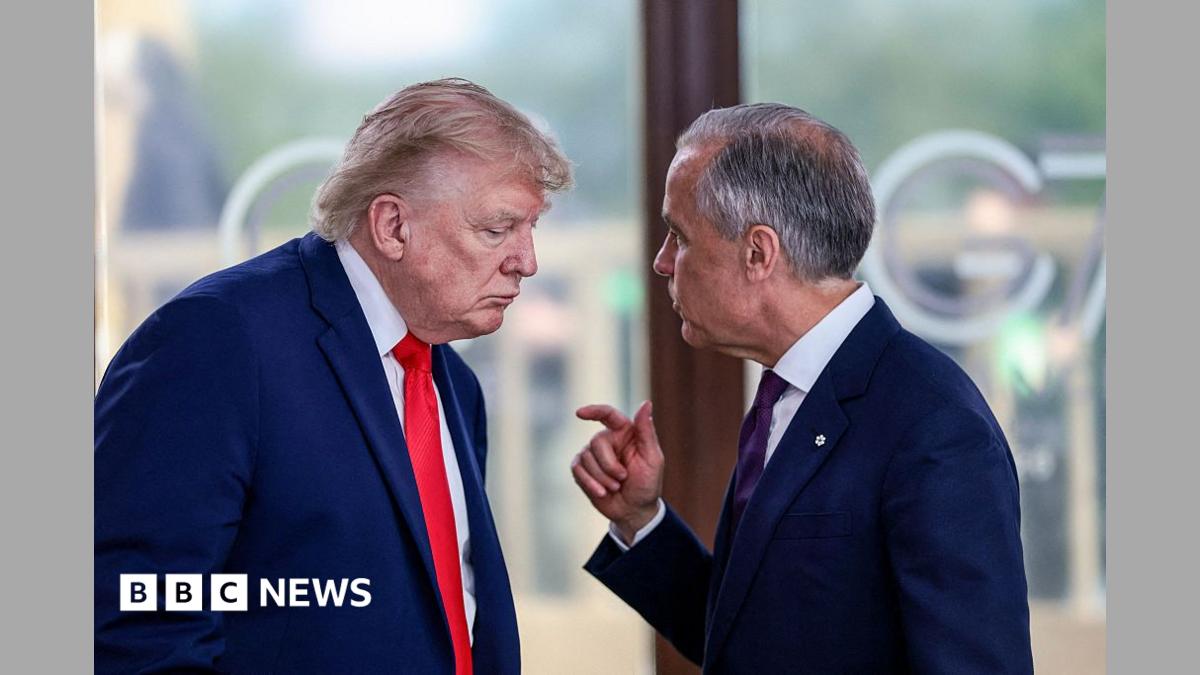
President Donald Trump has signed three proclamations imposing 50% tariffs on a wide range of Canadian imports, including wine, hockey sticks, and cement. The duties, set to take effect on August 19, respond to what the White House calls unreasonable, unequal, and discriminatory actions against American automobiles, alcohol, and dairy products. The administration framed the move as an effort to restore fair competition, protect U.S. manufacturers and workers, and pressure Canada to address trade policies that officials say contribute to a significant decline in American sales.
Trump Invokes Section 338 of the 1930 Trade Act Against Canada
Escalation Under Section 338 of the 1930 Trade Act
The tariffs were enacted through three proclamations under Section 338 of the 1930 Trade Act. This particular section has drawn criticism, with several Democratic lawmakers last year advocating for its repeal due to concerns that Trump could wield it to destabilize the national economy. A presidential proclamation stated: I find that it is necessary and appropriate and in the public interest to impose an additional ad valorem duty of 50 percent on certain products of Canada.
The proclamation further asserted: The United States, U.S. businesses and workers, and U.S. commerce suffer from Canada’s discriminatory, unequal, and unreasonable tariff scheme.

White House Cites Retaliatory Trade Practices and Wildfire Smoke Concerns
The White House accused Canada of unreasonable, unequal, and discriminatory actions
by imposing tariffs or import restrictions on certain American goods, some of which began after Mr. Trump’s initial round of tariffs on Canada last year. An administration official, speaking anonymously to reporters, justified the action by stating that Canada, alongside China, was among the few nations to retaliate against previous tariffs imposed by Trump, necessitating accountability. The move also comes after President Trump threatened to impose tariffs over Canadian wildfire smoke drifting into the U.S., though an official noted Trump is exploring unspecified tariff options for the wildfire response separately.
Specific Sectors and Trade Implications
The 50% duty applies to a broad list of goods, though the White House has carved out notable exemptions. Energy products, potash, fish, and critical minerals remain excluded from the new tax. They also exclude products already subject to tariffs aimed at protecting national security, such as steel and aluminum. However, the scope of the tariffs is extensive, covering items including certain food products, wearables, synthetic materials, electronics, and industrial materials such as cement.

USMCA Trade Agreement Goods Face New 50% Tariff Surcharges
The new duties apply to all covered goods regardless of whether the product was included under the existing free trade agreement between Canada, the U.S. and Mexico, known as the USMCA. A senior administration official confirmed to reporters that goods flowing across the border under the USMCA will not be exempt from the new tariffs. Monday’s import taxes build on trade barriers already in place between the two nations. The U.S. has been maintaining active tariffs ranging from 15% to 50% on Canadian steel, aluminum and copper, as well as a 35% tariff on Canadian softwood lumber and a 25% tax on non-U.S. parts in cars. Canada currently maintains its own 25% counter-tariff on selected imports of American steel, aluminum and vehicles.
While the administration stated the tariffs do not mean the U.S. is entering a trade war with Canada, the move risks further reigniting trade tensions. The White House said the tariffs will go into effect in 30 days, leaving time for possible negotiations between the two countries.
Sources: bbc.co.uk, The Independent.
Worth a look