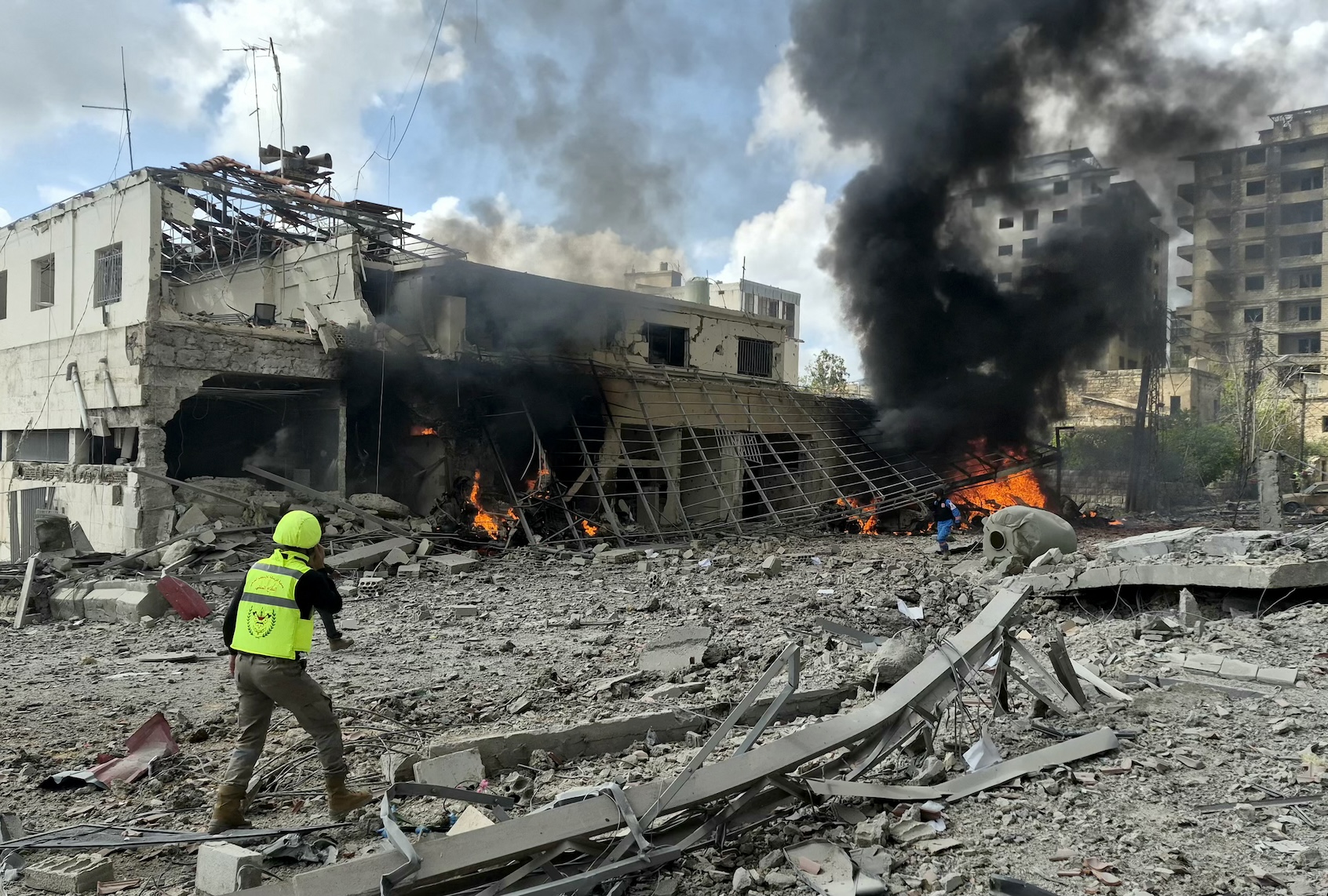
The prospect of a lasting peace in the Middle East remains precarious as a fragile Iran war ceasefire faces critical strain. Vice President JD Vance departed Washington, D.C., on Friday, April 10, 2026, for the Pakistani capital of Islamabad to lead mediated negotiations aimed at ending the conflict via AP News. The diplomatic mission comes at a moment when a temporary halt in fighting appears to be on the precipice of collapsing.
The stability of the agreement is currently threatened by ongoing military actions in Lebanon. While the U.S., Iran, and Israel previously agreed to a temporary halt in fighting, the terms have been disputed according to NewsNation. Tehran has signaled that it will not participate in the scheduled Saturday talks until Israel ceases its bombing campaign in Lebanon.
For the global economy, the stakes are exceptionally high. The conflict has disrupted the Strait of Hormuz, a vital shipping chokepoint. While the U.S. Administration has pushed for the waterway to fully open, Iran has maintained strict control, allowing only a slow trickle of ships through, primarily from nations deemed non-hostile.
As these geopolitical tensions persist, the economic ripple effects are reaching American households. Recent data indicates that the conflict is driving financial impacts beyond fuel prices, with inflation markers showing the first signs of widespread strain resulting from the war that began in late February.
Diplomatic Friction and the Islamabad Negotiations
Vice President JD Vance’s trip to Pakistan is designed to prevent the resumption of full-scale war, which would have grave implications for the global economy via The Guardian. Before boarding Air Force Two, Vance issued a stern warning to Tehran, stating that Iran must not “attempt and play” the United States during the negotiations. He noted that if Iran attempts to manipulate the process, the U.S. Negotiating team will not be receptive via AP News.
Though, the likelihood of these talks commencing on schedule remains uncertain. Mohammad Bagher Ghalibaf, Iran’s parliamentary speaker and co-leader of the Iranian delegation, has set specific preconditions for the start of negotiations. Ghalibaf asserted on X that two mutually agreed-upon measures must be implemented first: a total ceasefire in Lebanon and the release of Iran’s blocked assets.
Two of the measures mutually agreed upon between the parties have yet to be implemented: a ceasefire in Lebanon and the release of Iran’s blocked assets prior to the commencement of negotiations. These two matters must be fulfilled before negotiations commence.
The tension is further exacerbated by the refusal of Israeli leadership to halt operations in Lebanon. Prime Minister Benjamin Netanyahu stated on Thursday, April 9, that there is no ceasefire in Lebanon and that Israel continues to strike Hezbollah with full force. This insistence on continuing military operations has led Iranian officials to view the current truce as a violation.
The Strait of Hormuz and Global Trade Disruptions
A central point of contention in the fragile Iran war ceasefire is the status of the Strait of Hormuz. As one of the world’s most significant energy transit points, any restriction on this waterway immediately impacts global oil prices and shipping costs. Despite promises from the Trump administration that the strait would fully open, Iran continues to restrict traffic.
Current reports indicate that Iran is selectively allowing ships through based on the political alignment of the vessel’s home country. France has emerged as the first Western nation to have a ship successfully pass through the strait since restrictions were implemented, a move attributed to France’s positioning as not aligned with the U.S. In the conflict.
The continued restriction of this trade route is not merely a diplomatic hurdle but a direct driver of economic volatility. When energy flows are throttled at the source, the resulting supply shock manifests as higher costs for consumers and industries worldwide, contributing to the inflationary pressures currently being felt in the United States.
Economic Impact on American Consumers
The geopolitical instability is translating into measurable economic pain for Americans. New Consumer Price Index (CPI) data released on Friday, April 10, reveals that prices have risen 3.3 percent over the year, with a 0.9 percent increase in March alone. This spike represents the highest inflation rate in two years and serves as a primary indicator of the financial fallout from the U.S.-Israel-Iran conflict.
The most acute price increases have been seen in the energy sector. Between February and March, fuel oil prices jumped by over 30 percent, while gasoline prices saw an increase of 21 percent. These figures highlight how sensitive the domestic economy remains to disruptions in the Middle East.
The White House has attempted to frame these spikes as temporary. Spokesman Kush Desai stated that the American economy remains on a solid trajectory, citing a “robust supply-side agenda of tax cuts, deregulation, and energy abundance.” The administration maintains that a quick recovery is possible as ceasefire talks move forward and the free flow of energy through the Strait of Hormuz is restored.
What Happens Next: Key Checkpoints
The immediate future of the ceasefire depends on the outcome of the Islamabad talks and a separate set of diplomatic efforts in the U.S. Capital. While the U.S. And Iran negotiate in Pakistan, Lebanon and Israel have agreed to meet in Washington, D.C., on Tuesday, April 14, 2026, to discuss a ceasefire and establish a date to begin formal talks via The Guardian.
This Tuesday meeting will be mediated by the U.S. State Department and involves Lebanon’s ambassador to the U.S., Nada Hamadeh Mouawad, Israel’s ambassador to the U.S., Yehiel Leiter, and the U.S. Ambassador to Lebanon, Michael Issa. The success of these talks is widely seen as a prerequisite for Iran’s willingness to engage in the broader peace process and the subsequent reopening of the Strait of Hormuz.
We invite our readers to share their perspectives on the economic impact of these geopolitical tensions in the comments below. Please share this report to keep your network informed on the evolving crisis.
Related reading