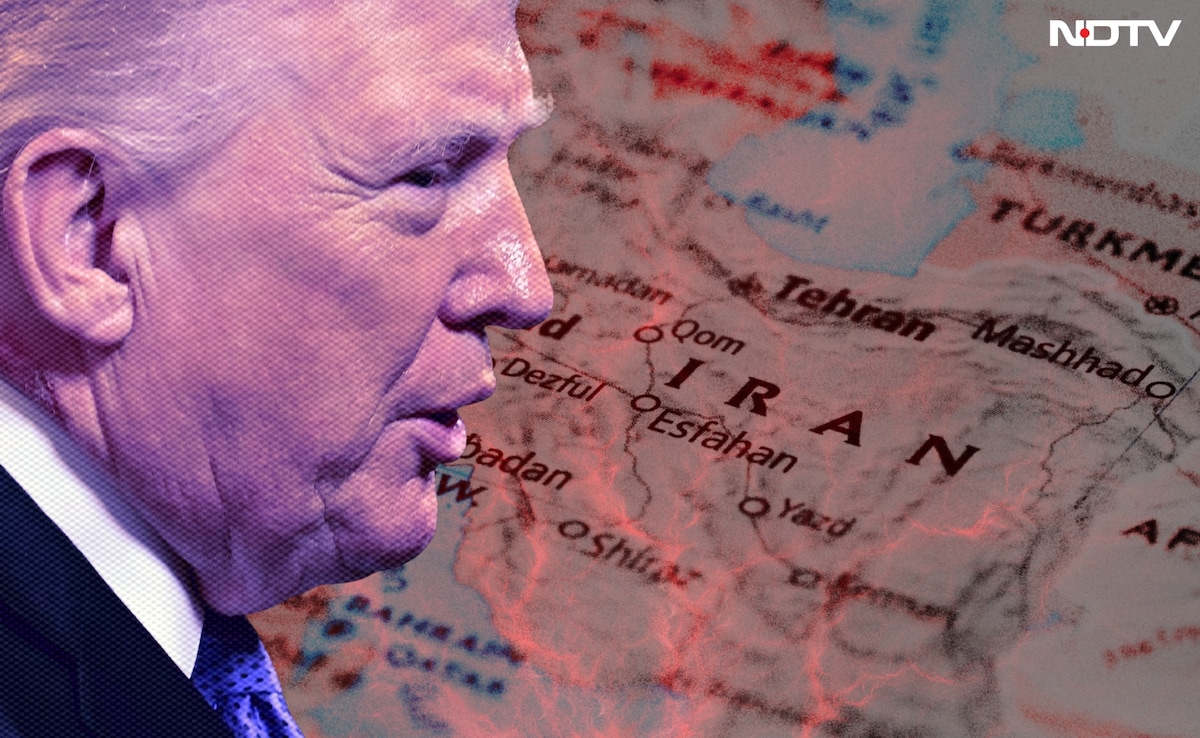
The world is currently staring at a countdown clock. President Donald Trump has issued a stark, apocalyptic ultimatum to Iran, warning that “a whole civilization will die tonight” if the regime does not agree to a deal to halt or end the ongoing conflict. The deadline is set for 8 p.m. ET on Tuesday, April 7, 2026, marking what the president described as one of the most critical moments in world history.
This latest escalation comes after five weeks of war, a period that has already triggered a significant spike in global oil prices due to Iran’s control of the Strait of Hormuz. The president’s rhetoric has shifted from diplomatic negotiations to threats of “complete demolition,” creating a high-stakes environment where the possibility of massive U.S. Military strikes on civilian infrastructure looms.
While the administration has previously extended deadlines, the current language suggests a finality that has alarmed international observers. Trump’s demands are centered on a peace deal that includes the immediate reopening of the Strait of Hormuz, a critical maritime choke point for the global energy supply.
The Ultimatum: ‘Power Plant Day and Bridge Day’
The specificity of the threats is unprecedented. In a series of posts on Truth Social and statements during press conferences, President Trump detailed a plan to destroy Iran’s critical infrastructure. He explicitly vowed that if no deal is reached by the 8 p.m. ET deadline, the U.S. Will target every bridge and power plant in the country.
During a press conference on Monday, Trump described a scenario where “every bridge in Iran will be decimated by 12 o’clock tomorrow night, where every power plant in Iran will be out of business, burning, exploding and never to be used again.” He emphasized that this “complete demolition” would occur over a concentrated period of four hours. On Easter Sunday, he further characterized the coming Tuesday as “Power Plant Day, and Bridge Day, all wrapped up in one, in Iran,” according to reports from Deadline.
The targets are not limited to energy and transport. The ultimatum similarly includes the bombardment of desalination facilities, which are critical for providing fresh water to the Iranian population. Such an attack would not only cripple the military and economic capabilities of the regime but would have immediate and devastating effects on the civilian population.
The Strategic Choke Point: The Strait of Hormuz
At the heart of this conflict is the Strait of Hormuz. As a narrow waterway connecting the Persian Gulf with the Gulf of Oman, it is the world’s most important oil transit choke point. Since the war began five weeks ago, Iran’s control over the strait has led to extreme volatility in oil markets, driving prices upward and threatening global economic stability.
The U.S. Demand for the reopening of the strait is a matter of global economic security. By forcing the strait open, the U.S. Aims to stabilize energy costs and break the leverage Tehran holds over international trade. However, the method of achieving this—through the threat of total infrastructure collapse—has drawn sharp criticism from human rights advocates and legal experts.
Legal Implications and War Crime Concerns
The nature of the threatened attacks has raised urgent legal questions. International law, specifically the Geneva Conventions, prohibits the intentional targeting of civilian infrastructure that is not being used for military purposes. Experts have warned that the destruction of power plants, bridges, and desalination facilities—assets essential for the survival of the civilian population—could be classified as war crimes.
The human cost of such an operation would be immense. Beyond the immediate casualties of bombardment, the loss of power and water would likely lead to a humanitarian crisis. This perspective has been echoed by cultural figures such as filmmaker Asghar Farhadi, who has called on the global creative community to speak out against what he describes as the “destructive aggression” of the U.S.-Iran war, as noted by Deadline.
A Pattern of Mixed Messages
Despite the ominous warnings, the Trump administration has maintained a pattern of contradictory signaling. Even as he threatened that a “whole civilization will die tonight,” Trump simultaneously suggested that “something revolutionarily wonderful can happen.” He attributed this possibility to the emergence of “different, smarter, and less radicalized minds” within Iran, suggesting that “Complete and Total Regime Change” might be underway.
This cycle of extreme threats followed by hints of diplomatic breakthroughs is not new. President Trump first threatened to target Iran’s civilian infrastructure on March 21, 2026, stating that sites would be hit within 48 hours. However, he backed away from that deadline and extended it several times, citing successful ongoing talks. This history of “deadline diplomacy” leads some analysts to wonder if tonight’s 8 p.m. ET cutoff will also be extended, or if the administration has finally reached a breaking point.
Key Stakes of the April 7 Deadline
| Factor | Details |
|---|---|
| Deadline | 8 p.m. ET, Tuesday, April 7, 2026 |
| Primary Demand | Peace deal and reopening of the Strait of Hormuz |
| Threatened Targets | All bridges, power plants, and desalination facilities |
| Proposed Timeline | Full demolition to occur over a period of four hours |
| Global Impact | Oil price volatility and potential Geneva Convention violations |
What Happens Next?
As the 8 p.m. ET deadline approaches, the international community remains on high alert. The immediate focus is on whether Tehran will concede to the demands regarding the Strait of Hormuz or if the U.S. Will initiate the four-hour bombardment sequence described by the president. Negotiations are reportedly continuing, leaving a slim window for a diplomatic resolution that avoids the “complete demolition” of Iranian infrastructure.
The next confirmed checkpoint is the 8 p.m. ET deadline tonight. We will continue to monitor official statements from the White House and the Iranian government as the hour approaches.
Do you believe diplomatic pressure or military threats are more effective in resolving international conflicts? Share your thoughts in the comments below and share this article to retain others informed on this developing global crisis.
Worth a look