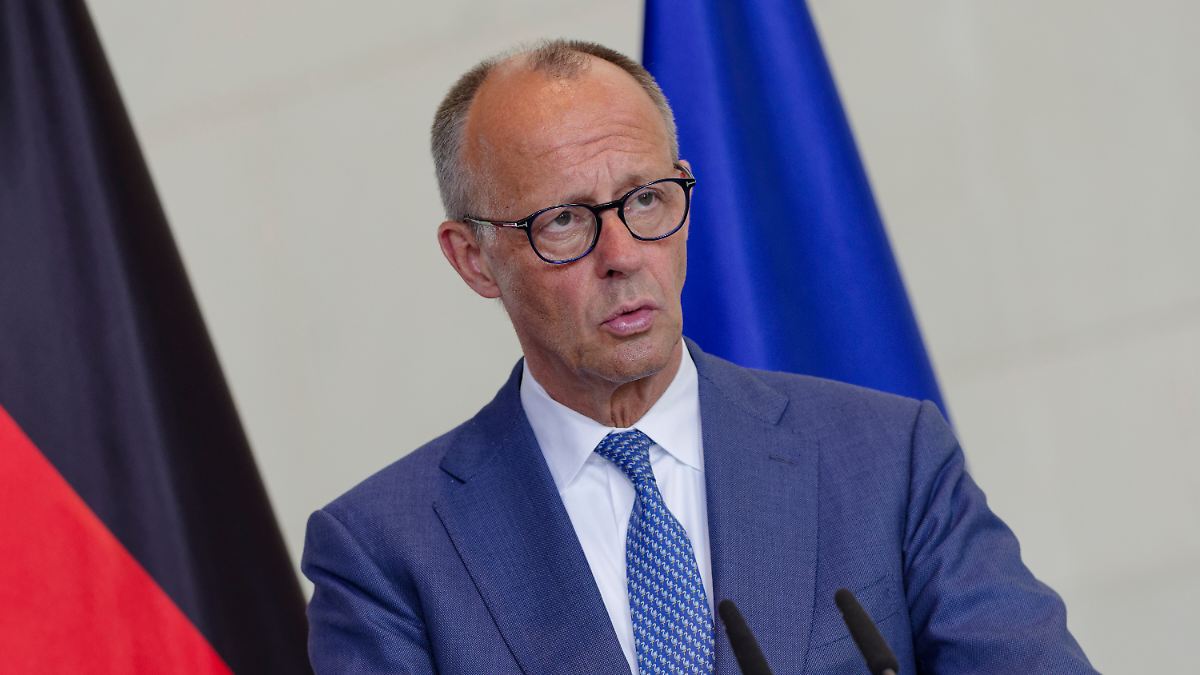
A diplomatic and legal friction point has emerged between Washington and Berlin following a German court’s decision to penalize a social media user for a derogatory comment directed at the nation’s leadership. The ruling, which involved a financial penalty for a Facebook user who labeled Chancellor Friedrich Merz a “Lügenfritz” (a derogatory German term for a liar), has drawn sharp criticism from the Trump administration, highlighting a growing transatlantic divide over the boundaries of political speech and digital expression.
The incident, which follows a recent visit by the Chancellor to Heilbronn, has reignited a fierce debate within Germany regarding the constitutionality and necessity of laws designed to protect public officials from personal insults. While the German judiciary maintains that such measures are essential to preserve the dignity of democratic institutions, critics argue they create a “chilling effect” on public discourse, a sentiment echoed by officials in the United States.
The controversy centers on the application of Paragraph 188 of the German Criminal Code (Strafgesetzbuch), a statute specifically designed to address insults, slander and defamation against persons in political or public offices. The ruling has not only unsettled the domestic German political landscape but has also become a flashpoint for international discussions on how modern democracies should regulate online political vitriol.
The Incident: A Facebook Post and a Financial Penalty
The legal proceedings were triggered by a post on Facebook in which a citizen referred to Chancellor Merz as a “Lügenfritz” following his appearance in Heilbronn. Under German law, the term was deemed sufficiently insulting to warrant judicial intervention. The court subsequently imposed a fine on the user, a move that has been characterized by some as an overreach of state power in the digital age.
The term “Lügenfritz,” while appearing somewhat archaic, carries significant weight in German political slang, intended to diminish the credibility and character of a leader. In the context of the ruling, the court determined that the comment moved beyond legitimate political criticism and into the realm of personal defamation that could undermine the public’s trust in the office held by the Chancellor.
This case is not an isolated event. It follows a series of controversial legal actions involving social media comments directed at high-ranking German officials, including members of the federal government and regional leaders. These cases have consistently tested the limits of what constitutes “robust political debate” versus “criminal insult” under the current legal framework.
Understanding Paragraph 188: Germany’s Shield or Sword?
To understand the gravity of the ruling, one must examine Paragraph 188 of the German Criminal Code, which governs the protection of public figures. Unlike the legal standards in the United States, where the First Amendment provides near-absolute protection for speech regarding public officials—provided it does not incite immediate violence—the German legal system seeks a different balance.
The German legal framework is built upon the principle of “human dignity” (Menschenwürde), which is enshrined in Article 1 of the German Basic Law (Grundgesetz). This principle often takes precedence over absolute freedom of expression when the two come into conflict. Paragraph 188 specifically addresses “insult, defamation, and slander” when such acts are committed against persons who are in public office or are engaged in political activity, particularly if the act is intended to jeopardize their public standing.
Proponents of the law argue that it serves as a vital shield, protecting the democratic process from being eroded by character assassination and personal attacks that serve no purpose other than to destabilize the functioning of the state. They suggest that without these protections, the digital landscape would become a vacuum of misinformation and vitriol that makes constructive governance impossible.
However, legal scholars and civil liberties advocates have raised concerns that the law is increasingly being used as a sword. They argue that the threshold for “insult” is dangerously subjective, allowing politicians to weaponize the judiciary to silence dissent and punish unpopular opinions. The concern is that the law is being applied to “soft” insults—such as labels like “Lügenfritz”—which many argue should be part of the rough-and-tumble of political life.
Domestic Fallout: The Call for Legal Reform
The ruling has catalyzed a significant political movement within Germany to reform or entirely abolish the controversial statute. Christiane Linnemann, a prominent politician within the CDU (Christian Democratic Union), has emerged as a leading voice in this movement, arguing that the current application of the law is out of step with modern democratic norms.
Linnemann has expressed the view that the public is increasingly “shaking their heads” at the perceived absurdity of criminalizing political name-calling. Her proposal focuses on the idea that political leaders must possess a higher degree of resilience and that the state should not be in the business of policing the vocabulary of its citizens’ frustrations.
The debate has split the German political class. While some members of the governing coalition defend the judiciary’s right to maintain order and dignity, others see an opportunity to modernize the criminal code. The movement to repeal or significantly narrow Paragraph 188 is gaining momentum in the Bundestag, driven by a growing sentiment that the law is anachronistic in an era where political discourse has moved almost entirely to decentralized, high-speed social media platforms.
A Transatlantic Clash Over Free Expression
The international dimension of this case arrived in the form of sharp criticism from the Trump administration. A high-ranking official within the administration characterized the German ruling as an affront to the principles of free speech, suggesting that such legal mechanisms are antithetical to a truly open and democratic society.
The American critique is rooted in a fundamental philosophical difference regarding the role of the state in regulating speech. In the United States, the legal precedent established by cases such as New York Times Co. V. Sullivan ensures that even false and insulting statements about public officials are protected unless they are made with “actual malice”—knowledge that the statement was false or with reckless disregard for the truth.

The Trump administration’s intervention highlights a growing tension: as the world becomes more digitally interconnected, the differing legal standards for online speech are creating diplomatic friction. What Germany views as a necessary protection of democratic dignity, the United States views as a form of state-sponsored censorship that targets political dissent.
This clash is not merely academic. It reflects a broader geopolitical struggle over the governance of the internet and the definition of “harmful speech.” As more nations look to regulate digital content to combat misinformation, the friction between the American model of maximalist free speech and the European model of regulated expression is likely to intensify.
Comparative Analysis: US vs. German Speech Protections
The following table outlines the fundamental differences in how the two nations approach the protection of public figures from insulting or defamatory speech.
| Feature | United States (First Amendment) | Germany (Basic Law / StGB) |
|---|---|---|
| Primary Focus | Maximizing freedom of expression. | Balancing speech with human dignity. |
| Threshold for Liability | “Actual Malice” (high bar for public figures). | Potential to jeopardize public office/standing. |
| Role of Insult | Generally protected as political speech. | Can be criminalized under Paragraph 188. |
| Judicial Philosophy | Protecting the “marketplace of ideas.” | Protecting the integrity of democratic institutions. |
This divergence creates a complex environment for global social media platforms, which must navigate vastly different legal requirements when moderating content that may be legal in one jurisdiction but criminal in another.
As the debate continues, the focus remains on whether Germany will move toward a more permissive standard of speech or if the judiciary will continue to uphold the current protections. The next major checkpoint in this legal and political saga will be the upcoming discussions in the Bundestag regarding the proposed amendments to the criminal code, where the future of German political expression will be heavily contested.
What are your thoughts on the balance between protecting political leaders and maintaining free speech? Should “insults” be part of political discourse, or do they undermine democracy? Let us know in the comments below and share this article to join the conversation.
Worth a look
- Ex-Bodyguard of Dalia Grybauskaitė: I Still Cannot Share Certain Details
- Cpi, Procuratore generale Khan sollevato dal suo incarico – RaiNews
- Trump’s Aircraft Delivery Push Led to Higher Costs and Safety Trade-offs (newsdirectory3.com)
- Rescission Packages, Explained: The Route Trump Bypassed (daybreakwire.com)