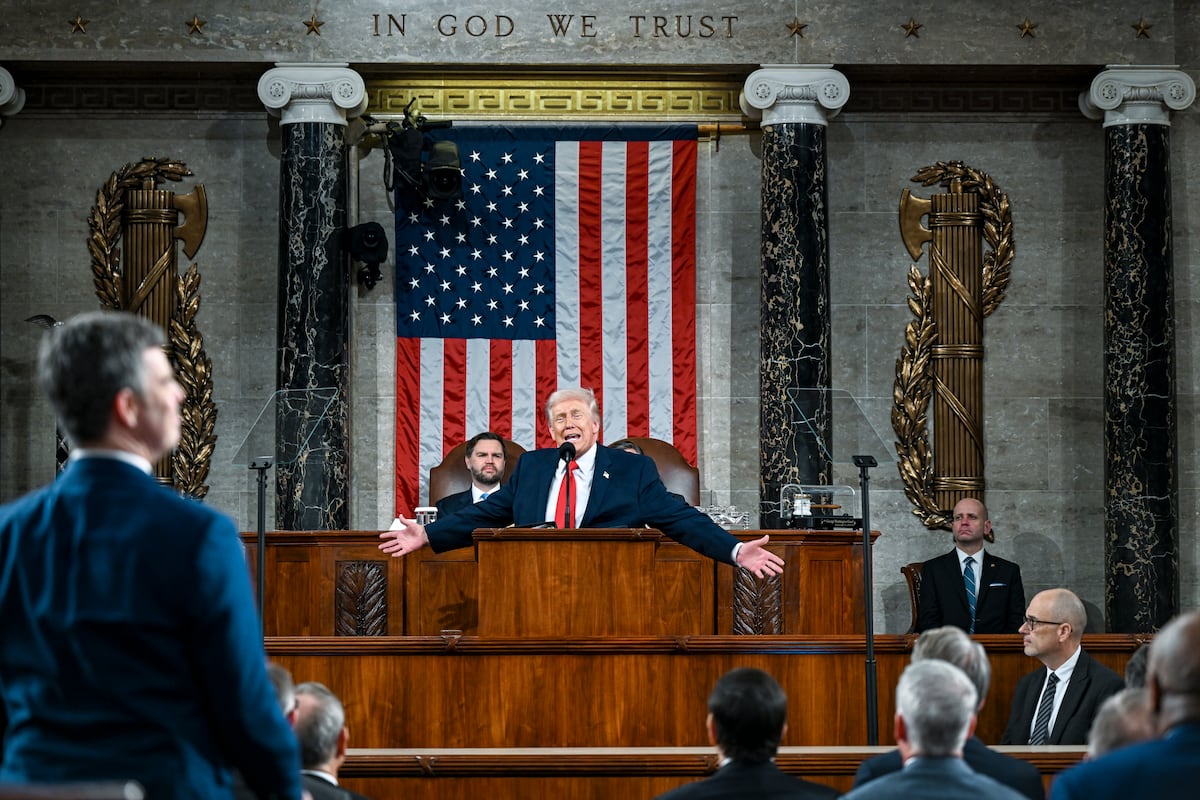
Trump’s State of the Union Address: Economic Claims and Tariff Policies Under Scrutiny
Washington D.C. – In his State of the Union address on Tuesday, President Donald Trump focused heavily on the state of the U.S. Economy, touting successes in curbing inflation and lowering fuel costs. However, the speech largely sidestepped the growing concerns surrounding affordability for many American families, a key issue impacting voters. While the President claimed significant economic gains, independent analysis suggests a more nuanced picture, particularly regarding the impact of his administration’s trade policies. The address likewise reaffirmed a commitment to continued tariff implementation, a move that experts warn could further strain household budgets.
Trump’s speech centered on the narrative of economic recovery under his leadership. He asserted that his administration had brought inflation down to its lowest level in over five years, with a reported 1.7% rate in the last three months of 2025. He also highlighted a decrease in gasoline prices, attributing it to his policies, and suggested that lower interest rates would alleviate housing affordability issues. However, these claims require careful examination in light of broader economic trends and the experiences of average American households. The President’s address notably avoided direct discussion of the rising costs of essential goods and services, such as healthcare, automobiles, education, and groceries, which are increasingly impacting family finances.
Inflation and the Cost of Living: A Disparate Recovery
The President’s claim of reduced inflation aligns with recent data, though the impact is not uniformly felt across the economic spectrum. According to the Bureau of Labor Statistics, the Consumer Price Index (CPI) did show a moderation in inflation in late 2025, reaching 1.7% in December. The Bureau of Labor Statistics provides detailed CPI data, and analysis. However, this figure masks a growing disparity in economic outcomes. While those with investments in the stock market have benefited from recent gains, a significant portion of the population – over half of American families – are struggling with rising costs that outpace wage growth.
The economic landscape is increasingly described as a “K-shaped recovery,” where the affluent continue to prosper while those with limited savings and financial resources fall further behind. Here’s evidenced by the increasing cost of essential services like health insurance, car repairs, and childcare, alongside the rising price of everyday groceries. While the stock market has reached near-record highs, fueled in part by optimism surrounding artificial intelligence, concerns remain about a potential “AI bubble” and its long-term sustainability.
Tariff Policies and Household Costs
A central theme of Trump’s address was the continuation of his protectionist trade policies, particularly the imposition of tariffs on imports from Mexico, Canada, and China. He framed these tariffs as a means of protecting American jobs and industries. However, analysis from the Yale Budget Lab suggests that these tariffs are significantly increasing costs for American consumers. According to a report by La Opinion, a typical American family could face an additional $1,600 to $2,000 per year due to these tariffs.
The 25% tariffs on imports from Canada and Mexico, coupled with a 10% tariff on Chinese goods, are impacting a wide range of products, from gasoline and automobiles to electronics. While import companies like Walmart may initially absorb some of these costs, experts predict that these increases will ultimately be passed on to consumers. Brian Peck, director of the Center for Transnational Law and Business at the University of Southern California, stated that “if there is a significant increase in tariffs, those costs will likely be passed on to consumers and businesses.” This suggests that the President’s tariff policies, while intended to bolster domestic industries, may be contributing to the affordability crisis facing many American families.
Food Prices and Agricultural Impacts
The President’s claims regarding food prices also warrant closer scrutiny. While he asserted that he would lower prices “immediately” upon taking office, data indicates a different trend. According to BBC Verify, food prices increased by 2.7% in the 12 months leading up to September 2025, with significant increases in specific items such as coffee (18.9%), ground beef (12.9%), and bananas (6.9%). BBC Verify’s analysis highlights the complexities of controlling food prices, particularly in the short term.
Professor David Ortega, an expert in food economics, explained to BBC Verify that the President has limited control over food prices. Factors such as global supply chains, weather patterns, and geopolitical events all play a significant role. Since Trump assumed office in January 2025, food prices have continued to rise on a monthly basis, with only a slight decrease in April. This contradicts the President’s promise of immediate price reductions.
Shifting Tone on Inflation
Recent reports indicate a shift in the President’s rhetoric regarding inflation. As reported by the New York Times in February 2025, Trump has begun to soften his tone on reducing inflation as prices remain elevated. The New York Times article notes that as a candidate, Trump promised to lower costs “the first day” of his presidency, but his recent statements have been less definitive.
This shift in tone may reflect the challenges of addressing inflation in a complex global economy. While the President has taken steps to address supply chain issues and promote domestic manufacturing, the impact of these policies on consumer prices remains uncertain. The ongoing geopolitical tensions and the potential for further disruptions to global trade could also contribute to inflationary pressures.
Looking Ahead
The coming months will be crucial in assessing the true impact of President Trump’s economic policies. The continued implementation of tariffs, coupled with the ongoing challenges of inflation and affordability, will likely remain a central focus of public debate. The next key economic indicator to watch will be the CPI report for February 2026, scheduled for release on March 12th, which will provide further insight into the trajectory of inflation. The Federal Reserve’s next interest rate decision, scheduled for March 18th, will also be closely monitored for signals about the central bank’s response to the evolving economic landscape.
The President’s commitment to protectionist trade policies and his focus on economic nationalism are likely to continue shaping the economic debate in the United States. The long-term consequences of these policies, both positive and negative, remain to be seen. As the economic situation evolves, This proves essential for policymakers to prioritize policies that address the affordability crisis and ensure that the benefits of economic growth are shared by all Americans.
What are your thoughts on President Trump’s economic policies? Share your comments below and let us know how these changes are impacting your family. Don’t forget to share this article with your network to keep the conversation going.
Keep reading