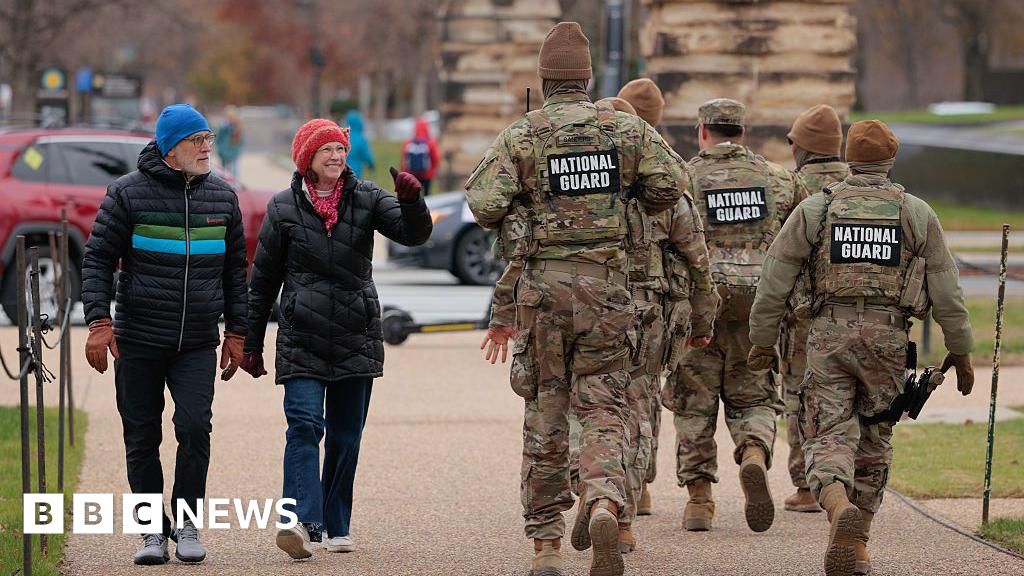
trump Withdraws National Guard from Cities Following Supreme Court Ruling: A Deep Dive
The deployment of National Guard troops to cities like Chicago and Los angeles by former President Donald Trump has come to an end. This follows a recent Supreme Court decision limiting presidential authority over these deployments for domestic law enforcement purposes.But what dose this mean for the future of federal involvement in local policing, and what were the core arguments driving this legal battle? LetS break down the situation.
The Withdrawal: What Happened?
On New Year’s Eve, Trump announced via Truth Social the withdrawal of National Guard troops from several Democratic-led cities, including Chicago, Los Angeles, and Portland, Oregon. This decision came after the administration dropped its legal attempts to maintain control over troops stationed in Los Angeles. Crucially, the declaration did not include Washington D.C., where troops remain on patrol.
Trump hinted at a potential return, stating, “We will come back, perhaps in a much different and stronger form, when crime begins to soar again.” This statement underscores the underlying rationale for the initial deployment – a perceived need to address rising crime rates.
The Legal Challenge: Presidential Authority vs. State Control
The core of this controversy revolved around the question of who controls the National guard: the President or state governors? Traditionally, the National Guard falls under the command of state governors, who can deploy troops within their state for emergencies or law enforcement assistance.
Trump’s attempt to federalize and deploy these troops sparked a series of legal challenges. The argument centered on whether the President had the constitutional authority to bypass state governors and utilize the National Guard for domestic policing. The Supreme Court ultimately sided with the states, ruling in Trump v Illinois that the president lacked this authority in Chicago.
Why were Troops Deployed in the First Place?
The Trump administration justified the deployments by citing concerns over escalating crime and illegal immigration in these cities.The stated goal was to enforce federal law and restore order.Though, critics viewed the move as an overreach of presidential power and a politically motivated attempt to intimidate Democratic leadership.
Here’s a breakdown of the key arguments:
* Trump Administration: Needed to address rising crime, enforce federal law, and secure the border.
* Critics (Governors & Mayors): An authoritarian overreach, a violation of states’ rights, and an unneeded escalation of federal power.
Hundreds of troops had been sent to cities like Chicago and Portland, but were largely held in reserve pending the outcome of the legal battles. They hadn’t been actively patrolling city streets.
reactions to the Withdrawal
The withdrawal was met with praise from Democratic leaders who had fiercely opposed the deployments.
* California Governor Gavin Newsom called the move “an admission” of an “illegal intimidation tactic” and likened Trump’s announcement to “you can’t fire me, I quit.”
* Chicago Mayor Brandon Johnson celebrated the Supreme Court ruling, stating it affirmed that the President’s overreach posed a “real threat to our democracy.”
These reactions highlight the deep political divisions surrounding the issue and the relief felt by those who viewed the deployments as an infringement on local autonomy.
Evergreen Insights: The Future of Federal-Local Policing
This situation raises crucial questions about the evolving relationship between the federal government and local law enforcement. While federal assistance can be valuable in times of crisis, the line between support and overreach remains blurry.
Here are some key takeaways to consider:
* States’ Rights: The Supreme court’s decision reinforces the principle of states’ rights and the importance of respecting the authority of state governors over their National Guard units.
* Political Motivations: The case underscores the potential for political motivations to influence federal law enforcement decisions.
* The Need for Clear Guidelines: There’s a clear need for clearer legal guidelines defining the circumstances under which the federal government can deploy resources to assist local law enforcement.
* Community Trust: Deploying federal troops can erode community trust in law enforcement, notably in communities already facing challenges with policing.
Frequently Asked Questions (FAQ)
1. What is the National Guard’s role in domestic law enforcement?
The National Guard primarily operates under the command of state governors and is typically used for emergencies like natural disasters.while they can assist local law enforcement, their role in routine policing is limited.
2. Did the Supreme Court completely prevent Trump from using the National Guard?
No. The ruling in Trump v illinois
Worth a look