U.S. Offers Insurance to Ships Traversing the Persian Gulf Amidst Escalating Iran Conflict
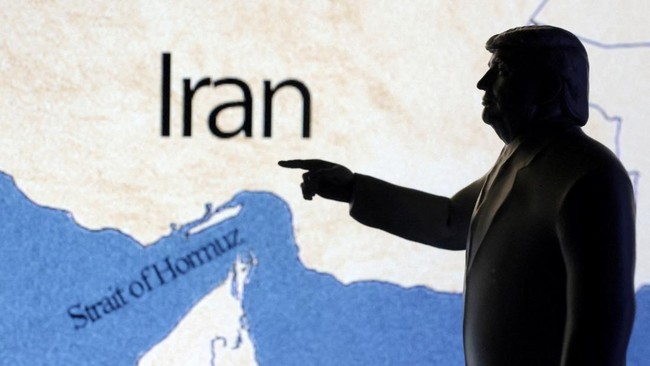
The escalating conflict between the United States and Iran is sending shockwaves through global energy markets, prompting the U.S. Government to take emergency measures to safeguard vital shipping lanes. In a move designed to stabilize maritime trade, President Donald Trump announced on Tuesday, February 3, 2026, that the United States will provide risk insurance for vessels navigating the Persian Gulf, particularly those transiting the strategically crucial Strait of Hormuz. This announcement comes as fears mount that Iran may attempt to disrupt or close the strait, a critical artery for global oil supplies.
The President’s declaration, delivered via social media, signals a heightened commitment to ensuring the free flow of energy to the world. “EFFECTIVE IMMEDIATELY, I have ordered the United States Development Finance Corporation (DFC) to provide, at a extremely low cost, political risk insurance and guarantees for the ENTIRE Maritime Trade, especially Energy, traversing the Gulf,” Trump stated. The move is a direct response to the increasing threat to commercial shipping following recent attacks and heightened tensions in the region.
The Strait of Hormuz: A Global Chokepoint
The Strait of Hormuz, a narrow waterway connecting the Persian Gulf with the Indian Ocean, is one of the world’s most important oil transit routes. Approximately 20% of the world’s oil supply passes through this critical chokepoint, making it a focal point for geopolitical risk. Disruptions to traffic through the strait, whether through military action, blockades, or attacks on shipping, can have a significant and immediate impact on global energy prices and economic stability. According to the U.S. Energy Information Administration, major oil-producing nations like Saudi Arabia, Iran, the United Arab Emirates, Kuwait, and Iraq all rely on the Strait of Hormuz to export their crude oil. U.S. Energy Information Administration
The current crisis stems from a recent escalation of hostilities initiated by U.S. And Israeli strikes against targets within Iran. These actions prompted retaliatory attacks by Iran, including missile strikes targeting Israel and U.S. Military facilities in the Middle East, as well as reported attempts to blockade the Strait of Hormuz and attacks on oil production facilities in Gulf nations. The resulting instability has already sent oil prices soaring, with increases exceeding 15% since the initial attacks, and further price hikes are anticipated should the situation deteriorate.
U.S. Response: Insurance and Potential Military Escorts
The United States Development Finance Corporation (DFC), a government agency established to advance U.S. Foreign policy and national security by mobilizing private capital, will be central to the insurance scheme. The DFC will offer political risk insurance and guarantees to shipping companies at a discounted rate, mitigating the financial risks associated with operating in the increasingly volatile region. This insurance is intended to cover potential losses resulting from attacks, seizures, or other disruptions to maritime trade.
Beyond the insurance program, President Trump indicated a willingness to deploy the U.S. Navy to escort tankers through the Strait of Hormuz if necessary. “If required, the United States Navy will begin escorting tankers through the Strait of Hormuz, ASAP,” he stated. This potential military intervention underscores the U.S. Commitment to maintaining the free flow of energy and protecting its strategic interests in the region. The U.S. Navy’s Fifth Fleet, based in Bahrain, is responsible for maritime security in the Middle East and would likely be tasked with any escort operations.
Insurance Market Reacts to Increased Risk
The escalating tensions have already had a ripple effect on the maritime insurance market. Several insurance companies are reportedly reducing their coverage limits or increasing premiums in response to the heightened risk of attacks. Lloyd’s of London, a leading insurance marketplace, has warned shipowners about the increased threat level in the Gulf region and is advising them to review their security protocols. The DFC’s intervention is intended to fill the gap left by private insurers and ensure that maritime trade can continue despite the elevated risks.
Impact on Global Oil Prices and Economy
The disruption to oil supplies caused by the conflict is already being felt in global markets. The price of West Texas Intermediate (WTI) crude oil, a benchmark for U.S. Oil prices, jumped to $72.79 per barrel on Monday, February 2, 2026, representing an 8.6% increase from the previous Friday, according to data from CME Group. CME Group Further increases are expected if the Strait of Hormuz is closed or significantly disrupted.
While the United States has increased its domestic oil production in recent years, it remains vulnerable to global price fluctuations. Higher oil prices can contribute to inflation, increase transportation costs, and negatively impact consumer spending. The potential for a prolonged conflict in the Middle East and a sustained disruption to oil supplies poses a significant threat to the global economy.
Iran’s Position and Potential for De-escalation
According to President Trump, Iran has signaled a willingness to begin negotiations following the initial military operations. “Iran wants to start negotiating after the operation,” Trump stated, adding that Tehran “should have been talking last week, not this week.” However, the conditions for negotiations and the potential for a peaceful resolution remain uncertain. Iran has previously stated its willingness to negotiate, but has also demanded the lifting of sanctions and a commitment from the U.S. To de-escalate its military presence in the region.
The situation remains highly fluid and unpredictable. The potential for further escalation is significant, and the risk of a wider regional conflict cannot be ruled out. The U.S. Government is closely monitoring the situation and is prepared to take further action to protect its interests and ensure the stability of global energy markets.
The coming weeks will be critical in determining the trajectory of the conflict. The effectiveness of the U.S. Insurance program, the potential for military intervention, and the willingness of both sides to engage in meaningful negotiations will all play a role in shaping the outcome. The world will be watching closely as the situation unfolds, with the stakes – both economic and geopolitical – exceptionally high.
The next key development to watch will be the DFC’s detailed rollout of the insurance program, expected within the next 72 hours, and any further statements from the Iranian government regarding their willingness to negotiate. We encourage readers to share their thoughts and perspectives on this evolving situation in the comments below.
Related reading