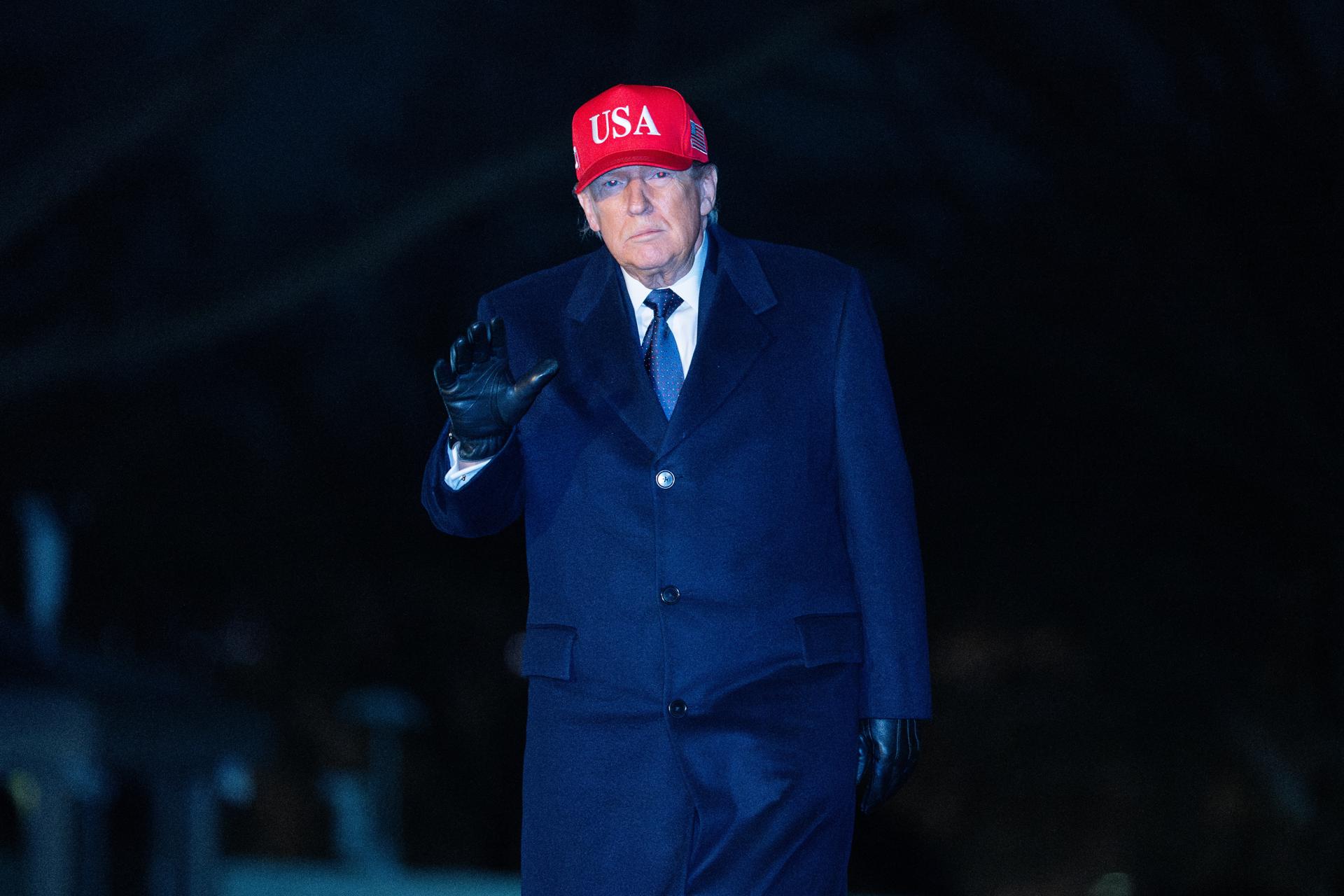
Washington D.C. – In a bold and controversial statement, former U.S. President Donald Trump has suggested that the recent political upheaval in Venezuela, culminating in the reported arrest of Nicolás Maduro by U.S. Forces, could serve as a model for a potential transition of power in Iran. The remarks, made during a telephone interview with The New York Times, come amidst heightened tensions following reports of a joint U.S.-Israeli operation that reportedly resulted in the death of Iran’s Supreme Leader, Ayatollah Ali Khamenei. This assertion raises complex questions about the feasibility and implications of replicating such a strategy in a country with vastly different political, cultural, and historical contexts.
Trump framed the situation in Venezuela as a success, suggesting that the removal of Maduro paved the way for increased cooperation. He indicated a preference for a similar approach in Iran, focusing on regime change as a catalyst for a more amenable government. “What we did in Venezuela, I think, is the perfect scenario,” Trump reportedly said. The former president’s comments have ignited debate among foreign policy analysts, with many questioning the practicality of applying the Venezuelan experience to the Iranian landscape. The situation in Venezuela, while marked by political instability and international intervention, differs significantly from Iran’s deeply entrenched theocratic system and its complex regional alliances.
Venezuela as a Precedent: A Contentious Comparison
The comparison drawn by Trump between Venezuela and Iran centers on the idea of removing a long-standing authoritarian leader to facilitate a shift in political dynamics. In Venezuela, years of economic mismanagement, political repression, and a deepening humanitarian crisis led to widespread protests and a challenge to Maduro’s legitimacy. The United States, under the Trump administration, recognized Juan Guaidó as the interim president in 2019, further escalating the political standoff. While the details surrounding Maduro’s reported arrest remain somewhat opaque, the implication is that direct U.S. Involvement played a role in his removal from power. The New York Times reported on the unfolding events in Venezuela, highlighting the complex interplay of domestic and international factors.
However, Iran presents a fundamentally different scenario. The Islamic Republic, established after the 1979 revolution, operates under a unique political system blending religious authority with elected institutions. The Supreme Leader, until his reported death, held ultimate authority, overseeing key policy decisions and wielding significant influence over the country’s military and security apparatus. The deeply ingrained ideological foundations of the Iranian regime, coupled with its robust security forces, including the Islamic Revolutionary Guard Corps (IRGC), pose significant challenges to any attempt at externally imposed regime change. Iran’s strategic alliances with regional actors, such as Syria and Hezbollah, add another layer of complexity to the geopolitical equation.
Trump’s Vision for Iran: A Post-Khamenei Landscape
According to reports, Trump believes that removing the Supreme Leader has created an opportunity to install a more cooperative government in Tehran. He reportedly indicated having “three very good options” in mind to lead Iran, though he declined to reveal their identities, stating, “I won’t reveal them now. First let’s finish the job.” This suggests a pre-planned strategy for a post-Khamenei Iran, potentially involving the installation of a leadership more aligned with U.S. Interests. France 24 reported on the interim leader’s call for the lifting of sanctions following the reported death of Khamenei, indicating a desire for a more normalized relationship with the West.
Trump also expressed confidence that Iranian security forces, including the IRGC, would ultimately relinquish their arms to the Iranian population, believing this would empower citizens to overthrow the government. This expectation appears optimistic, given the IRGC’s unwavering loyalty to the Islamic Republic and its significant control over the country’s security apparatus. The former president also claimed that the U.S. Military has “a huge amount of ammunition” stockpiled globally, signaling a willingness to escalate military involvement if necessary. He further stated that the U.S. And Israel have “done very well” in dismantling parts of the Iranian navy, suggesting a broader military campaign is underway.
Concerns from Advisors and the Reality of Cultural Differences
The New York Times reported that Trump’s advisors cautioned him about the significant cultural and historical differences between Venezuela and Iran, suggesting that replicating the Venezuelan strategy would be problematic. These concerns are well-founded. Iran’s deeply rooted national identity, its complex religious beliefs, and its long history of resisting foreign interference create a vastly different environment than Venezuela. The Iranian population is also more politically aware and engaged, with a strong sense of national pride and a history of defending its sovereignty. Any attempt to impose a foreign-backed regime change could trigger widespread resistance and instability.
The success of any transition in Iran will likely depend on internal dynamics and the ability of Iranian factions to forge a consensus on a future political path. External intervention, while potentially disruptive, is unlikely to be a decisive factor. The Iranian people, rather than external forces, will ultimately determine the country’s future.
The Aftermath in Venezuela: A Limited Model for Iran?
Trump’s assertion that “everyone kept their jobs except two people” in Venezuela offers a glimpse into his preferred approach to regime change – a limited overhaul of the existing power structure rather than a complete dismantling of the state apparatus. However, the situation in Venezuela remains far from stable. While Maduro is reportedly under arrest, the country continues to grapple with economic hardship, political polarization, and a humanitarian crisis. The long-term consequences of the U.S.-backed intervention remain to be seen.
the Venezuelan model may not be easily transferable to Iran. The IRGC, a powerful and deeply entrenched institution, is unlikely to passively accept a similar fate. The organization controls vast economic resources and wields significant influence over Iranian politics and society. Any attempt to dismantle the IRGC would likely trigger a violent backlash and could plunge the country into civil war. The potential for regional escalation is also a major concern, given Iran’s close ties with other regional actors.
Key Takeaways
- Former President Trump has suggested the Venezuelan political situation could serve as a model for a transition of power in Iran.
- The comparison between the two countries is contentious, given Iran’s unique political, cultural, and historical context.
- Trump believes removing the Supreme Leader has created an opportunity to install a more cooperative government in Tehran.
- Advisors have reportedly cautioned Trump about the difficulties of replicating the Venezuelan strategy in Iran.
- The long-term stability of Venezuela following the reported arrest of Maduro remains uncertain.
The unfolding situation in Iran remains highly volatile and unpredictable. While Trump’s vision for a post-Khamenei Iran may be ambitious, its feasibility is questionable. The success of any transition will depend on a complex interplay of internal and external factors, and the Iranian people will ultimately determine the country’s future. The U.S. Government is expected to provide further updates on the situation in the coming days, and international observers will be closely monitoring developments in the region.
As of March 2, 2026, the situation remains fluid. The U.S. State Department has not issued an official statement confirming the reported death of Ayatollah Khamenei or the arrest of Nicolás Maduro. Further developments are expected as the situation evolves. Readers are encouraged to share their thoughts and perspectives in the comments section below.