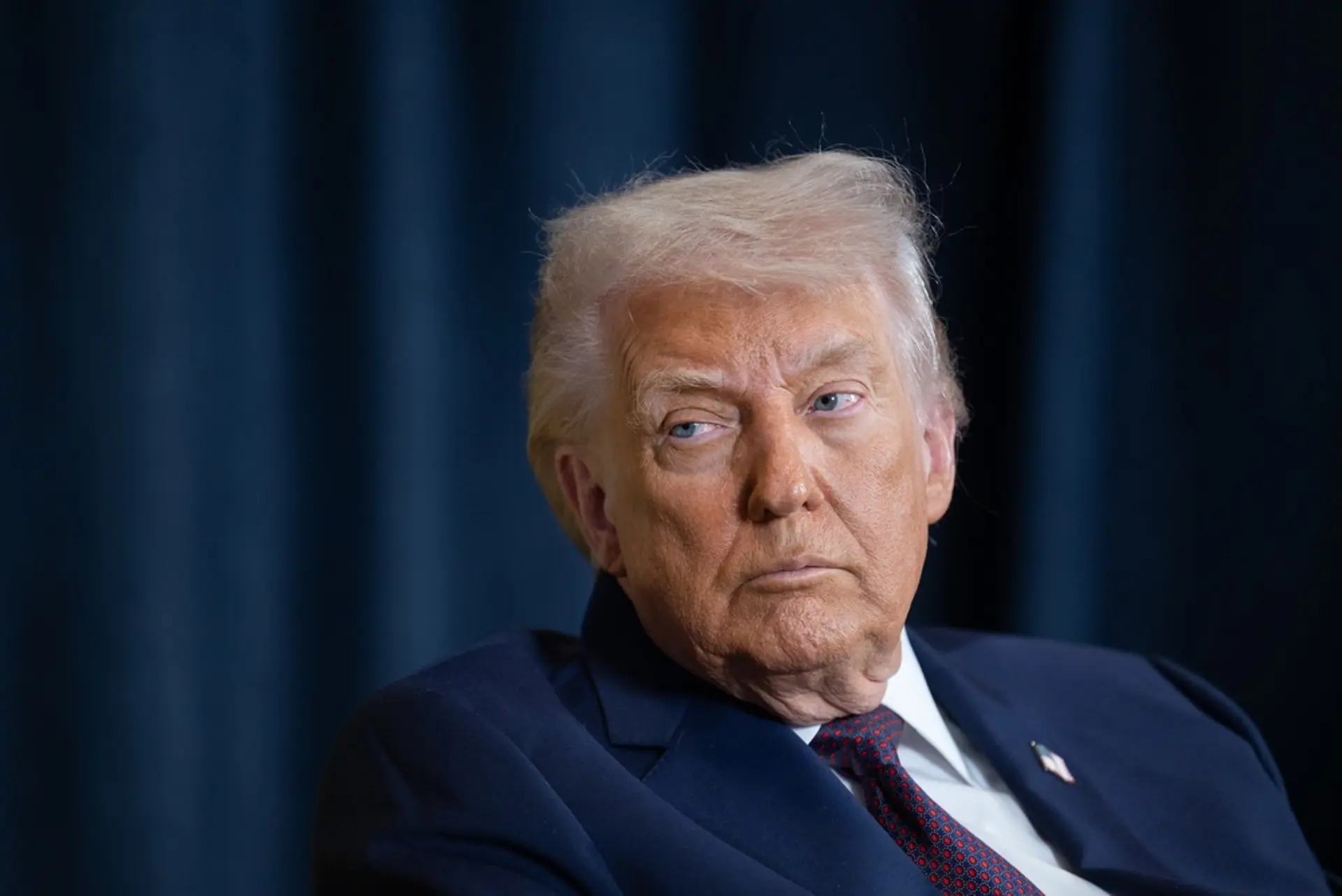
Former U.S. President Donald Trump has reignited debate over America’s diplomatic stance toward Iran, insisting that negotiations over the country’s nuclear program remain unresolved despite growing concerns about potential concessions. In a statement that underscores the delicate balance between hardline and conciliatory approaches in foreign policy, Trump’s remarks come as global observers weigh the risks of escalating tensions in the Middle East.
Trump’s latest comments reflect a broader geopolitical tension: while some U.S. Officials and analysts have suggested that recent diplomatic overtures could lead to a breakthrough, Trump’s insistence that “negotiations are not over” signals skepticism about the pace and substance of discussions. His warning about “excessive concessions” aligns with a long-standing critique from his administration that past agreements—particularly the 2015 Joint Comprehensive Plan of Action (JCPOA)—were too lenient on Tehran.
The former president’s remarks, delivered amid a backdrop of shifting alliances and regional instability, raise questions about the future of U.S.-Iran relations. With no direct evidence of current negotiations in the public domain, Trump’s statement appears to be a strategic reminder of the complexities ahead for any potential deal. Meanwhile, the Biden administration has maintained a cautious approach, emphasizing incremental progress while avoiding public commitments.
Trump’s Stance: “Negotiations Are Not Over”
In a statement that has sparked renewed scrutiny of U.S. Foreign policy, Trump explicitly rejected the notion that talks with Iran have reached a conclusion. “The negotiations are not over,” he stated, adding that “there have been concerns about excessive concessions”—a phrase that echoes his administration’s 2018 decision to withdraw from the JCPOA and reimpose sanctions on Iran.
Trump’s framing suggests a preference for a harder line, one that prioritizes Iran’s complete denuclearization over any interim agreements. His comments come as indirect talks between the U.S. And Iran have reportedly resumed in recent months, though details remain classified. The Biden administration has described the process as “deliberate and patient,” with officials emphasizing that any final deal would require rigorous verification mechanisms.
Yet Trump’s intervention introduces a layer of political uncertainty. As a potential 2024 presidential candidate, his stance could influence public perception of the administration’s diplomatic efforts. While the White House has not directly responded to Trump’s remarks, officials have previously dismissed suggestions that the U.S. Is making unilateral concessions, insisting that any agreement would be “mutually beneficial and verifiable.”
What Does “Excessive Concessions” Mean?
The phrase “excessive concessions” is laden with historical context. During his presidency, Trump frequently criticized the JCPOA, arguing that it allowed Iran to retain capabilities for nuclear development while lifting sanctions. His administration’s “maximum pressure” campaign included targeted assassinations of Iranian scientists, cyberattacks on Iranian infrastructure, and a broad sanctions regime aimed at crippling Tehran’s economy.
Critics of Trump’s approach argue that his policies exacerbated regional tensions, including the 2020 killing of Iranian General Qasem Soleimani by a U.S. Drone strike. Supporters, however, contend that his hardline stance forced Iran into a more defensive posture, making it easier for the U.S. To negotiate from a position of strength.
Today, the debate over concessions centers on whether the Biden administration is repeating past mistakes by offering too much too soon. Some analysts suggest that Iran’s recent willingness to engage in talks—particularly after the assassination of its top nuclear scientist, Mohsen Fakhrizadeh, in 2020—may indicate a shift in Tehran’s calculus. Others warn that any deal risks being perceived as a repeat of the JCPOA’s perceived failures.
Where Do Negotiations Stand Today?
As of May 2026, there is no public confirmation that formal negotiations between the U.S. And Iran are underway. However, indirect talks have reportedly taken place through intermediaries, including Oman and Iraq. The Biden administration has described the process as “ongoing,” with officials emphasizing that any agreement would need to address three core issues:
- Iran’s nuclear program: Ensuring that Tehran’s uranium enrichment activities are fully transparent and compliant with international standards.
- Regional security: Addressing concerns over Iran’s support for proxy groups, including Hezbollah and the Houthis in Yemen.
- Sanctions relief: Determining the scope and timing of any sanctions easing, with the U.S. Seeking guarantees that Iran does not use lifted restrictions to fund military activities.
Trump’s intervention complicates these efforts by introducing a political variable. His remarks suggest that any potential deal would face scrutiny not only from Iran but also from domestic audiences wary of perceived weaknesses in U.S. Diplomacy. Meanwhile, Iran’s Supreme Leader, Ayatollah Ali Khamenei, has historically opposed negotiations that he views as concessions to Western pressure.
A Historical Perspective: The JCPOA and Its Aftermath
The 2015 JCPOA remains the most significant diplomatic framework between the U.S. And Iran in decades. Under the agreement, Iran agreed to limit its nuclear activities in exchange for the lifting of international sanctions. The deal was praised by many as a diplomatic achievement, but it faced immediate backlash from Trump’s administration, which viewed it as insufficiently restrictive.
Trump’s withdrawal from the JCPOA in 2018 reignited tensions, leading to a cycle of tit-for-tat escalations. Iran responded by gradually violating the agreement’s limits on uranium enrichment, while the U.S. Imposed additional sanctions, targeting Iran’s oil exports and financial sector. The result was a period of heightened instability, including attacks on oil tankers in the Strait of Hormuz and a U.S. Drone strike that killed Soleimani.
Since then, both sides have expressed interest in reviving some form of diplomatic engagement. Iran’s President Ebrahim Raisi, who took office in 2021, has signaled openness to negotiations—but only under conditions that do not require Iran to abandon its nuclear rights entirely. The Biden administration, for its part, has sought to rebuild trust by easing some sanctions while insisting on strict verification measures.
What Happens Next?
The immediate question is whether Trump’s remarks will influence the trajectory of U.S.-Iran talks. While the Biden administration has not publicly addressed his comments, the former president’s intervention underscores the political risks involved in any potential agreement. Analysts suggest that the U.S. May need to navigate a delicate balance between Trump’s hardline rhetoric and the pragmatic approach favored by the current administration.
For now, the focus remains on indirect diplomacy. The next critical checkpoint will likely be the outcome of any future talks, should they resume. The Biden administration has indicated that it will not rush to judgment, preferring a methodical approach that prioritizes long-term stability over short-term gains.
As the situation evolves, readers are encouraged to follow official statements from the U.S. Department of State and the International Atomic Energy Agency (IAEA), which monitors Iran’s nuclear activities. The IAEA has repeatedly called for full transparency from Tehran, a position that aligns with both Trump’s and Biden’s stated priorities.
Key Takeaways
- Donald Trump has stated that U.S.-Iran negotiations over the nuclear program are “not over,” warning against “excessive concessions.”
- His remarks reflect ongoing debates over the JCPOA’s legacy and the risks of repeating past diplomatic missteps.
- The Biden administration maintains a cautious approach, emphasizing verification and incremental progress.
- Indirect talks have reportedly taken place, but no formal agreement has been reached.
- The next steps depend on whether Iran and the U.S. Can bridge their differences on nuclear restrictions, sanctions, and regional security.
As the geopolitical landscape remains fluid, one thing is clear: the path forward will require careful diplomacy, patience, and a willingness to address the concerns of all stakeholders. For now, the world watches—and waits—for the next move in this high-stakes game of international relations.
What are your thoughts on the future of U.S.-Iran relations? Share your insights in the comments below, and don’t forget to follow World Today Journal for the latest updates on this developing story.
Related reading
- Square Enix Blames “Human Error” for Controversial Kingdom Hearts Artwork
- Beyond the Gates Weekly Spoilers August 3-7: Bill Hits Rock Bottom as Eva Faces Grim Tidings
- Henry Pollock Worth £1m-a-Year, Says Eddie Hearn Amid Northampton Contract Talks (archynewsy.com)
- Trump Slams Iran’s Duplicity and Warns Blockade Will Remain Amid Stalled Talks (world-today-news.com)