
The National Park Service (NPS) spent $527,226 in federal funds to construct a pedestal for a statue of Caesar Rodney in Washington, D.C.’s Freedom Plaza, according to government contracting documents. The project, which involved modifying an existing contract through a non-competitive, no-bid process, was completed in April to ensure the monument was in place ahead of the nation’s 250th anniversary celebrations.
Caesar Rodney, a delegate from Delaware who signed the Declaration of Independence, has been a subject of historical debate due to his status as a plantation owner who enslaved approximately 200 people. The statue, which depicts Rodney on horseback, was previously located in Wilmington, Delaware, until it was removed in 2020 amid nationwide protests. The federal government’s decision to move the sculpture to the nation’s capital and the associated costs have drawn scrutiny from government transparency advocates.
Contracting Costs and Regulatory Justification
The $527,226 expenditure for the statue’s base was nearly double the government’s original estimate of $286,549, as detailed in an April 6 “record of negotiations” document. The project manager noted that the initial estimate failed to account for necessary geotechnical investigations required to ensure the stability of the structure. Despite the significant price increase, the agency proceeded with the installation without opening the contract to competitive bidding.

The Interior Department invoked an emergency exemption to bypass the standard competitive procurement process. Under federal acquisition regulations, this process can be expedited if a delay would result in “serious injury” to the government. An Interior Department official stated that the work was accelerated to meet a deadline tied to the nation’s upcoming 250th anniversary, known as the semiquincentennial. However, Scott Amey, general counsel for the Project on Government Oversight, questioned the use of this authority. “By definition, urgency should be used when a delay would result in a serious injury to the government,” Amey said. “It’s inconceivable to think that a statue for a holiday celebration meets that standard.”
Historical Significance and Controversy
The statue commemorates Rodney’s 1776 ride from Delaware to Philadelphia, an effort that allowed him to cast a deciding vote in favor of the Declaration of Independence. While Rodney is credited with helping secure Delaware’s support for the resolution, his legacy remains contested. In 1776, he introduced legislation in the Delaware assembly to limit the slave trade, yet records indicate he held many people in bondage during his lifetime.
The statue’s removal from Wilmington in 2020 was ordered by the city’s mayor following a wave of protests against the public display of historical figures linked to slavery. The current placement in Freedom Plaza is intended to be temporary, according to correspondence between federal officials and stakeholders. The site itself is significant; it served as the location for a rally on January 5, 2021, that preceded the attack on the U.S. Capitol the following day.
Broader Federal Beautification Efforts
The installation is part of a wider initiative by the administration to renovate parks and fountains in Washington, D.C., ahead of the July 4 holiday. The White House requested $10 billion in April for a general fund designated for the beautification of National Park Service land in the capital. This allocation stands in contrast to the $3 billion requested for repair and maintenance needs across the remainder of the National Park system for 2027.
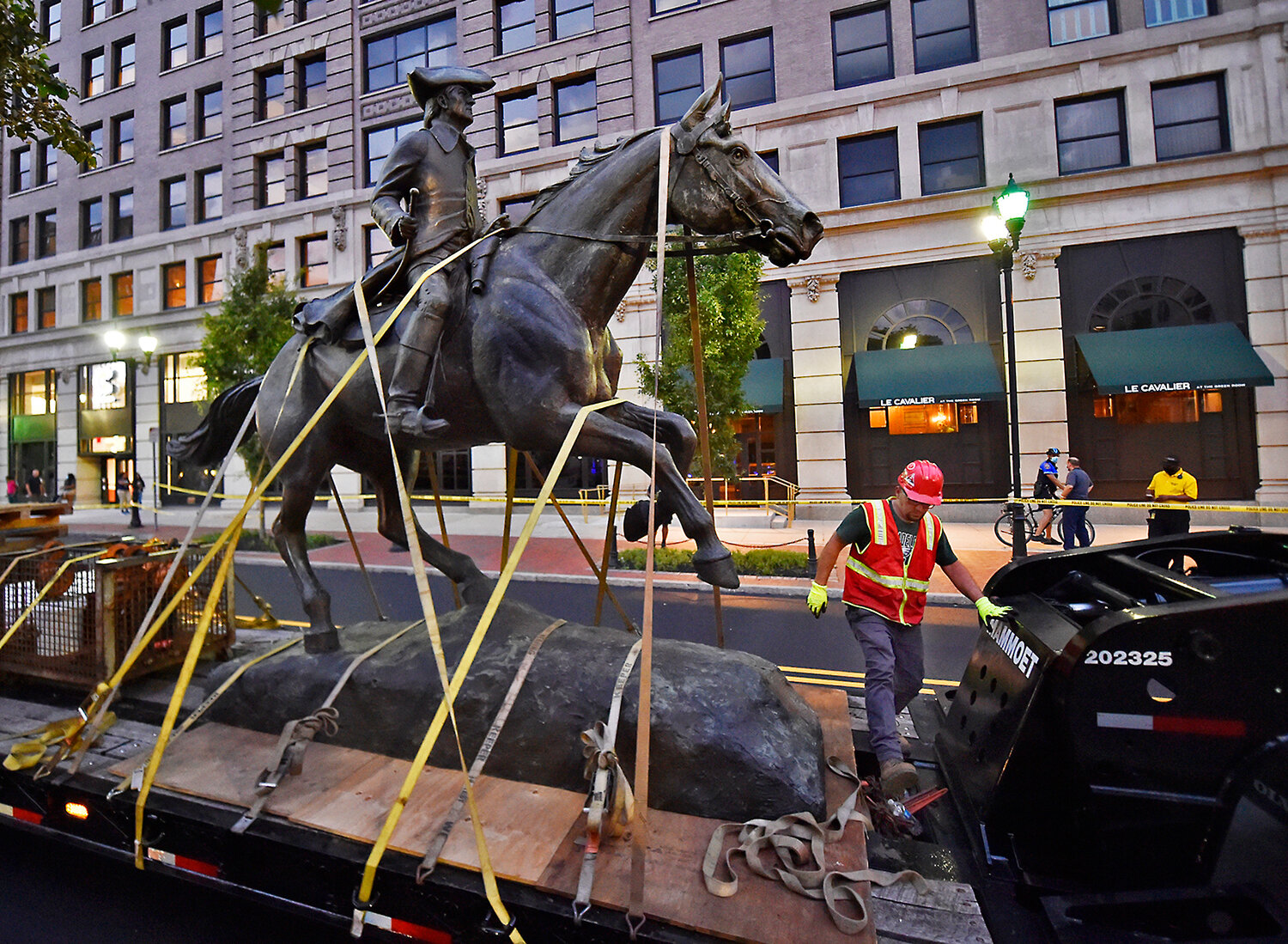
In addition to the Rodney statue, the administration has moved to install other monuments, including a replica of a Christopher Columbus statue that had been removed from Baltimore’s inner harbor in 2020. Furthermore, plans were announced in May for a “Garden of American Heroes” in West Potomac Park, intended to feature 250 statues of historical figures. As these projects move forward, they highlight a continued federal emphasis on historical monument placement, even as the agency faces significant staffing reductions, having lost more than 2,000 employees to buyouts and forced retirements over the past year.
The National Park Service has not provided a definitive timeline for how long the Caesar Rodney statue will remain in Freedom Plaza. Further updates on the status of the “Garden of American Heroes” and other ongoing commemorative projects are expected to be released through the Department of the Interior’s official communications channels. Readers are encouraged to monitor future Congressional budget hearings for potential oversight regarding the use of emergency procurement exemptions for these installation projects.
Worth a look