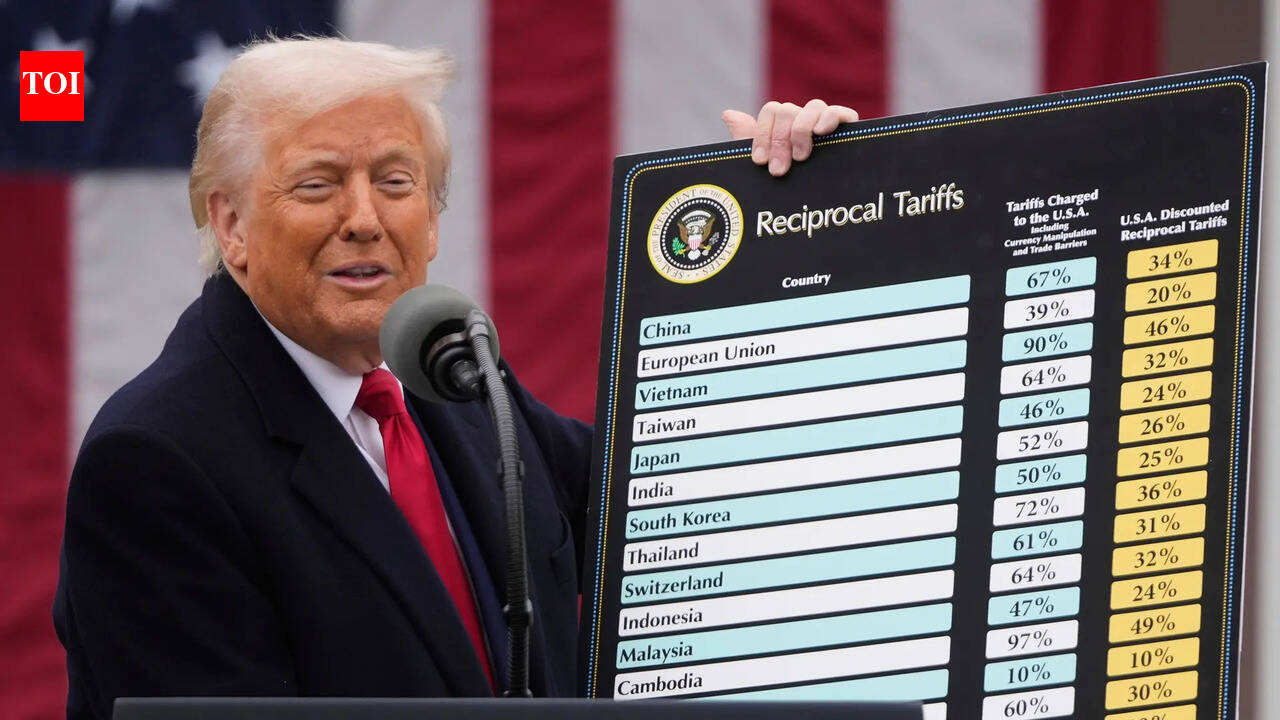
Sofia, Bulgaria – The US Supreme Court’s recent decision striking down a series of tariffs imposed by former President Donald Trump has sent ripples through the global trade landscape, prompting a swift response from the White House and raising questions about the future of US trade policy. The 6-3 ruling, delivered on February 20, 2026, invalidated tariffs levied under the International Emergency Economic Powers Act (IEEPA) of 1977, a law the court found had been overextended by the previous administration. This decision, while a victory for businesses and states challenging the duties, has also introduced a new layer of uncertainty, particularly regarding potential refunds estimated at over $200 billion paid by importers in 2025. The ruling underscores the complex interplay between presidential power and congressional authority in matters of trade.
The core of the dispute centered on Trump’s use of IEEPA, originally intended for national security emergencies, to justify broad tariffs on goods from numerous countries. The court determined that the application of the law to impose tariffs exceeded the authority granted to the president by Congress. This isn’t simply a legal debate; it has significant economic implications for businesses worldwide and for the delicate balance of international trade relations. The decision highlights the constitutional division of power among the three branches of government, a point emphasized by the justices themselves. The full syllabus of the case provides a detailed legal analysis of the court’s reasoning.
A New Tariff, A Familiar Approach
In a move widely anticipated, but nonetheless significant, President Trump responded to the Supreme Court’s decision by imposing a new 10% global tariff on all imports into the United States. This action, announced just hours after the court’s ruling, utilizes Section 122 of the Trade Act of 1974, a different legal authority than IEEPA. This is the first time Section 122 powers have been exercised, according to reports. The BBC reported that Trump characterized the Supreme Court’s decision as “terrible” and labeled the justices as “fools.” The new tariff is set to take effect on February 24, 2026, and will remain in place for 150 days, ending in July, unless Congress intervenes to extend it. Under the Trade Act, the president is authorized to impose temporary import surcharges of up to 15% or apply quotas to address balance of payments concerns.
However, the new tariff isn’t a blanket imposition. Goods originating from Canada and Mexico that meet the requirements of the US-Mexico-Canada Agreement (USMCA) are exempt. Existing national security tariffs remain operational. This selective application suggests a strategic approach, aiming to protect key trade relationships while still asserting pressure on other nations. The administration’s willingness to quickly implement a new tariff underscores its commitment to a protectionist trade policy, despite the legal setback.
Navigating a Complex Legal Landscape
The Supreme Court’s ruling doesn’t necessarily close the door on future tariffs. Legal experts suggest that the Trump administration may explore other avenues for imposing trade restrictions, including utilizing Section 301 and Section 232 mechanisms. These provisions allow for tariffs based on unfair trade practices or national security concerns, respectively. The administration is expected to use the interim period to complete investigations and potentially justify tariffs under these alternative authorities. This suggests a period of continued legal maneuvering and potential trade disputes.
The legal complexities extend beyond the immediate tariff issue. Justice Brett Kavanaugh, in his dissenting opinion, raised concerns about the potential for significant refunds to importers, estimated to be in the billions of dollars. He also warned that the court’s decision could create uncertainty around existing trade agreements with countries like China, the United Kingdom, and Japan, which were, in part, supported by the IEEPA-related tariffs. Kavanaugh’s concerns highlight the far-reaching consequences of the ruling and the potential for prolonged legal battles over refunds and the stability of international trade arrangements.
The “Counter-Intuitive” Negotiation Strategy
Amidst this uncertainty, a report by SBI Research suggests that countries may require to adopt a “counter-intuitive” negotiation approach in the coming months. The report argues that, with the final say on tariff matters now resting with a closely divided US Congress, traditional negotiating tactics may prove ineffective. This suggests a need for creative and unconventional strategies to navigate the evolving trade landscape. The report cautions that the interaction between international treaties and the actions of private entities regarding tariffs could further complicate efforts to establish a consistent tariff regime.
This “counter-intuitive” approach could involve a willingness to compromise on certain issues to secure gains on others, or a focus on building coalitions with unexpected partners. It also suggests a need for increased transparency and communication with the US government to understand its priorities and concerns. The report emphasizes the importance of strategic positioning during this interim period, recognizing that the balance of power in Congress will play a crucial role in shaping future trade policy.
Implications for Global Trade and Investment
The Supreme Court’s decision and the subsequent imposition of a new tariff have significant implications for global trade and investment. Businesses are facing increased uncertainty and the potential for higher costs. The prospect of billions of dollars in tariff refunds, while potentially beneficial to importers, also raises questions about the impact on consumers and the overall economy. The situation demands careful monitoring and strategic planning by businesses operating in the international arena.
The ruling also has geopolitical ramifications. The US’s trade relationships with key partners, particularly China, are likely to be affected. The potential for further trade disputes and retaliatory measures remains high. The decision underscores the importance of international cooperation and the need for a rules-based trading system to prevent escalating trade tensions. The long-term impact on global economic growth and stability remains to be seen.
Key Takeaways
- The US Supreme Court struck down tariffs imposed under IEEPA, deeming the use of the act beyond the president’s authority.
- President Trump responded by implementing a new 10% global tariff using Section 122 of the Trade Act of 1974.
- The new tariff is temporary, lasting 150 days unless Congress approves an extension.
- A report suggests countries may need to adopt a “counter-intuitive” negotiation strategy to navigate the evolving trade landscape.
- The ruling creates uncertainty for businesses and could lead to prolonged legal battles over tariff refunds.
Looking ahead, the coming months will be critical in determining the future of US trade policy. The fate of the new 10% tariff will depend on the actions of Congress. The administration is also likely to pursue other avenues for imposing trade restrictions, potentially leading to further legal challenges. Businesses and governments around the world will need to closely monitor these developments and adapt their strategies accordingly. The next significant checkpoint will be the expiration of the 150-day period for the new tariff in July 2026, at which point Congress will decide whether to extend it.
What are your thoughts on the Supreme Court’s decision and the new tariffs? Share your insights and perspectives in the comments below. Don’t forget to share this article with your network to maintain the conversation going.
Worth a look