
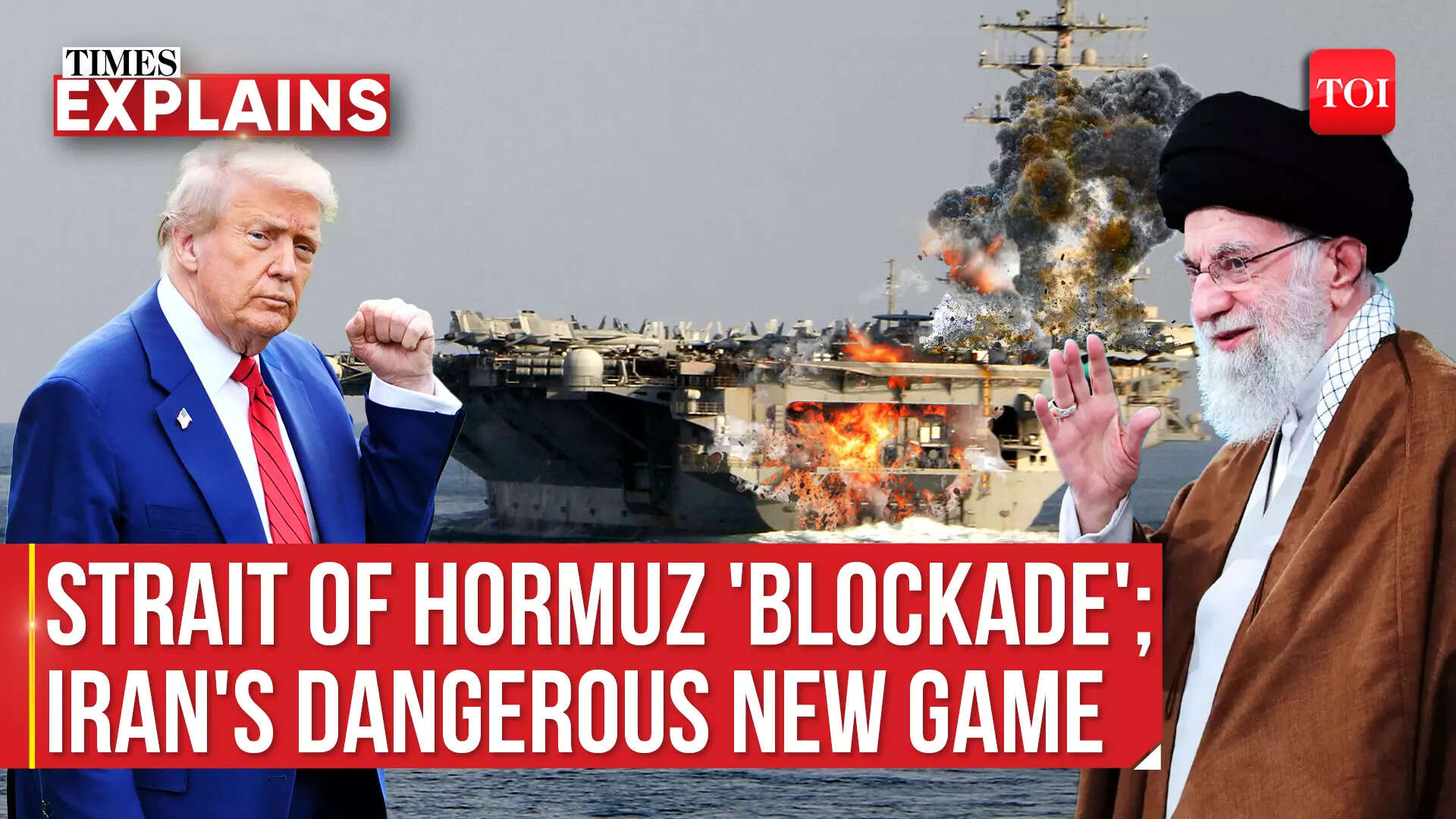
President Donald Trump has ordered a sweeping naval blockade of the Strait of Hormuz, escalating tensions in the Middle East following the collapse of high-stakes diplomatic efforts in Pakistan. The announcement, made Sunday, April 12, 2026, comes as a direct response to what the U.S. Administration describes as Iran’s “intransigent” refusal to abandon its nuclear ambitions during peace negotiations in Islamabad .
The move places one of the world’s most critical maritime chokepoints under U.S. Military control, threatening the flow of global energy and risking a direct military confrontation between Washington and Tehran. The US naval blockade of the Strait of Hormuz follows a weekend of intense but ultimately fruitless discussions intended to secure a permanent agreement on Iran’s nuclear program and stabilize the region.
The geopolitical stakes are immense. The Strait of Hormuz is the primary artery for the global oil trade, with approximately one-fifth of the world’s crude oil passing through the narrow waterway situated between Iran and the Sultanat of Oman . Any disruption to this flow is likely to trigger immediate volatility in global energy markets and impact economic stability worldwide.
The Collapse of the Islamabad Peace Talks
The decision to implement the blockade followed the sudden termination of negotiations in Islamabad. U.S. Vice President JD Vance announced on Sunday that he was returning to the United States without an agreement . Although President Trump noted on his Truth Social platform that most points of the discussion had been agreed upon and that the talks had generally gone “well,” he asserted that Tehran refused any compromise regarding its nuclear capabilities .
In a subsequent interview with Fox News, President Trump took a hardline stance on the issue of nuclear proliferation, stating, “They seek nuclear weapons. They will not have nuclear weapons” . He further claimed that the Iranian military had been “annihilated” and that “everything in the place is destroyed,” suggesting that the U.S. Holds the strategic advantage in the current conflict .
Strategic Implications of the Naval Blockade
The U.S. Navy is now tasked with blocking all vessels attempting to enter or exit the Strait of Hormuz. This operation is not merely a symbolic gesture but a high-risk military maneuver. President Trump issued a stern warning via Truth Social, stating that any Iranian force that fires upon U.S. Personnel or “peaceful ships” would be “PULVERIZED” . The President also hinted that other unnamed countries might be involved in the blockade effort.
The blockade follows a period of heightened naval tension, including reports that Washington had begun mine-clearing operations in the Strait—a claim that Tehran has firmly denied . By controlling the Strait, the U.S. Effectively gains leverage over Iran’s primary economic lifeline, as the country relies heavily on the waterway for its own oil exports.
Regional Reactions and Diplomatic Desperation
The response from Tehran has been one of condemnation. Mohammad Bagher Ghalibaf, the President of the Iranian Parliament and leader of the Iranian delegation in Islamabad, criticized the United States on X, describing the U.S. As “incapable” of winning the trust of the Iranian government during the negotiations .
Meanwhile, Oman, which has frequently acted as a mediator between Washington and Tehran, is urgently calling for a return to diplomacy. Badr al-Busaidi, Oman’s Minister of Foreign Affairs, urged both parties to make “painful concessions” to avoid the catastrophic consequences of war . Al-Busaidi specifically requested a prolongation of the current ceasefire to allow for further talks, noting that the pain of concession is far less than the “pain of failure and war” .
Key Stakes in the Hormuz Crisis
| Factor | U.S. Position | Iranian Position |
|---|---|---|
| Nuclear Program | Demands total renunciation of nuclear ambitions. | Refuses compromise on nuclear capabilities. |
| Maritime Access | Implementing a total naval blockade of the Strait. | Claims U.S. Is incapable of building trust. |
| Diplomacy | Talks failed due to Iranian intransigence. | Blames U.S. For the breakdown in Islamabad. |
The Ceasefire Clock: April 22 Deadline
One of the most pressing concerns for the international community is the status of the existing ceasefire. A two-week truce is currently in effect, but We see scheduled to expire on April 22, 2026 . The announcement of the blockade casts a heavy shadow over this truce, leaving it unclear whether the cessation of hostilities will be maintained or if the blockade will serve as the catalyst for a resumption of full-scale conflict.

As of Sunday evening, neither the U.S. Nor Iranian governments have officially stated whether the ceasefire will be honored or extended. The failure of the Islamabad talks has removed the primary diplomatic mechanism that was expected to resolve the crisis before the April 22 deadline.
The global community now watches the Strait of Hormuz closely. The combination of a naval blockade, a ticking clock on a ceasefire, and the uncompromising rhetoric from both Washington and Tehran creates a volatile environment where a single miscalculation could lead to a wider regional war.
The next critical checkpoint is April 22, 2026, when the current ceasefire is set to expire. Whether the U.S. Maintains the blockade or returns to the negotiating table will depend on the reactions of Tehran and the potential intervention of regional mediators like Oman.
We invite our readers to share their perspectives on these developments in the comments below. For the latest updates on global security and geopolitical shifts, please subscribe to the World Today Journal.