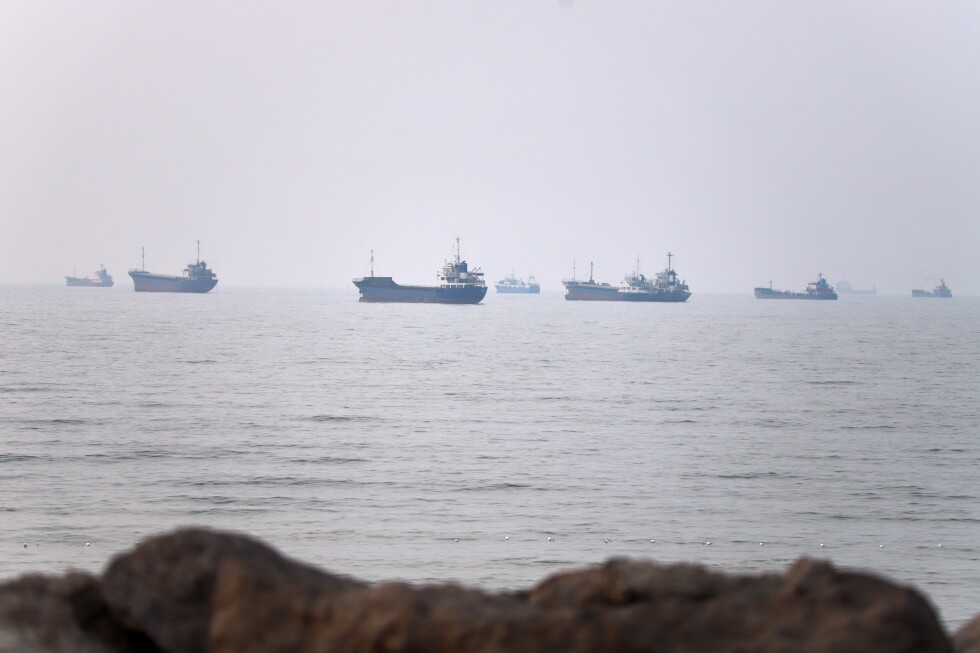
President Donald Trump warned Wednesday that the U.S. will destroy one bridge or power plant in Iran for every ship targeted in the Strait of Hormuz. The threat follows 11 days of U.S. strikes and an escalating conflict that has shuttered the critical waterway, causing global fuel price spikes and economic instability.
Threat to destroy one bridge or power plant in Iran
Trump’s Infrastructure Ultimatum and Escalating Strikes
President Donald Trump issued a direct threat via a Truth Social post on July 22, stating that the U.S. military will target Iranian civilian infrastructure in response to attacks on vessels in the Strait of Hormuz. Trump stated: “From this point forward, any time the Islamic Republic of Iran shoots at a ship in the Strait of Hormuz, whether it be by Missile, Rocket, Drone, or any other device or weapon, the United States will bomb and destroy ONE BRIDGE OR POWER PLANT, including those located next to, or in, the Capital City of Tehran.” The policy marks a significant escalation in a conflict that has already resulted in significant casualties and infrastructure damage across the region.
The announcement came as the U.S. launched its eleventh straight day of attacks on Iran following the collapse of a ceasefire between the two nations. This follows the Pentagon’s confirmation on July 21 that it had identified the remains of a third soldier believed to have died in a July 17 attack on Muwaffaq Salti Air Base in Jordan, with a fourth U.S. soldier confirmed to have died in Iraq. Trump made these comments hours before attending the dignified transfer of U.S. service members killed during the strike on the base in Jordan.
Attacks on energy and water systems in Gulf countries
Impact on the Strait of Hormuz and Global Markets
The Strait of Hormuz, through which a fifth of the world’s traded oil and gas passed during peacetime, remains largely closed due to Iranian attacks. The closure has jolted the world economy, sending fuel prices up ahead of midterm U.S. elections this fall. As negotiations remain largely stalled, both sides have sought leverage by targeting civilian infrastructure. Iran has responded to U.S. attacks by targeting energy infrastructure and desalination plants that provide drinking water in parched neighboring Gulf countries. United Nations Secretary-General Antonio Guterres decried such attacks as “unacceptable” on Tuesday.

Iran has threatened to strike the energy and water systems of its Gulf neighbors if the U.S. follows through on threats to hit Iran’s electricity grid. Tehran continues to demonstrate the ability to carry out attacks despite more than three weeks of heavy U.S. and Israeli bombardment that officials say has reduced Iran’s missile capabilities. Air raid sirens have sounded across parts of northern and central Israel, including Tel Aviv and the occupied West Bank, warning of incoming missiles. Earlier, the Israeli military reported completing a wave of strikes on Tehran targeting a military base and weapons production and storage facilities.
Proposed two-week period for passage through the Strait of Hormuz
Failed Ceasefires and Diplomatic Stagnation
Attempts to secure a lasting peace have repeatedly stalled. Iranian Foreign Minister Abbas Araghchi stated that passage through the Strait of Hormuz would be allowed for a two-week period under Iranian military management, as part of a proposed ceasefire. President Trump noted he had agreed to suspend bombing for two weeks, describing it as a double sided CEASEFIRE!
subject to the COMPLETE, IMMEDIATE, and SAFE OPENING of the Strait of Hormuz.
Trump stated he received a 10-point proposal from Iran, claiming it is a workable basis on which to negotiate,
while adding that nearly all points of past contention have been agreed upon.

However, Iran’s Supreme Security Council reported that negotiations would begin on Friday, emphasizing that talks do not signal the end of the war. Iranian media cited Foreign Ministry spokesperson Esmaeil Baghaei as saying that matters related to a peace agreement are speculation and that nothing has been finalized, stressing that Iran would not compromise on its “red lines.” Baghaei acknowledged that a large part of the text had been finalized, but claimed that Americans keep changing their positions.
Transit ban near the coastal city of Sirik
Military Stance and Regional Implications
Pete Hegseth, in the context of recent attacks on U.S. bases and ships, stated that Iran remains at its weakest point militarily.
Meanwhile, on June 12, 2026, Iranian forces confronted and turned away an oil tanker attempting to sail through the Strait of Hormuz. A military source told state media that the vessel complied with a transit ban after receiving warnings from Revolutionary Guard ships following reports of explosions near the coastal city of Sirik. The country’s top military command had warned that any vessel attempting to cross the waterway, including tankers and commercial ships, would be shot at.