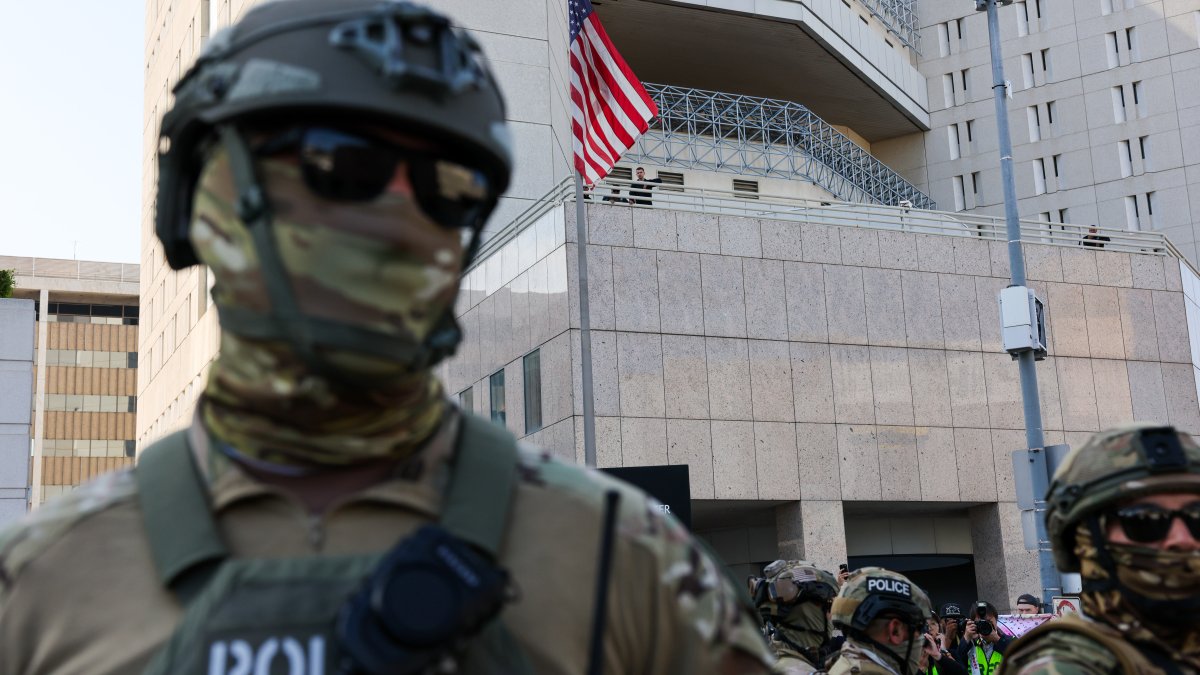
California and the Federal Government clash Over Law Enforcement Transparency and Safety
A significant legal battle is brewing between the state of California and the federal government, centered around new state laws designed to increase transparency in law enforcement and address growing concerns about the actions of federal agents operating within California’s borders. The dispute highlights a complex interplay of states’ rights, federal authority, and the critical need for public trust in law enforcement – all against a backdrop of escalating threats to officer safety.
California’s New Laws: A Focus on Accountability
In September, California Governor Gavin Newsom signed into law two key pieces of legislation aimed at enhancing accountability and clarity regarding law enforcement activity. The first prohibits most law enforcement officers, including those with federal agencies like immigration and Customs Enforcement (ICE), from covering thier faces while on duty. This ban specifically targets items like neck gaiters and ski masks, with exceptions made for legitimate safety equipment like N95 respirators, tactical gear, and undercover operations.
The second law mandates that all law enforcement personnel visibly display clear identification, including their agency and badge number, while actively working. These laws extend to federal agencies, requiring them to establish mask and identification policies by July 1, 2026, and January 1, 2026, respectively.
These measures were enacted in response to increasing public concern over the tactics employed by federal agents, notably regarding immigration enforcement.Critics have pointed to instances of agents operating without clear identification, leading to confusion and distrust within communities. Newsom himself has described the practice of masked federal agents making arrests as “dystopian.”
federal Government Responds with a Lawsuit
The federal government, led by Attorney General Pam Bondi, has vehemently opposed California’s new laws, filing a lawsuit arguing they are unconstitutional and pose a direct threat to the safety of federal law enforcement officers. The lawsuit asserts that the laws discriminate against the federal government, particularly as they exempt state police from the facial covering ban. Moreover, the federal government argues the laws violate the Supremacy Clause of the Constitution, which generally prevents states from regulating federal operations.
The core of the federal argument rests on the escalating dangers faced by agents. The lawsuit details numerous incidents of harassment, “doxing” (the public release of personal details), and even violent threats directed at ICE officers and their families. A recent case highlighted in the lawsuit involved three women in Los Angeles accused of livestreaming while following an ICE agent home and publicly posting their address on Instagram.
“Given the personal threats and violence that agents face, federal law enforcement agencies allow their officers to choose whether to wear masks to protect their identities and provide an extra layer of security,” the lawsuit states. This ability to maintain a degree of anonymity is seen as a crucial safety measure in an increasingly antagonistic habitat.
A Rising Tide of Threats and the FBI Warning
The concerns raised by the federal government are not isolated. the Federal Bureau of Investigation (FBI) issued a memo in October advising law enforcement agencies nationwide to ensure officers clearly identify themselves in the field. This advisory stemmed from a disturbing trend: criminals posing as immigration officers were using disguises to rob and kidnap victims. This underscores the potential for confusion and danger when law enforcement personnel are not readily identifiable.
The situation is further complex by a broader national conversation about the role of federal agents in local policing. The Trump administration’s increased deployment of federal agents to cities across the country sparked controversy, with concerns raised about overreach and a lack of accountability.
California’s Counterargument: Protecting public Trust
California Attorney General Rob Bonta’s office defends the new laws as a necessary step to protect public safety and build trust between law enforcement and the communities they serve.
“It’s problematic when Californians can’t tell the difference between a law enforcement officer who is charged with protecting them and a criminal who is attempting to cause them harm,” Bonta’s office stated.They point to the FBI’s own warning about criminals exploiting the ambiguity created by masked ICE agents, arguing that the laws are designed to prevent such exploitation.
furthermore, Newsom’s office has criticized the federal government’s priorities, stating that if the federal administration focused as much on public safety as it does on othre issues, communities would be safer.
Looking Ahead: A Complex Legal and Political Landscape
The legal battle between California and the federal government is likely to be protracted and complex.The outcome will have significant implications for the balance of power between state and federal authorities, as well as for the future of law enforcement transparency and accountability.
This case isn’t simply about masks and badges; it’s about essential
- Mercedes Crisis: CEO Pushes for Longer Hours as IG Metall Union Resists Cost-Cutting Measures
- Lee Jae-myung Concludes 2nd Ministerial Work Reports
- Trump’s Former Lawyer Clears Key Hurdle for Attorney General Role (world-today-news.com)
- California Billionaire Tax Proposal: Debate Over $100B Healthcare Fund (archynewsy.com)