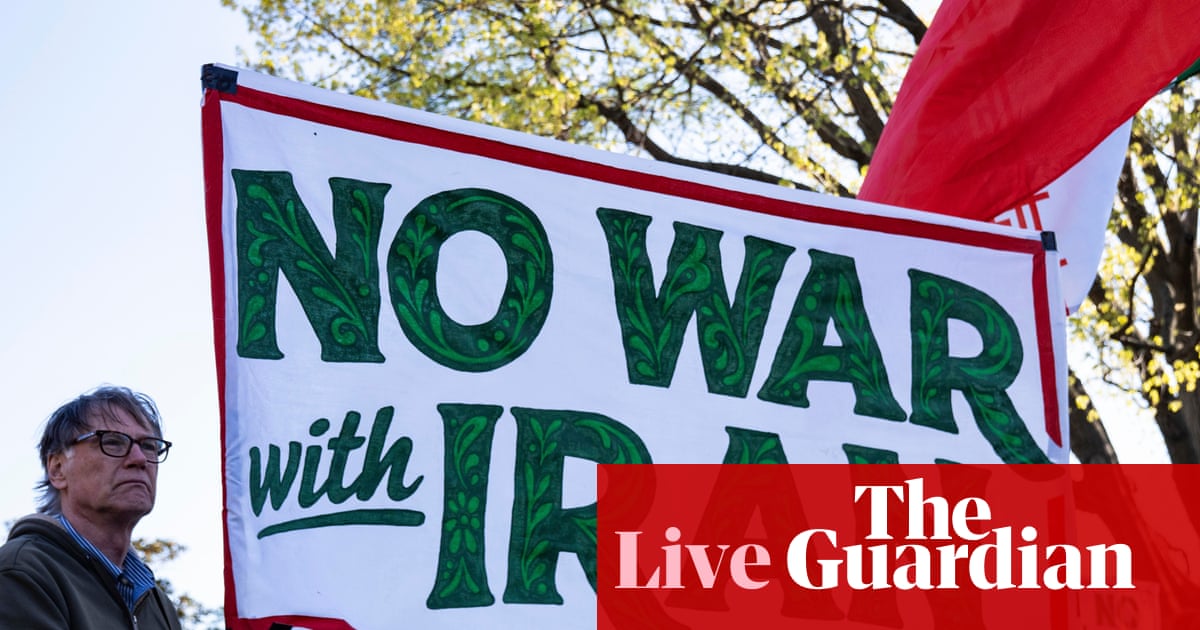
The internal cohesion of the MAGA movement is facing a significant trial as President Donald Trump and former U.S. Representative Marjorie Taylor Greene have engaged in a public exchange of insults over the administration’s handling of the conflict with Iran. The rift has intensified following reports of a potential ceasefire, leading the President to call Greene a “traitor” while the former representative accused him of shifting his philosophy from “America First to America Last.”
This political fracturing comes amid a volatile military campaign in the Middle East. The administration is currently attempting to navigate the aftermath of Operation Epic Fury, which was launched on February 28, as it seeks to prevent Iran from acquiring nuclear capabilities. While the White House maintains that We see achieving its objectives, the public dispute with one of his most prominent former loyalists suggests a widening gap between the President’s current strategy and the expectations of his core base.
Defense Secretary Pete Hegseth has stepped into the fray to defend the administration’s stance, reiterating the President’s claims that Iran will cease uranium enrichment. Hegseth stated, “Any material they should not have, will be removed right now,” emphasizing that the President has remained clear from the start that there will be no Iranian nuclear weapons.
The Origins of Operation Epic Fury and the “Scapegoat” Debate
The current tensions are rooted in the decision-making process that led to the February 28 launch of Operation Epic Fury. During a roundtable event for national military and law enforcement leaders in Memphis, Tennessee, President Trump detailed the conversations that preceded the military action. He noted that he consulted with several “great people,” including Defense Secretary Pete Hegseth and General Dan Caine, to address the problem of Iran, which he described as a “purveyor of terror” for 47 years that was “exceptionally close to having a nuclear weapon.”
However, the President’s description of these events has sparked debate over whether he is praising his staff or preparing a fallback position. Trump specifically highlighted Hegseth’s role, stating, “And Pete, I think you were the first one to speak up and you said, ‘Let’s do it because you can’t let them have a nuclear weapon.’” While some viewed this as a compliment, others, including various media outlets, interpreted the remark as an attempt to pin the responsibility for the conflict on the Defense Secretary. Reports from the Independent indicate that the President appeared to be pinning the blame for the Iran conflict on Hegseth during the Memphis event.
The perception of Hegseth as a potential “fall guy” has been amplified by reports that the administration’s claims of success in the war are being refuted. The narrative of “throwing the Defense Secretary under the bus” has gained traction among political analysts, suggesting that the President may be laying the groundwork for a Pentagon shakeup should the Middle East situation deteriorate further.
Conflicting Narratives on Ceasefire and Nuclear Enrichment
A central point of contention in the current rift is the validity of ceasefire negotiations. President Trump has claimed that his administration has held “very good and productive” ceasefire talks with Tehran. These claims, however, have been flatly denied by the Iranian regime. Mohammad Bagher Ghalibaf, Iran’s parliamentary speaker, dismissed the reports as “fake news,” asserting that no negotiations have been held with the U.S. And accusing the administration of using such claims to manipulate financial and oil markets.
In response to the Iranian denial, the President remarked that Tehran would need “better public relations people,” maintaining that the talks had been “very strong.” This disconnect between the White House’s public optimism and the reality on the ground has fueled the accusations from Marjorie Taylor Greene that the administration is abandoning its “America First” principles.
The stakes of these negotiations center heavily on uranium enrichment. Defense Secretary Hegseth has echoed the President’s social media assertions that Iran will stop enriching uranium, a condition that Tehran has historically refused. The administration’s insistence that “any material they should not have, will be removed right now” represents a hardline demand that remains a primary flashpoint in the conflict.
Assessing the Military Impact and Global Consequences
The effectiveness of the air strikes and military pressure remains a subject of intense disagreement. In a recent address to the nation, President Trump claimed that the U.S. Had “beaten and completely decimated Iran,” asserting that the enemy had suffered “clear and devastating large-scale losses in a matter of weeks.” He suggested the mission was “nearing completion” and that U.S. Forces would soon be pulling back.

Despite these claims, external analysis suggests a more complex reality. Reports indicate that Iran’s Revolutionary Guard continues to maintain control over the country and the Strait of Hormuz, which remains a critical chokepoint for the global oil supply. While air strikes may have eliminated several leaders, they have not resulted in a regime change. Trump has threatened that if a deal is not accepted, the U.S. Will “hit them extremely hard over the next two to three weeks” to bring them “back to the Stone Ages.”
The global community, particularly U.S. Allies, has expressed concern over the instability in the region. Some allies have pleaded for a settlement over the Strait of Hormuz to ensure the flow of oil. The President has dismissed these concerns, taunting allies to “build up some delayed courage” and suggesting they “head to the strait and just seize it” if they want the oil to flow again.
Key Points of the MAGA Split
- Strategy Conflict: A divide between those supporting a negotiated ceasefire and those viewing it as a “surrender.”
- Philosophical Shift: Accusations from former loyalists like Marjorie Taylor Greene that the “America First” doctrine has been compromised.
- Accountability: Public uncertainty over whether Defense Secretary Pete Hegseth is being praised or positioned as a scapegoat for the war’s outcome.
- Nuclear Deadlock: The administration’s insistence on the removal of uranium enrichment materials despite Iranian denials of negotiation.
The current situation reflects a broader tension within the President’s second term, characterized by a belief that global affairs are governed by brute force and self-interest rather than traditional alliances. As the administration balances the threat of further escalation with the desire for a publicized victory, the internal political cost continues to rise.
The next critical window for the conflict is the two-to-three-week period mentioned by the President, during which he threatened further extreme military action if Tehran does not accept the administration’s terms.
World Today Journal encourages readers to share this report and leave their thoughts in the comments section regarding the impact of these internal political divisions on U.S. Foreign policy.
Related reading
- Todd Blanche Senate Confirmation Hearing: Trump’s AG Nominee Faces High-Stakes Scrutiny
- The Best Birkenstock Styles: From Arizona to Boston
- Trump Threatens to Bomb Iranian Power Plants and Bridges to Force Talks (archyworldys.com)
- Blanche Leads Justice Department Amid Scrutiny Over Targeting of Trump’s Political Foes (newsdirectory3.com)