
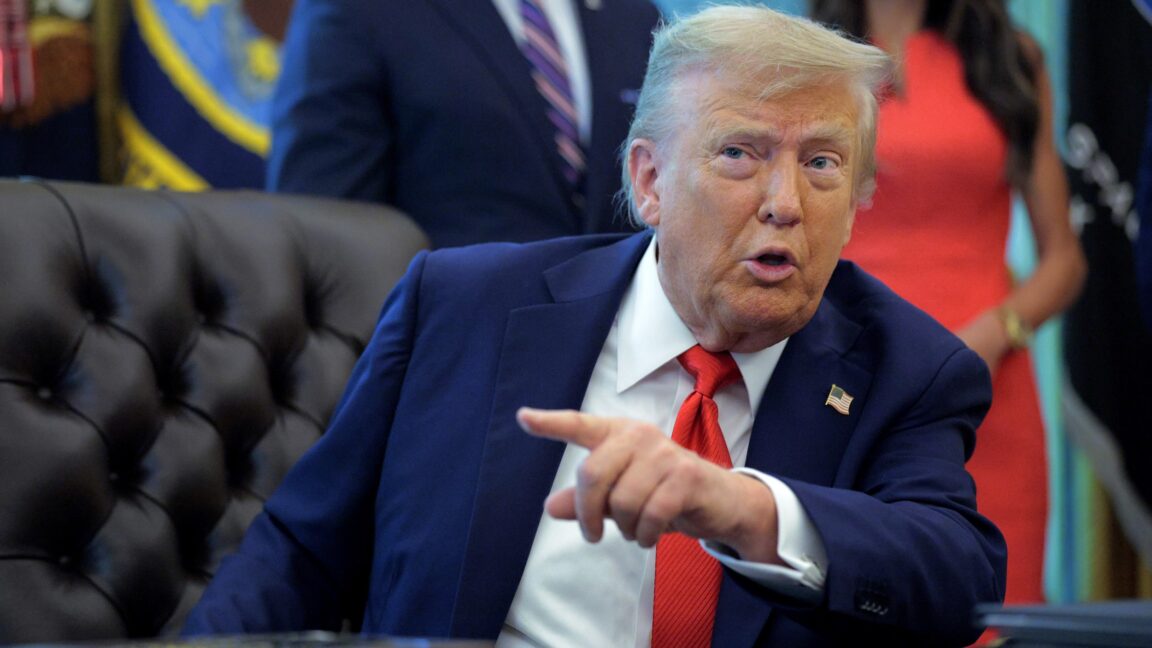
Trump’s AI executive Order: A Challenge to State regulations & the Future of AI Governance
The landscape of artificial intelligence (AI) regulation is rapidly evolving, and a recent executive order issued by former President Trump throws a critically important wrench into the works. This order isn’t simply a policy statement; it’s a direct challenge to states attempting to establish their own AI governance frameworks,especially those focused on consumer protection against algorithmic bias. the core of the issue revolves around federal versus state rights,the potential stifling of innovation,and the very definition of responsible AI development. but what does this mean for developers, consumers, and the future of AI in the US? Let’s delve into the details, exploring the implications and potential outcomes of this controversial move.
The Push for “AI Dominance” and Minimal Burdens
Section 2 of the executive order lays out the management’s overarching goal: to maintain US ”global AI dominance” through a “minimally burdensome national policy framework.” This phrasing is key. It signals a preference for a light-touch regulatory approach,prioritizing innovation and economic competitiveness over stringent consumer safeguards. This isn’t a new stance; the argument often presented is that overly restrictive regulations could hinder the US’s ability to compete wiht nations like China in the burgeoning AI market.
But is this a valid concern,or a pretext for allowing potentially harmful AI applications to proliferate unchecked?
Colorado’s Law: The Spark for Federal Intervention
The executive order specifically targets a Colorado law (SB24-205) enacted earlier this year. This law aims to protect consumers from algorithmic discrimination,defining it as any unfair or unlawful differential treatment resulting from the use of AI systems based on characteristics like age,race,or sex. It mandates openness and accountability for developers of “high-risk systems,” requiring disclosures, risk management programs, data correction rights for consumers, and appeal processes for adverse decisions made by AI.
The Trump administration alleges this law is overly broad and could force AI models to produce “false results” to avoid perceived bias. Moreover, the order claims the law infringes on interstate commerce by potentially regulating AI systems beyond Colorado’s borders. This argument echoes concerns frequently raised by tech companies regarding the patchwork of state privacy laws, like the California Consumer Privacy Act (CCPA), which they argue create compliance headaches.
Commerce Department Tasked with Identifying “Onerous” Laws
The executive order directs the Commerce Department to evaluate existing state AI laws and identify those deemed ”onerous” or conflicting with the federal policy. The evaluation will specifically focus on laws that:
* Require AI models to alter “truthful outputs” to avoid differential treatment.
* Compel disclosures that could violate the First Amendment or other constitutional rights.
This directive effectively empowers the federal government to potentially preempt state AI regulations,establishing a national standard – likely one that favors industry interests. This raises significant questions about the future of state innovation in AI governance and the potential for a race to the bottom in terms of consumer protection.
Related Subtopics: This situation also touches upon broader debates surrounding data privacy, civil rights, and the ethical implications of AI. Resources like the AI Now Institute (https://ainowinstitute.org/) offer valuable insights into these complex issues.
What Does This Mean for AI Developers and Consumers?
For AI developers, the order could provide a degree of regulatory certainty, potentially reducing compliance costs and streamlining operations.However, it also risks creating a less accountable environment, potentially leading to public backlash and erosion of trust in AI technologies.
For consumers, the implications are more concerning. The potential weakening of state-level protections against algorithmic bias could leave them vulnerable to discriminatory outcomes in areas like loan applications, hiring processes, and even healthcare.
Recent Statistics: A 2023 study by the Pew Research Center found that 52% of Americans are





