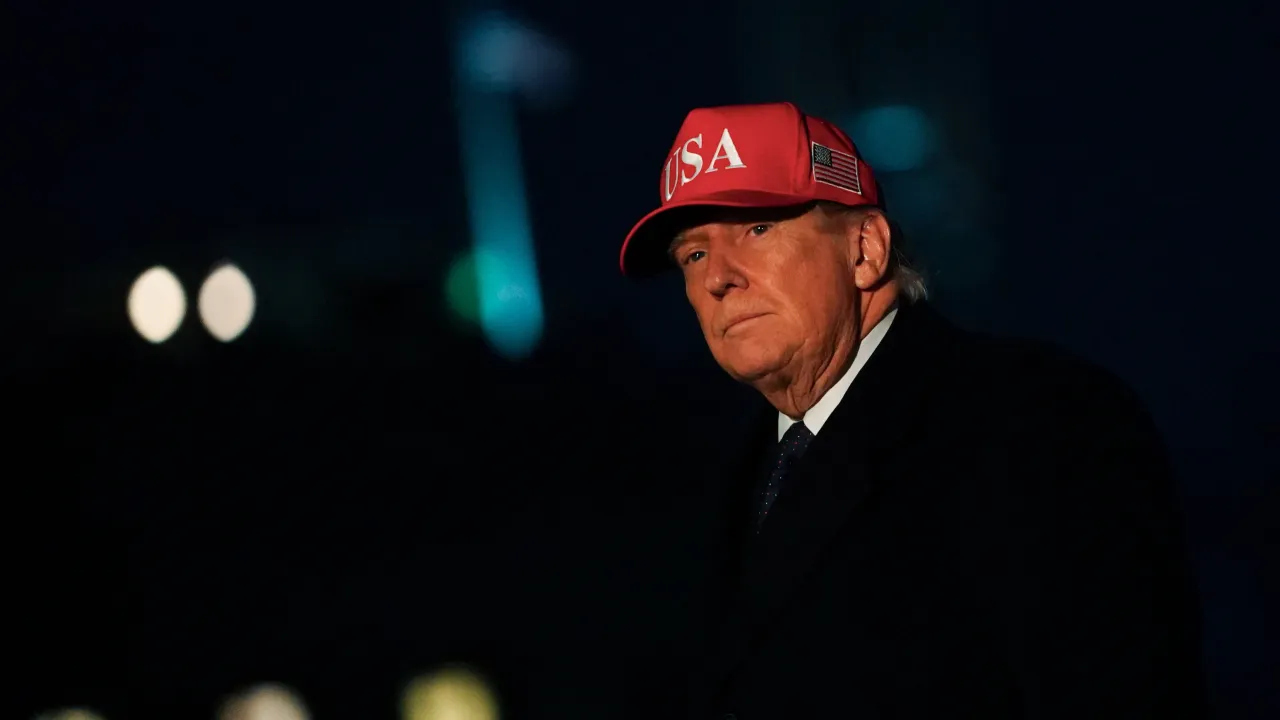
The death of Iran’s Supreme Leader, Ayatollah Ali Khamenei, in a joint U.S.-Israeli strike has thrown the Islamic Republic into a period of uncertainty, prompting immediate discussion about his successor. In a surprising turn, former U.S. President Donald Trump has asserted that he must be directly involved in the selection process, drawing a parallel to recent political interventions in Venezuela. This assertion, coupled with Trump’s declaration that the late leader’s son, Mojtaba Khamenei, would be an “unacceptable” choice, adds a complex layer to the already volatile situation in the Middle East.
The news of Ayatollah Khamenei’s death, confirmed by Iranian state media on February 28, 2026, followed an announcement by President Trump regarding a joint U.S.-Israeli air strike targeting the Supreme Leader’s compound. The attack, which reportedly likewise resulted in the deaths of Khamenei’s daughter, son-in-law, and grandson, marks a significant escalation in regional tensions. The timing of these events coincides with a period of heightened conflict, as noted by the warning on the Wikipedia page for Ali Khamenei, which currently flags the situation as an ongoing “2026 Iran war.”
Succession Concerns and Trump’s Intervention
According to reports, Mojtaba Khamenei, 56, is currently considered the most likely candidate to succeed his father. However, Trump has publicly dismissed this possibility, stating, “Chamenei’s son is unacceptable to me. We want someone who will bring peace and harmony to Iran.” He further argued that a continuation of the current policies under Mojtaba Khamenei would inevitably lead to war with the United States within five years. This strong stance reflects a desire for a different trajectory for Iran, one that aligns with U.S. Interests and avoids further regional conflict.
Trump’s insistence on personal involvement in the succession process is framed by him as mirroring the situation in Venezuela, where he claims U.S. Forces intervened to remove President Nicolás Maduro, leading to the installation of Vice President Delcy Rodríguez. He pointed to the subsequent increase in oil imports from Venezuela as a positive outcome of this intervention, stating that the U.S. Has received over 80 million barrels of oil since Maduro’s removal. This analogy, however, is a contentious one, given the complex political and economic factors at play in Venezuela and the differing geopolitical landscape surrounding Iran. The situation in Venezuela remains highly contested, and the claim of a straightforward “intervention” is a simplification of a multifaceted crisis.
Who is Mojtaba Khamenei?
While not a high-ranking cleric or holding any official political position, Mojtaba Khamenei is widely considered a powerful figure within the Iranian regime. He has largely remained out of the public eye, but analysts suggest he wields significant influence, particularly within the Islamic Revolutionary Guard Corps (IRGC). His close ties to the IRGC, a powerful military and political force in Iran, raise concerns about a continuation of hardline policies and a potential escalation of regional tensions. According to Al Jazeera, Mojtaba Khamenei enjoys popularity within the IRGC, further solidifying his position as a frontrunner in the succession race. Al Jazeera provides further background on the potential candidates and the complexities of the succession process.
Recent Developments and Regional Implications
Adding to the instability, reports indicate that Israel conducted an airstrike on a building in the city of Qom, Iran, housing the Council of Guardians, the body responsible for selecting the next Supreme Leader. According to Axios, the purpose of this strike was to disrupt the vote-counting process. This action underscores the level of direct involvement both the U.S. And Israel are taking in shaping the future leadership of Iran. The situation is further complicated by the ongoing “2026 Iran war,” as noted on the Wikipedia page for Ali Khamenei, indicating a rapidly evolving and highly sensitive geopolitical landscape. Wikipedia currently flags the article as being affected by current events.
Ayatollah Ali Khamenei’s Legacy
Ayatollah Ali Khamenei served as the second Supreme Leader of Iran from 1989 until his death in February 2026, succeeding Ayatollah Ruhollah Khomeini, the architect of the Islamic Revolution. During his tenure, Khamenei oversaw significant political and economic changes within Iran, navigating a complex web of international sanctions and regional conflicts. He was a staunch advocate for Iran’s nuclear program and a vocal critic of Western influence in the Middle East. His leadership was marked by a commitment to the principles of the Islamic Revolution and a determination to maintain Iran’s independence, and sovereignty. His death leaves a void in Iranian politics and raises questions about the future direction of the country.
The Role of the Assembly of Experts
The selection of the next Supreme Leader rests with the Assembly of Experts, a body of 88 clerics responsible for choosing the country’s highest authority. The Assembly’s deliberations are shrouded in secrecy, and the process is expected to be lengthy and contentious. The influence of various factions within the Assembly, including hardliners and pragmatists, will likely play a crucial role in determining the outcome. The potential for external interference, as suggested by Trump’s comments, adds another layer of complexity to the process. According to the Wikipedia entry, Khamenei was a member of the Assembly of Experts from 1983 to 1989, giving him intimate knowledge of its internal workings.
Key Takeaways
- Ayatollah Ali Khamenei, Iran’s Supreme Leader, has been killed in a joint U.S.-Israeli strike.
- Donald Trump has stated his intention to be involved in the selection of Khamenei’s successor, citing the example of Venezuela.
- Mojtaba Khamenei, the late leader’s son, is considered a leading candidate but has been deemed “unacceptable” by Trump.
- The Assembly of Experts is responsible for selecting the next Supreme Leader, a process likely to be fraught with internal divisions and external pressures.
- The situation is unfolding against the backdrop of an ongoing conflict, described as the “2026 Iran war” on Wikipedia.
The coming weeks and months will be critical in determining the future of Iran. The selection of a new Supreme Leader will have profound implications for the country’s domestic and foreign policies, as well as for regional stability. The involvement of external actors, particularly the United States and Israel, adds a significant degree of uncertainty to the process. The international community will be closely watching developments in Iran, hoping for a peaceful and stable transition of power. For the latest updates, refer to credible news sources such as Reuters, the Associated Press, and the BBC.
As the situation continues to evolve, This proves crucial to remain informed and to engage in constructive dialogue about the challenges and opportunities facing Iran and the wider region. Share your thoughts and perspectives in the comments below.