The geopolitical landscape of the Middle East has entered a volatile state of “carrot and stick” diplomacy as the United States balances the threat of intensified military action with reports of a burgeoning peace framework. President Donald Trump has signaled that while a “Complete and Final Agreement” to end the conflict with Iran may be within reach, the window for diplomacy remains narrow, with the alternative being a significant escalation in aerial campaigns.
This dual-track strategy has sent ripples through global energy markets and shipping corridors, particularly within the Strait of Hormuz. As the U.S. Pauses specific naval operations to allow for diplomatic breakthroughs, the international community is closely watching the next 48 hours for a formal response from Tehran on several key points of a proposed memorandum of understanding.
For those of us who have covered international affairs for over a decade, this pattern of maximum pressure coupled with a sudden diplomatic opening is a familiar tactic. However, the current stakes—involving a naval blockade and the threat of “higher level” bombing—place this confrontation in a precarious category of risk for global stability.
The Threat of Operation Epic Fury
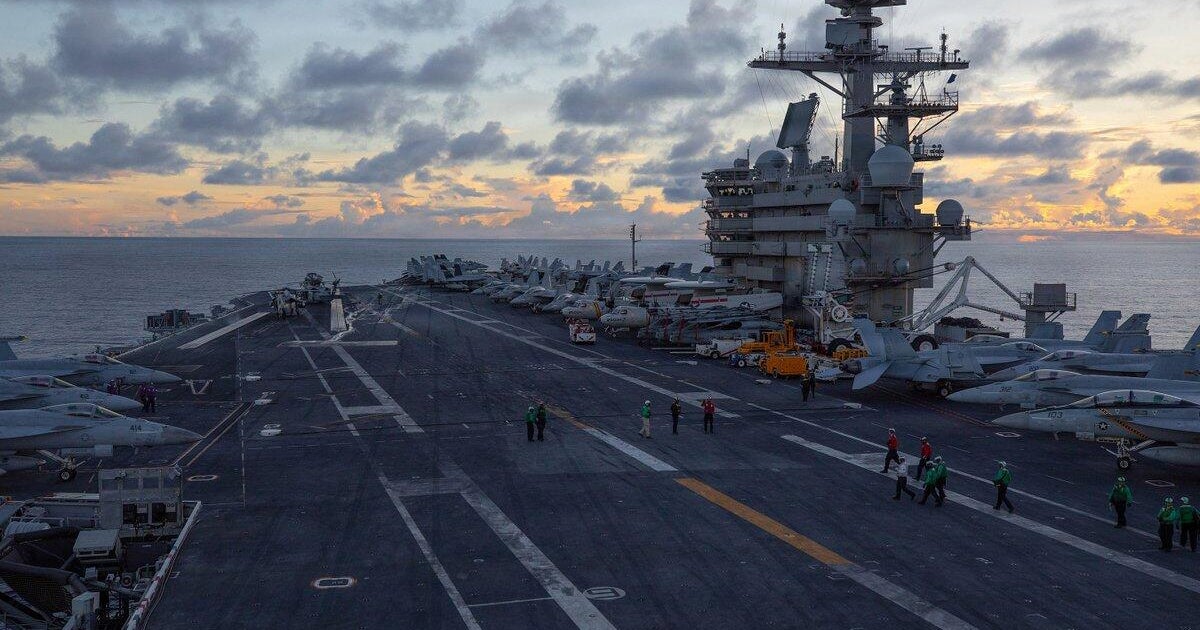
Central to the current tension is the U.S. Military offensive known as Operation Epic Fury. President Trump has explicitly stated that this operation will only conclude if Iran agrees to the terms already discussed in ongoing negotiations. The warning is stark: should Tehran decline the peace proposal, the U.S. Is prepared to launch bombing campaigns at a “much higher level and intensity” than those previously executed.
The administration’s position is that the current military pressure is a necessary precursor to a sustainable deal. By maintaining a naval blockade of Iranian ports in the Gulf of Oman, the U.S. Holds a significant lever of power over Iran’s economic arteries. The promise of reopening the Hormuz Strait to all traffic, including Iranian vessels, serves as the primary incentive for Tehran to sign the proposed agreement.
This “all-or-nothing” approach reflects a strategy designed to force a rapid conclusion to a conflict that has persisted for more than two months. By framing the end of Operation Epic Fury as conditional upon Iran’s total compliance with agreed-upon terms, the U.S. Is attempting to eliminate the possibility of a partial or temporary ceasefire that does not address core security concerns.
The 14-Point Framework and Pakistani Mediation
Despite the rhetoric of escalation, there are substantive indications that a diplomatic exit ramp is being constructed. Reports indicate that Washington and Tehran are nearing a one-page, 14-point memorandum of understanding designed to end the war and establish a framework for further, more detailed negotiations.

Pakistan has emerged as a critical intermediary in these talks. Government officials in Pakistan have indicated that proposals to end the war are very likely to materialize in the coming days, confirming their role in brokering the communication between the two adversarial powers. This mediation highlights Pakistan’s strategic importance in regional stability and its ability to maintain channels of communication with both the U.S. And Iran.
While the specific details of the 14 points remain classified, the overarching goal is to create a moratorium on hostilities and a roadmap for long-term security arrangements. The U.S. Is reportedly expecting responses from Tehran on several key points within a 48-hour window, making the current moment a critical juncture for the prevention of a wider regional war.
Project Freedom and the Strait of Hormuz
In a move that suggests a genuine desire to test the diplomatic waters, President Trump recently placed “Project Freedom” on pause. Project Freedom was a mission designed to guide ships through the Strait of Hormuz, a move that had previously prompted Iranian attacks on vessels in the strait and against U.S. Allies in the Gulf.

The decision to pause Project Freedom is intended to signal that the U.S. Is willing to de-escalate if a “Complete and Final Agreement” is reached. However, the economic cost of the surrounding instability remains staggering. The shutdown and volatility in the Strait of Hormuz have created a logistical nightmare for global trade.
One of the world’s largest shipping companies, Hapag-Lloyd, has reported that the shutdown of the Strait of Hormuz is costing the firm approximately $60 million per week. These costs are driven primarily by rising insurance premiums and fuel expenses, as alternate routes—whether over land or via distant harbors—remain severely limited. This financial pressure underscores why the reopening of the strait is the most immediate priority for the global economy.
Economic Impact: Oil Prices and Market Volatility
The intersection of military threats and peace reports has created extreme volatility in the energy sector. Brent crude oil, the international benchmark, has seen significant price swings as traders react to every update from the White House and Tehran.
Prior to the onset of the war, crude oil was trading at roughly $70 per barrel. At the height of the recent tensions, prices jumped significantly, though they recently eased to around $100 per barrel following reports that a peace deal was nearing completion. The market’s sensitivity to the “48-hour window” suggests that any failure to reach an agreement could trigger another sharp spike in energy costs, further fueling global inflation.
Stock indices have similarly mirrored this volatility, jumping on news of the 14-point memorandum but remaining cautious. The economic reality is that the global market cannot sustain a prolonged blockade of the Hormuz Strait, which is the world’s most essential oil transit chokepoint.
Diplomatic Friction and the World Cup
Beyond the military and economic spheres, the conflict is spilling over into cultural and sporting arenas. In a notable exchange, Iran’s soccer chief, Mehdi Taj, addressed the country’s participation in the upcoming World Cup in North America. Taj asserted that Iran would participate under certain conditions, stating that the host is “FIFA, not Mr. Trump or America.”
This statement reflects the broader Iranian narrative of resisting U.S. Influence while attempting to maintain a presence on the global stage. It also highlights the complexity of the current situation: while the two nations are negotiating the end of a war, the underlying ideological and political animosity remains profound.
For the U.S., the challenge is to ensure that any peace deal is not merely a tactical pause for Iran, but a strategic shift. For Iran, the goal is to lift the naval blockade and end Operation Epic Fury without making concessions that compromise its domestic political standing.
Key Takeaways: The Current State of US-Iran Relations
- Military Status: Operation Epic Fury remains active but is promised to end if Iran accepts the peace deal.
- Diplomatic Progress: A 14-point memorandum of understanding is under review, with Pakistan serving as the primary mediator.
- Maritime Impact: Project Freedom is on pause; however, shipping giants like Hapag-Lloyd are losing millions weekly due to strait closures.
- Economic Marker: Brent crude oil has fluctuated from $70 (pre-war) to peaks above $100, currently stabilizing around the $100 mark.
- Timeline: A critical 48-hour window exists for Tehran to respond to key U.S. Demands.
What Happens Next?
The immediate future of the conflict hinges on the response from Tehran. If the Iranian government accepts the 14-point framework, the U.S. Is expected to lift the naval blockade of the Gulf of Oman and terminate Operation Epic Fury, effectively reopening the Strait of Hormuz to global commerce.

However, if the response is deemed insufficient or if Tehran rejects the terms, the U.S. Has signaled a return to military action at a higher intensity. President Trump has clarified that while progress has been “great,” it is still “too soon” for new direct, in-person peace talks in Pakistan, indicating that the current phase is about verification and commitment rather than further negotiation.
The next confirmed checkpoint is the expiration of the 48-hour window for Tehran’s response. Until then, the world remains in a state of high alert, balanced between the hope of a diplomatic resolution and the threat of intensified bombing.
We will continue to monitor this developing story. Do you believe the current “maximum pressure” strategy is the most effective way to achieve a lasting peace in the Middle East? Share your thoughts in the comments below and subscribe to our newsletter for real-time global updates.