
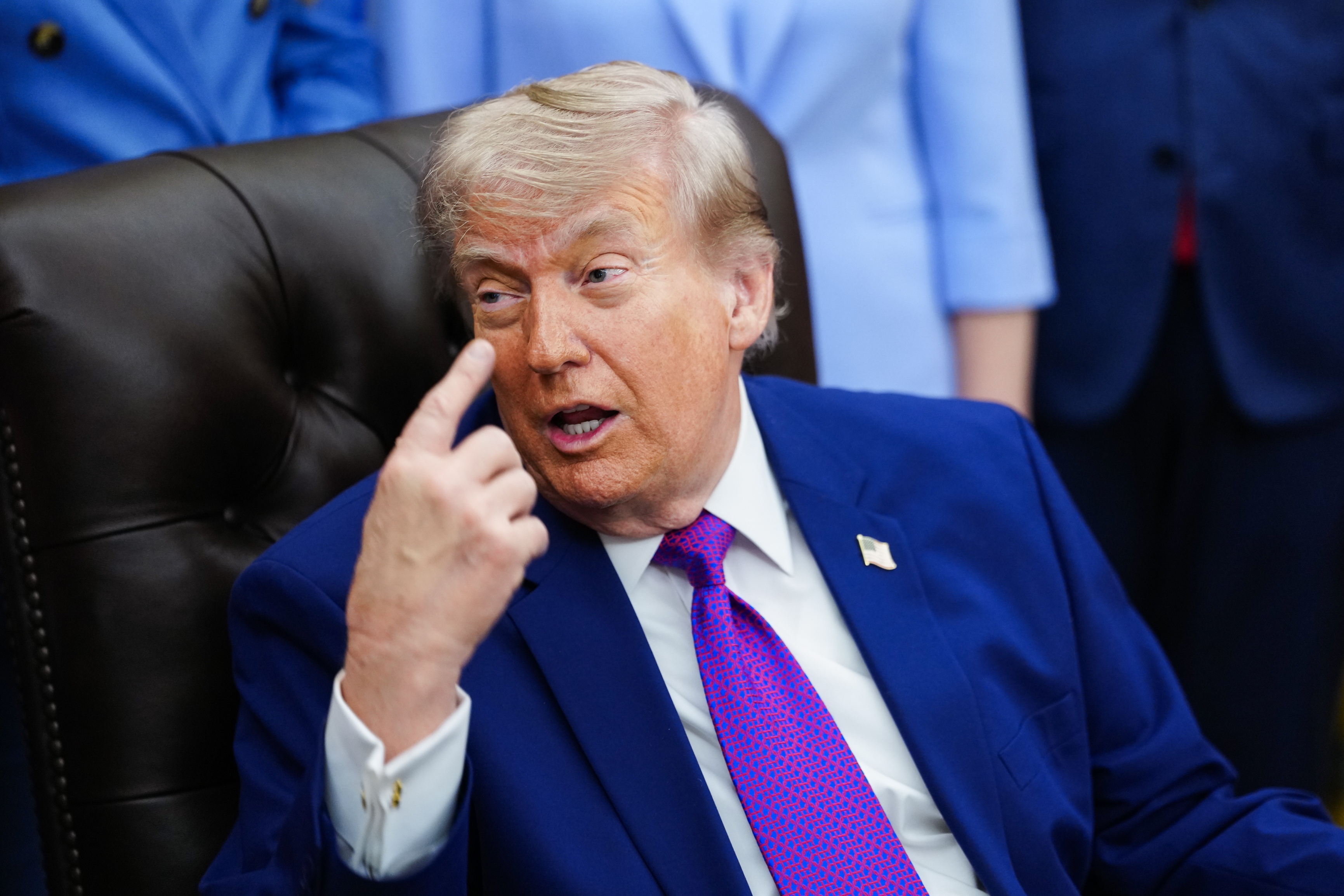
The geopolitical landscape of the Middle East has entered a period of acute instability as U.S. President Donald Trump issued a blunt ultimatum to the Islamic Republic of Iran, warning that the window for a diplomatic resolution is rapidly closing. Following his recent return from a high-stakes state visit to China, the 47th president pivoted immediately to the Persian Gulf, signaling a potential return to a “maximum pressure” campaign if Tehran fails to commit to a comprehensive new agreement.
The warnings, delivered with the characteristic urgency of the Trump administration, suggest that the United States is preparing for a significant escalation in its strategy to curb Iran’s nuclear ambitions and regional influence. At the heart of the current friction is a demand for a deal that transcends the limitations of the defunct Joint Comprehensive Plan of Action (JCPOA), focusing not only on uranium enrichment but also on ballistic missile development and the funding of regional proxies.
For the global community, the stakes are exceptionally high. A failure to reach a consensus could trigger a cascade of economic shocks, particularly regarding global energy markets, and increase the risk of direct military confrontation in a region already strained by overlapping conflicts. As the administration clarifies its red lines, the international community is watching to see whether this rhetoric serves as a genuine prelude to conflict or a calculated diplomatic gambit to force Iran back to the negotiating table on U.S. Terms.
The Ultimatum: ‘A Very Poor Time’ for Tehran
President Trump has explicitly stated that Iran will face a “very bad time” if a mutually acceptable agreement is not reached. This phrasing reflects a shift from the cautious diplomacy of previous years toward a posture of strategic confrontation. The administration’s core objective appears to be the establishment of a “grand bargain” that would permanently restrict Iran’s ability to produce weapons-grade nuclear material while imposing strict limits on its regional military activities.
The tension is compounded by reports regarding Iran’s nuclear progress. According to the International Atomic Energy Agency (IAEA), Iran has continued to increase its stockpiles of enriched uranium, pushing the boundaries of international monitoring. The Trump administration has interpreted these technical advancements not as leverage for negotiation, but as a breach of implicit trust, leading to the current assertion that time is running out for a peaceful settlement.
This “time is running out” narrative is designed to create a sense of urgency within the Iranian leadership. By setting an ambiguous but imminent deadline, the White House aims to split the internal dynamics in Tehran, pitting hardliners who favor defiance against pragmatists who fear the total collapse of the Iranian economy under renewed, suffocating sanctions.
Maximum Pressure 2.0 and the Economic Toll
The current strategy represents a refined version of the “Maximum Pressure” policy employed during Trump’s first term. However, the 2026 iteration is more tightly integrated with broader global economic pivots. By coordinating with key allies and leveraging shifts in global trade—highlighted by the president’s recent discussions in Beijing—the U.S. Is attempting to isolate Iran more effectively than ever before.

The primary tool of this strategy remains the use of primary and secondary sanctions. The U.S. Department of the Treasury has previously utilized Office of Foreign Assets Control (OFAC) designations to target the Iranian banking sector and oil exports. The administration has hinted that a new wave of sanctions could target any entity—regardless of nationality—that facilitates the export of Iranian crude, which remains the lifeblood of the Iranian state budget.
The economic impact of these threats is already manifesting within Iran. Reports from Tehran indicate a surge in anxiety across domestic markets, with the Iranian rial facing significant volatility. The fear of a return to full-scale economic warfare has led to fluctuations in consumer prices and a general sense of apprehension among the merchant class in cities like Tehran and Isfahan, where the memory of previous sanctions-induced inflation remains vivid.
Regional Stability and the Proxy Dilemma
While the nuclear issue often dominates the headlines, the Trump administration has made it clear that any new agreement must address Iran’s “regional footprint.” This includes the activities of the “Axis of Resistance,” comprising groups such as Hezbollah in Lebanon, various militias in Iraq, and the Houthi movement in Yemen.
The U.S. Position is that nuclear stability cannot be achieved while regional instability is funded and directed by Tehran. This expanded scope makes a deal significantly harder to reach, as it asks Iran to relinquish strategic depth and influence that it views as essential for its own national security. The administration’s willingness to use “all options on the table” suggests that if diplomacy fails, the U.S. May increase its support for regional partners to contain Iranian influence through non-nuclear means.
the role of Israel remains a critical variable. The close coordination between the White House and the Israeli government ensures that any perceived “breakout” toward a nuclear weapon will be met with a rapid response. This security guarantee to Israel emboldens the U.S. To maintain a hard line, knowing that the regional appetite for an Iranian nuclear weapon is virtually non-existent.
What This Means for Global Energy and Trade
The threat of escalation in the Persian Gulf carries immediate implications for the global economy. A significant portion of the world’s oil and liquefied natural gas (LNG) passes through the Strait of Hormuz, a narrow chokepoint that Iran has historically threatened to close during times of extreme tension.
Any military miscalculation or a deliberate blockade of the Strait could lead to an immediate spike in global oil prices. Market analysts monitor the “geopolitical risk premium” closely. even the rhetoric of a “very bad time” for Iran can trigger hedging activities in the energy markets, potentially raising costs for consumers worldwide. The intersection of U.S. Tariffs on other major economies and the instability in the Gulf creates a volatile environment for global inflation management.
For international businesses, the uncertainty is the primary challenge. Companies operating in the Middle East are forced to weigh the benefits of regional investment against the risk of sudden sanctions or kinetic conflict. The “time is running out” warning serves as a signal to global markets that the status quo is unsustainable and that a period of high volatility is likely.
Key Takeaways for the Current Crisis
- The Ultimatum: President Trump has warned Iran that the window for a diplomatic deal is closing and that failure to agree will result in a “very bad time” for the regime.
- Scope of Agreement: The U.S. Is demanding a “grand bargain” covering nuclear enrichment, ballistic missiles, and regional proxy funding.
- Economic Leverage: The administration is leveraging “Maximum Pressure 2.0,” utilizing sanctions to isolate Tehran and pressure its internal leadership.
- Nuclear Threshold: IAEA reports of increased uranium enrichment are driving the U.S. Urgency to secure a new, more restrictive deal.
- Global Risk: Potential escalation threatens the Strait of Hormuz and global energy price stability.
The Path Forward: Diplomacy or Confrontation?
The central question remains whether this aggressive rhetoric is a means to an end or a precursor to action. Historically, the Trump administration has used public pressure to create the conditions for a deal that would appear as a “win” for the U.S. While providing the opponent a narrow path to avoid catastrophe. If Iran perceives the threat as credible and the cost of defiance as too high, there may be a sudden pivot toward secret negotiations.

However, the Iranian leadership has also shown a high tolerance for economic pain and a willingness to engage in “strategic patience.” If Tehran believes that the U.S. Is bluffing or that the administration is too distracted by domestic issues and other global conflicts to commit to a full-scale military operation, they may continue their current trajectory of nuclear advancement.
The international community, including the European Union, finds itself in a difficult position. While the EU generally prefers a diplomatic approach and the preservation of some form of nuclear oversight, the lack of progress on the ground has diminished their role as mediators. The current dynamic is increasingly a bilateral struggle of wills between Washington and Tehran, with the rest of the world bearing the secondary risks.
As the administration continues to signal its impatience, the focus shifts to the operational readiness of U.S. Forces in the region and the internal stability of the Iranian government. The coming weeks will be decisive in determining whether the “time running out” is a countdown to a deal or a countdown to a conflict.
The next confirmed checkpoint for this developing situation will be the upcoming quarterly report from the IAEA Board of Governors, which will provide the latest verified data on Iran’s nuclear stockpiles and compliance levels. This report will likely serve as the technical trigger for the next phase of U.S. Policy action.
We want to hear from you. Do you believe a ‘Maximum Pressure’ approach is the most effective way to reach a nuclear agreement, or does it increase the risk of unintended escalation? Share your thoughts in the comments below.