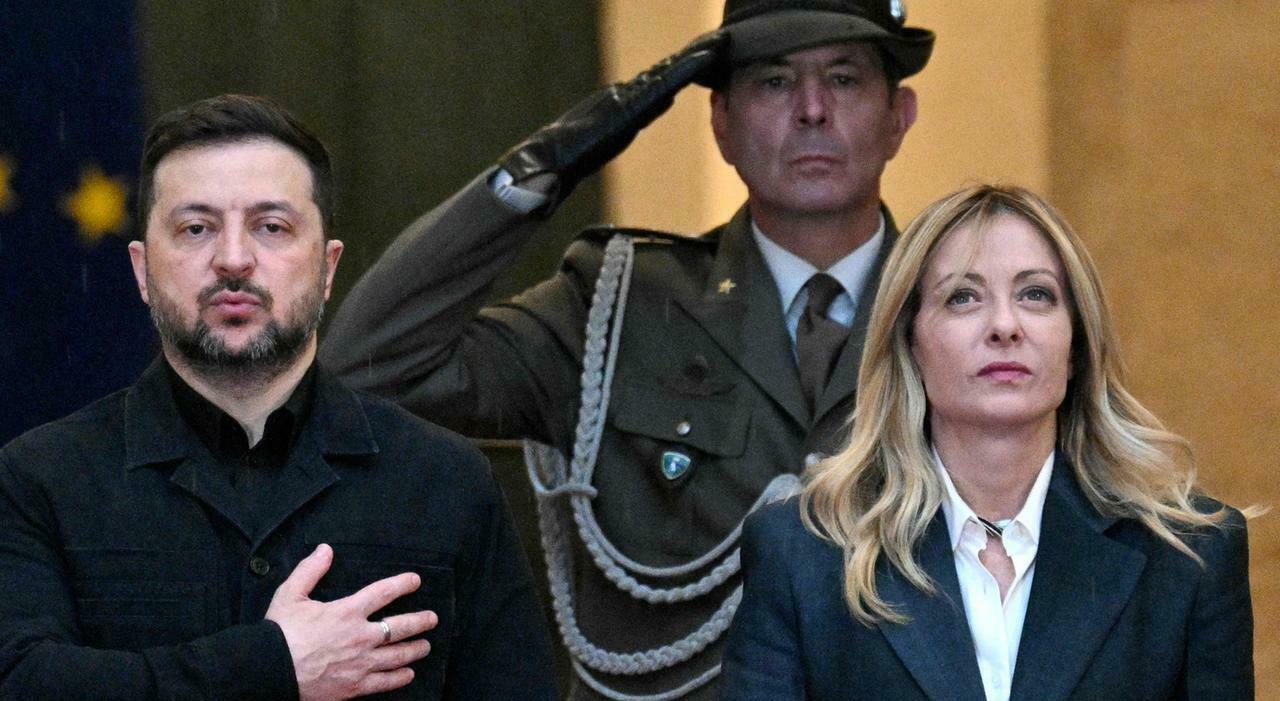
Italian Prime Minister Giorgia Meloni has stated that Italy will fulfill its role in the context of the Iran situation, even as her relationship with U.S. President Donald Trump appears strained. This comes after Trump criticized Meloni for not supporting his stance on Iran and for calling his remarks about Pope Leo XIV “unacceptable.” Meloni has emphasized her solidarity with the Pope following his opposition to the war in Iran, marking a notable divergence in her approach compared to the U.S. Administration’s position.
The tension between the two leaders has become increasingly visible in recent weeks. Trump publicly rebuked Meloni after she described his comments toward the Pope as unacceptable, highlighting a growing rift between what was once considered a close alliance. According to reports, Meloni has maintained her position that dialogue and diplomatic engagement should guide Italy’s foreign policy, particularly concerning regional conflicts involving religious and humanitarian dimensions.
Meloni’s stance reflects a broader effort by her government to balance transatlantic relations with independent decision-making on issues where moral and ethical considerations are paramount. Her administration has consistently advocated for multilateral approaches and has expressed concern over escalations that could exacerbate instability in the Middle East. This includes caution regarding military actions that lack broad international consensus or that may impact civilian populations.
The friction over Iran policy underscores evolving dynamics within NATO and among Western allies, where differing interpretations of strategic priorities are becoming more pronounced. Even as the United States has pursued a more assertive posture, Italy under Meloni has emphasized restraint and the importance of preserving channels for negotiation, especially when religious figures like the Pope are involved in peace advocacy.
Despite the public disagreements, both leaders have acknowledged the enduring strategic importance of the U.S.-Italy relationship. Meloni has reiterated Italy’s commitment to NATO and its role as a reliable partner, while also asserting the need for sovereignty in national decision-making. Trump, meanwhile, has acknowledged past cooperation but signaled disappointment over what he perceives as a lack of alignment on key security matters.
Observers note that the disagreement does not signal a fundamental rupture but rather a moment of recalibration in how allied nations navigate complex geopolitical challenges. The situation highlights the tension between loyalty to traditional alliances and the pursuit of independent foreign policy paths grounded in national values and assessments of global risks.
As of now, Notice no indications of imminent policy shifts from either side, but the exchange has drawn attention to the nuances of alliance management in an era of heightened global uncertainty. Both governments continue to engage through diplomatic channels, even as public expressions of dissatisfaction persist.
Moving forward, the focus will likely remain on how Italy and the United States manage areas of convergence and divergence, particularly concerning conflict resolution, humanitarian concerns, and the role of international institutions. Future developments will depend on evolving circumstances in Iran and the broader Middle East, as well as the willingness of both sides to find common ground despite differing perspectives.
For ongoing updates on this evolving diplomatic situation, readers are encouraged to follow official statements from the Italian Presidency of the Council of Ministers and the White House. Share your thoughts on how allied nations should handle disagreements on foreign policy while maintaining strong bilateral ties.
Worth a look