
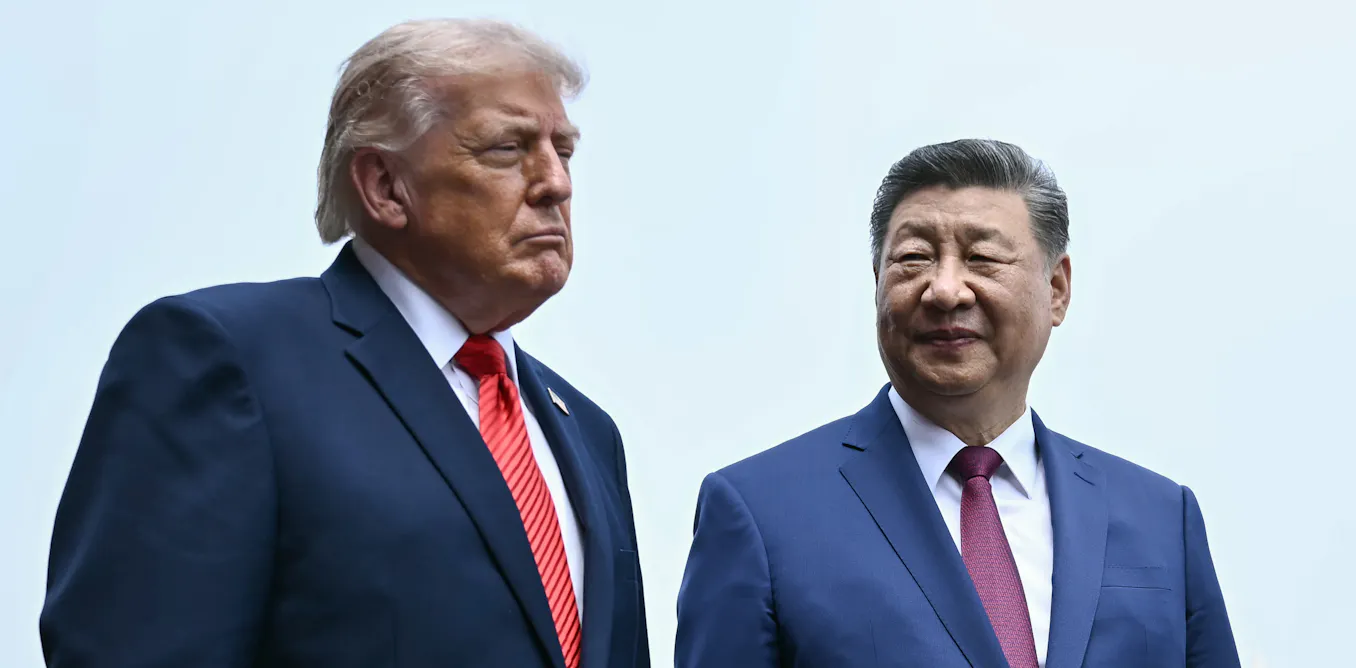
President Donald Trump departed China on May 15, 2026, following a high-stakes, two-day summit with Chinese leader Xi Jinping. The meeting, which drew intense global scrutiny, was framed by both leaders as a pivotal moment for the world’s two largest economies. While President Trump described the trip as “incredible,” President Xi characterized the encounter as the beginning of a “new bilateral relationship.”
Despite the optimistic rhetoric from the leaders, independent analysts remain cautious. Many observers noted a lack of major breakthroughs, suggesting that the summit served more as a stabilization effort than a transformative shift in policy. The primary objective appeared to be the restoration of economic predictability and the prevention of accidental military escalation, rather than a wholesale resolution of long-standing systemic frictions.
From a business perspective, the summit yielded several targeted “win-wins,” particularly in the aerospace and semiconductor sectors. However, these gains are tempered by deep-seated disagreements over intellectual property, supply chain security and the geopolitical status of Taiwan. For global markets, the takeaway is one of cautious progress: the relationship is being managed, but the fundamental competition remains unresolved.
Trade Stabilization: Boeing, Nvidia, and the New Boards
The economic agenda of the summit focused on restabilizing trade ties that have been volatile since the onset of the trade war in 2018. China is eager to regain the level of access to the American market it enjoyed in the 1990s and early 2000s. Conversely, the Trump administration continues to view Chinese control over critical supply chains and the persistent trade imbalance as significant national security risks.
A central point of contention remains the practice of forced technology transfers, where American firms are often required to hand over trade secrets, blueprints, and marketing plans to operate within China. While a comprehensive solution to these unfair trade practices was not reached, the summit produced several tangible commercial agreements.
President Trump announced that Beijing has agreed to purchase 200 aircraft from Boeing, a figure notably lower than the 500 aircraft previously suggested in various media reports. Several Chinese firms agreed to purchase microchips from Nvidia, continuing a trend of selective chip sales that began in late 2025. There was also reported movement regarding the increase of U.S. Beef sales to the Chinese market.
Beyond these immediate deals, the most significant structural outcome was the agreement to establish a Board of Trade and a Board of Investment. These bodies are intended to create a formal, streamlined pathway for expanding trade in the coming months, moving away from the erratic, deal-by-deal diplomacy that has characterized recent years.
The technology sector remains a delicate balancing act. Currently, China trails the U.S. In microchip development by approximately 18 months. While You’ll see ongoing concerns that high-technology chips could be diverted for defense purposes or that intellectual property could be stolen, the U.S. Position has evolved toward a managed sale. Washington aims to prevent the telecom giant Huawei from monopolizing the Chinese market by allowing the sale of “appropriate-level” Nvidia chips.
Taiwan: Rhetoric vs. Strategic Reality
The “Taiwan question” remains the most volatile element of the U.S.-China relationship. During the first day of the summit, President Xi emphasized that Taiwan is a “core interest” and “the most important issue in China-U.S. Relations,” warning that any mishandling of the situation could lead to “clashes and even conflicts.”

Analysts suggest this tough rhetoric serves two purposes: satisfying a domestic audience—including the approximately 100 million members of the Chinese Communist Party—and signaling to Washington that Beijing will not tolerate support for Taiwanese independence. This signal aligns with the 2025 National Security Strategy, which explicitly states that the U.S. Opposes unilateral action on Taiwan from “either party.”
While President Trump mentioned arms deals to Taiwan, the U.S. Continues to adhere to the declaratory policy established during the Reagan administration, which prohibits Beijing from participating in discussions regarding the specific weapons Washington sells to the island. This is supported by the Taiwan Relations Act of 1979, which mandates that the U.S. Provide Taiwan with defensive weapons to maintain its self-defense capabilities.

Much of the anxiety surrounding Taiwan stems from the modernization of the People’s Liberation Army (PLA). President Xi has set benchmarks for the PLA to be capable of an invasion by 2027—a concept often referred to in U.S. Circles as the “Davidson window.” However, military experts argue that China currently lacks a “blue water navy” capable of operating without port assistance. Taiwan’s mountainous geography and limited landing points make an invasion exceptionally difficult. Taiwan is also reportedly integrating lessons from the conflict in Ukraine to make the island “indigestible” to an invading force.
While the PLA aims to be a “world class military” by 2049, evidence suggests that the CCP’s primary focus remains internal. Data indicates that China spends more on internal security than on external defense, suggesting that domestic stability is a higher priority than overseas power projection.
Military Communication and Global Stability
One of the most unusual aspects of the summit was the presence of U.S. Secretary of Defense Pete Hegseth. The inclusion of a defense secretary at this level of a diplomatic summit is rare and underscores Washington’s urgent desire to open formal military lines of communication to prevent catastrophic accidents.
The need for these channels is highlighted by past incidents, such as the 2001 collision between a U.S. Aircraft and a Chinese jet and the 2023 “spy balloon” incident. Washington is seeking a communication framework similar to the one maintained between the U.S. And the Soviet Union during the Cold War to ensure that tactical miscalculations do not escalate into full-scale conflict.


Despite these efforts to open lines of communication, President Trump maintained that the U.S. Does not require Chinese assistance on its own military matters. This independence was particularly evident in discussions regarding Iran. While China has criticized U.S. Actions in the Middle East, it has reportedly been quietly urging Tehran to cease bombing Gulf countries.
Beijing’s stance on Iran is largely driven by economic necessity. China’s stockpile of Iranian oil is estimated to last only a few more weeks. If the conflict in the Middle East continues to drive oil prices higher, the economic fallout will hit the Chinese economy severely. President Xi is incentivized to see a resolution in the region to protect China’s energy security.
Key Takeaways from the Trump-Xi Summit
- Trade: Agreement on 200 Boeing aircraft and selective Nvidia chip sales; establishment of a Board of Trade and Board of Investment.
- Taiwan: Maintenance of the status quo; U.S. Continues defensive arms sales under the 1979 treaty; both sides oppose unilateral declarations of independence.
- Military: Rare attendance of Secretary of Defense Pete Hegseth to establish emergency communication lines to avoid accidental conflict.
- Energy: China’s dwindling Iranian oil reserves are driving a quiet push for stability in the Gulf region.
The immediate focus now shifts to the implementation of the newly formed Boards of Trade and Investment. Market participants will be watching for the first official meetings of these boards to see if the “cautious progress” touted in Beijing translates into a measurable increase in bilateral trade volume.
We invite our readers to share their perspectives on the impact of these trade agreements in the comments below. For further updates on global economic policy, subscribe to our Business section.