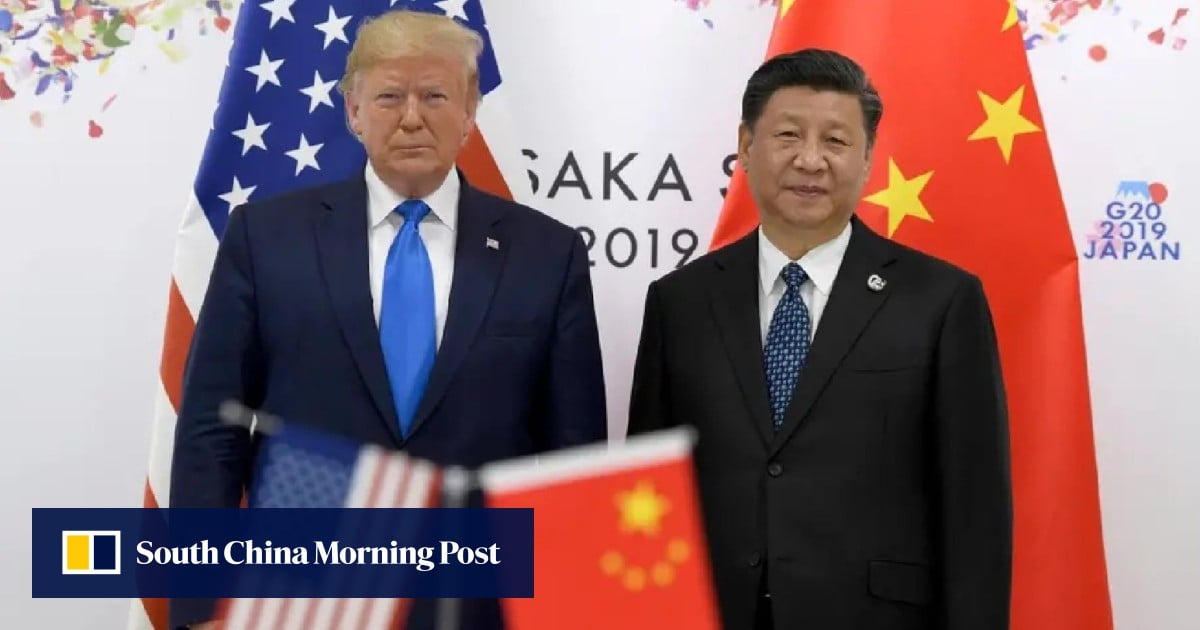
Washington D.C. – A recent Supreme Court ruling striking down broad tariffs imposed by the Trump administration is reshaping the dynamics ahead of President Trump’s planned visit to Beijing from March 31 to April 2, analysts say. The decision, delivered on Friday, February 21, 2026, has demonstrably weakened the US negotiating position, offering China increased leverage as the two nations seek to navigate ongoing trade tensions and address critical issues like Taiwan. This shift comes as both countries appear to be prioritizing economic stability, setting the stage for a summit focused on maintaining a fragile truce rather than achieving sweeping concessions.
The Supreme Court’s ruling centered on the legality of President Trump’s use of the International Emergency Economic Powers Act (IEEPA) to justify the imposition of tariffs on hundreds of billions of dollars worth of Chinese goods. The court found that the administration had improperly invoked the act, designed for national security emergencies, to pursue broader economic objectives. This legal setback significantly curtails the US’s ability to unilaterally impose tariffs as a negotiating tactic, a cornerstone of the previous administration’s trade strategy. The ruling effectively clips the wings of a key economic policy tool, according to Wendy Cutler, senior vice president at the Asia Society Policy Institute and a former US trade representative.
A Shift in the Balance of Power
The timing of the ruling is particularly significant, occurring just weeks before President Trump’s trip to China. Experts suggest that Beijing is now in a stronger position to push its agenda, which is widely expected to include seeking reduced US support for Taiwan. China’s Commerce Ministry has stated It’s currently assessing the impact of the Supreme Court’s decision, signaling a careful consideration of how to leverage the novel circumstances. The ruling has lowered effective tariffs for China, bringing them closer to parity with other trading partners, and bolstering its position in negotiations.
According to Sara Schuman, a former senior trade representative for China at the Office of the US Trade Representative, China’s effective tariff rate has fallen to around 15 percent from approximately 20 percent following last year’s meeting in Busan. This leveling of the playing field is expected to be a key point of discussion during the upcoming summit. Schuman suggested that the administration may attempt to re-establish a differential in tariff rates to regain some negotiating leverage, but this will require careful maneuvering.
Rare Earths and Critical Minerals: A Key Area of Leverage
Beyond tariffs, China’s control over critical minerals, particularly rare earth elements, adds another layer of complexity to the negotiations. These minerals are essential components in a wide range of high-tech products, including smartphones, electric vehicles, and defense systems. China currently dominates the global supply chain for rare earths, giving it significant leverage over other nations. As highlighted in a recent YouTube video from the South China Morning Post, China’s dominance in rare earths is facing increasing global scrutiny, with countries seeking to diversify their supply sources. This strategic importance is likely to be a central theme during the summit, with the US seeking assurances of continued access to these vital materials.
The US has been actively pursuing strategies to reduce its reliance on China for critical minerals, including investing in domestic mining and processing capabilities and forging partnerships with other countries. However, these efforts are still in their early stages, and China remains the dominant player in the short to medium term. The Biden administration has previously expressed concerns about China’s potential to weaponize its control over rare earths, using it as a tool to exert political pressure.
The Busan Meeting and the Fragile Truce
The groundwork for the upcoming summit was laid during a meeting in Busan in 2025, where both sides agreed to a fragile truce in the trade war. This truce involved a commitment from China to increase purchases of US agricultural products and energy, although the US agreed to roll back some of the tariffs imposed during the Trump administration. However, the truce has been subject to periodic tensions, and the Supreme Court’s ruling adds a new element of uncertainty. The agreement reached in Busan, while a step in the right direction, did not address the underlying structural issues that led to the trade war in the first place, such as intellectual property theft and forced technology transfer.
What to Expect from the Beijing Summit
Analysts predict that the Beijing summit will likely focus on extending the existing truce rather than achieving any major breakthroughs. Both sides appear to be prioritizing stability and avoiding further escalation of trade tensions. Given the weakened negotiating position of the US, it is unlikely that President Trump will be able to secure significant concessions from China. Instead, the summit is expected to yield a series of incremental agreements aimed at managing the relationship and preventing a further deterioration in trade ties.
Shi Yinhong, a professor of international relations at Renmin University in Beijing, noted that while the Supreme Court ruling weakens Trump’s trade leverage, it doesn’t automatically guarantee a more advantageous outcome for China. Beijing will demand to demonstrate a willingness to make concessions that Trump can present as a success, he explained. This suggests that the summit will be characterized by careful diplomacy and a focus on finding areas of mutual interest. The success of the summit will hinge on both sides’ ability to manage expectations and avoid inflammatory rhetoric.
The upcoming visit marks President Trump’s first trip to China since 2017. Xi Jinping is similarly expected to visit Washington later this year, signaling a continued effort to maintain dialogue and manage the complex relationship between the two superpowers. The long-term implications of the Supreme Court’s ruling and the outcome of the Beijing summit remain to be seen, but they are likely to shape the trajectory of US-China relations for years to come.
Key Takeaways
- The Supreme Court ruling against President Trump’s tariffs has significantly weakened the US negotiating position ahead of the April summit with China.
- China is now in a stronger position to push its agenda, potentially including seeking reduced US support for Taiwan.
- The summit is expected to focus on extending the existing trade truce rather than achieving major breakthroughs.
- China’s control over critical minerals, such as rare earths, adds another layer of complexity to the negotiations.
- Both sides appear to be prioritizing economic stability and avoiding further escalation of trade tensions.
Looking ahead, the focus will be on the details of any agreements reached during the Beijing summit and how effectively they are implemented. The next key date to watch is April 2, 2026, when President Trump is scheduled to conclude his visit to China. Further updates and analysis will be provided as they become available. We encourage readers to share their thoughts and perspectives on this evolving situation in the comments below.
Worth a look
- Paramount-Warner Antitrust Trial: California Attorney General Seeks April Start Date
- Swedish Retail Investors: Top Stocks and Funds Bought and Sold in July
- Africa Trade Grows to $1.5 Trillion as Intra-Continental Commerce Rises (time.news)
- Phoenix Interstate 10 Street Improvements Completed Ahead of Schedule (newsdirectory3.com)