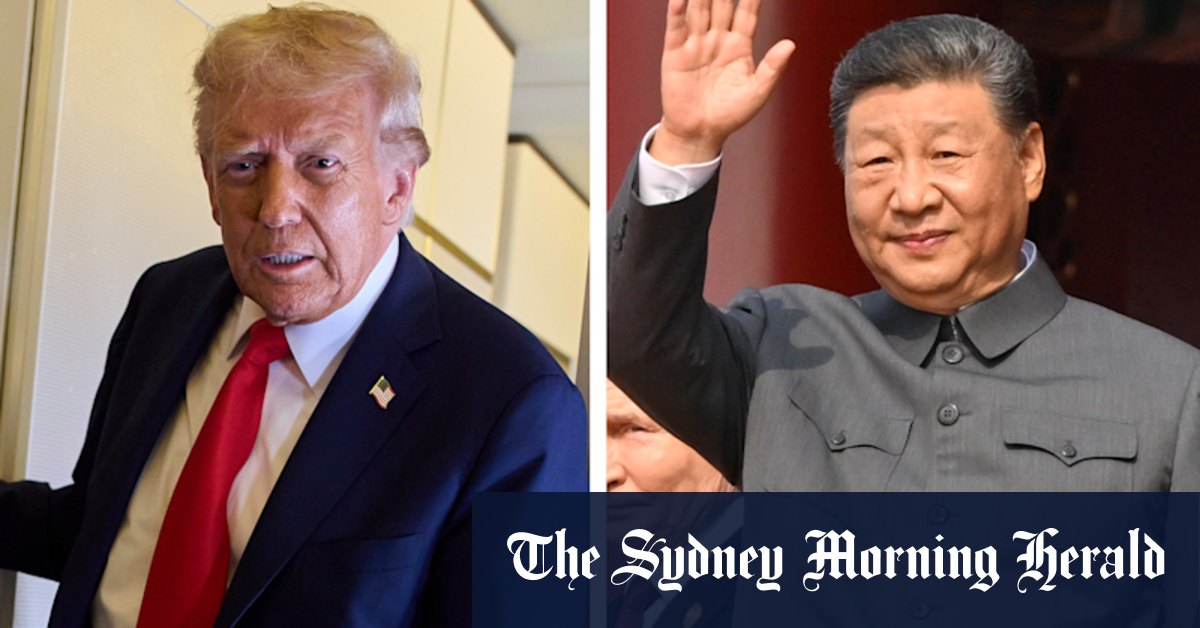
US-China Trade Talks: navigating TikTok, Fentanyl, and a High-Stakes Tech War
The delicate balance of US-China trade relations remains under intense scrutiny as negotiations continue, punctuated by cautious optimism and deeply entrenched challenges. Recent developments, including signals regarding TikTok’s future and ongoing discussions over export controls and trade imbalances, highlight the complexity of managing the world’s two largest economies. This article provides a complete overview of the current state of play, dissecting the key issues, past context, and potential pathways forward.
Xi Jinping Signals Acceptance of TikTok Restructuring
In a recent phone call, Chinese President Xi Jinping indicated his government’s willingness to accept a restructuring of TikTok’s US operations, a move that could avert a potential ban. Xi reiterated China’s commitment to fostering a business environment governed by “market rules” and compliant with Chinese law, while also emphasizing the need for reciprocal treatment of Chinese companies investing in the US. This statement represents a significant, though carefully worded, concession.
The proposed restructuring, as reported by The Wall Street Journal, centers around creating a new US entity to operate TikTok, with ByteDance – TikTok’s parent company – reducing its ownership stake to under 20%. The remaining 80% would be controlled by a combination of new investors and existing backers. While Xi’s approval is a crucial step, the devil remains in the details. Triumphant implementation hinges on satisfying US national security concerns, particularly regarding data privacy and potential Chinese government influence.
Beyond TikTok: A Multifaceted Trade Dispute
The TikTok issue, while prominent, is merely one facet of a broader and more complex trade dispute. Four rounds of talks between US and Chinese officials, held in Europe between May and September, have revealed several persistent sticking points:
* Fentanyl Precursors: The US is pressing China to considerably curb the export of chemicals used in the production of fentanyl, a highly potent opioid fueling a devastating addiction crisis in the United States.This demand stems from concerns that Chinese companies are knowingly or unknowingly supplying the raw materials for illicit fentanyl production.
* Trade Imbalance & US Goods: A longstanding US grievance is the significant trade deficit with China. The US seeks increased purchases of American goods,particularly agricultural products like soybeans,to address this imbalance. Former President Trump’s focus on this issue continues to resonate within the current administration.
* Semiconductor & AI Chip Competition: The rivalry in advanced technologies, particularly semiconductors and artificial intelligence, is escalating. The US has imposed export controls on advanced chips to limit China’s technological advancement, while China is investing heavily in its domestic semiconductor industry. The recent lifting of an export ban on Nvidia’s H20 chip by the Trump administration was quickly followed by a Chinese anti-monopoly examination into Nvidia, illustrating the tit-for-tat nature of this competition.
* Tariffs & Export Controls: The current negotiations are occurring under a temporary truce, with 90-day extensions to tariffs and a pause on certain export controls. This arrangement was brokered after the Trump administration imposed tariffs of up to 145% on Chinese imports, triggering retaliatory measures from Beijing, including tariffs and an export ban on rare earth minerals - critical components in numerous high-tech products.
A History of Escalation and De-escalation
The current trade tensions are rooted in a history of escalating tariffs and retaliatory measures. The Trump administration’s aggressive trade policies, initiated in 2018, fundamentally altered the US-China economic relationship. Beyond tariffs, the US also restricted access to chip design software, jet engine parts, and implemented stricter student visa regulations.
The May agreement to step back from the brink – lowering US tariffs to 30% and China’s to 10% – provided a crucial window for negotiation. Though, the November deadline for the current 90-day extension looms large, adding urgency to the ongoing talks. Failure to reach a more comprehensive agreement could lead to a renewed escalation of trade hostilities.
Expert Analysis: The Path Forward
The current negotiations represent a critical juncture in US-China relations. While Xi Jinping’s stance on TikTok offers a potential resolution to one key issue, the broader trade dispute remains deeply complex. Several factors will influence the outcome:
* Domestic Political Considerations: Both the US and China face domestic political pressures that shape their negotiating positions. In the US, concerns about national security, job losses, and the trade deficit are paramount. in China, maintaining economic stability and technological sovereignty are key priorities.
* Geopolitical Landscape: The broader geopolitical landscape, including tensions over Taiwan