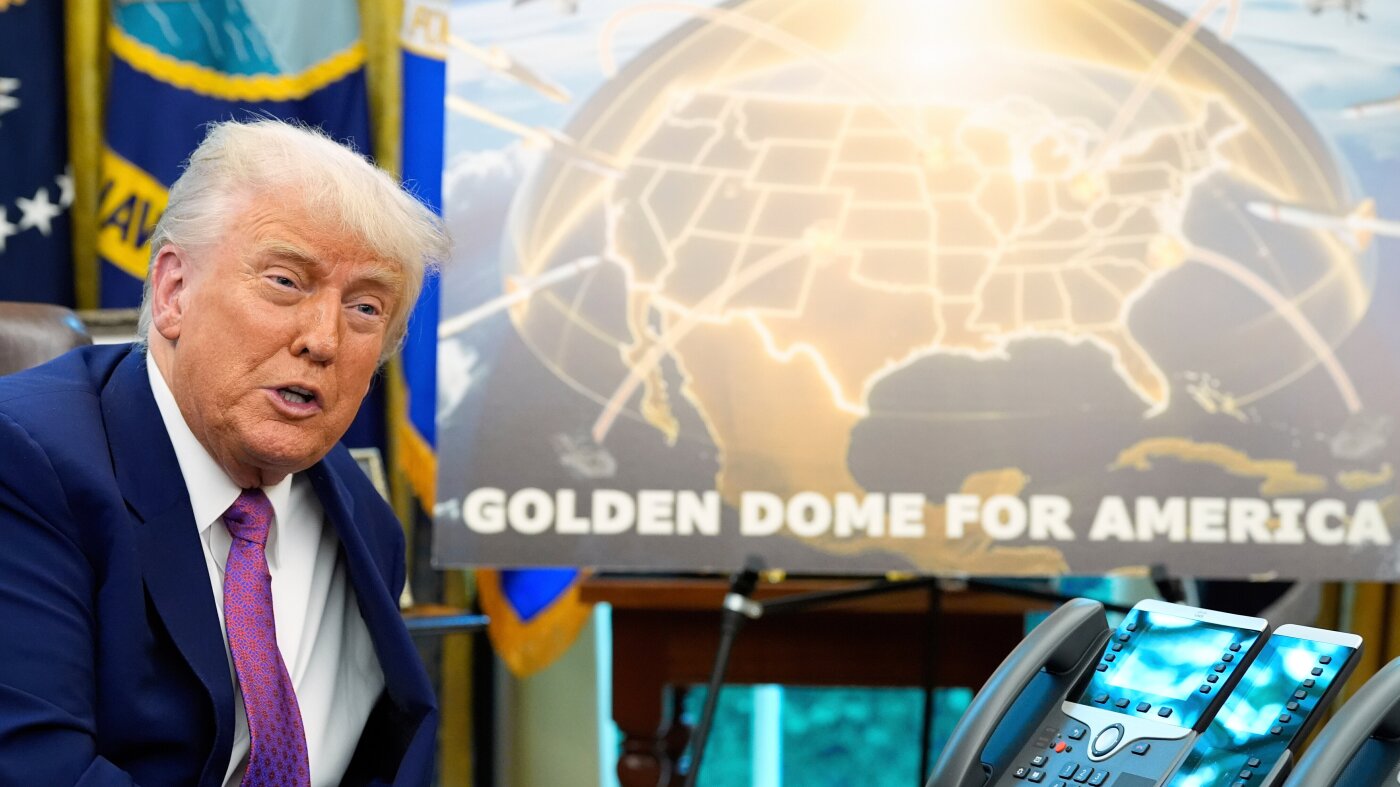
The Trillion-Dollar Shield: New Analysis Projects Massive Costs for Trump’s ‘Golden Dome’ Missile Defense
The financial scale of the administration’s most ambitious national security project is facing a significant reality check. New projections suggest that Trump’s Golden Dome missile defense program, a space-based initiative designed to intercept threats before they reach American soil, could require a staggering investment of $1.2 trillion over the next two decades.
This latest figure, released in a recent analysis by the nonpartisan Congressional Budget Office (CBO), represents a massive escalation from the initial estimates provided by the White House. While the administration previously suggested a price tag in the region of $175 billion, the CBO’s long-term forecast suggests the actual cost of implementing and maintaining such a sophisticated technological shield could be nearly seven times higher.
The discrepancy highlights the immense complexity of deploying a permanent defensive architecture in space. As the administration pushes for rapid implementation, the fiscal implications of the “Golden Dome for America” are becoming a central point of debate for both policymakers in Washington and international observers monitoring shifts in global defense spending.
A Massive Fiscal Gap: $175 Billion vs. $1.2 Trillion
The core of the controversy lies in the widening gap between political rhetoric and economic forecasting. Last year, the administration pitched the missile defense system with an estimated cost of $175 billion. However, the CBO’s report, published this Tuesday, paints a much more expensive picture, estimating a total outlay of $1.2 trillion over a 20-year period.

the CBO has characterized its findings as an “illustrative approach” rather than a definitive estimate of a specific administration proposal. This distinction is crucial; it suggests that the $1.2 trillion figure is a projection based on the technical requirements of such a system, rather than a line-item budget submitted by the White House.
The vast difference in these numbers underscores the difficulty of budgeting for “frontier” technologies. Space-based defense systems involve not just the initial launch of hardware, but the continuous development of interceptors, satellite maintenance, and the integration of advanced tracking software—all of which are subject to inflationary pressures and evolving technological demands.
Strategic Necessity and the Evolving Threat Landscape
Despite the mounting costs, the administration remains committed to the program. The “Golden Dome” was formally ordered via an executive order during the first week of the current term. The administration’s push for the system is driven by what it describes as a fundamental shift in global military capabilities.
In the executive order justifying the program, President Trump emphasized the escalating risks posed by modern weaponry. He noted that over the last 40 years, the threat from next-generation strategic weapons has not diminished but has instead become “more intense and complex.”
A primary driver for the program is the rapid development of advanced delivery systems by what the administration classifies as “peer and near-peer adversaries.” To counter these sophisticated threats, the administration argues that a traditional ground-based defense is no longer sufficient, necessitating a move toward a space-based interceptor architecture.
The Challenge of Deployment and Information Gaps
One of the primary reasons for the high cost projected by the CBO is the current lack of granular detail regarding the program’s execution. The CBO report explicitly stated that a lack of specific details from the Department of Defense (DoD) regarding the exact nature and quantity of the systems to be deployed makes it “impossible to estimate the long term cost” with absolute precision.
The ambiguity surrounding the program covers several critical areas:
- The Number of Interceptors: It remains unclear how many interceptor units will be stationed in orbit to ensure comprehensive coverage.
- Deployment Strategy: The specific orbital paths and the method of satellite deployment remain largely undefined.
- Technological Specifications: The exact capabilities of the “next-generation” interceptors have not been fully disclosed to budget analysts.
This information vacuum has forced analysts to rely on high-end modeling, which naturally leans toward the more expensive side of the spectrum to ensure all potential contingencies are covered.
Timeline for Implementation: The 2029 Goal
The administration has set an aggressive timeline for the “Golden Dome.” President Trump has expressed the expectation that the system will be “fully operational before the end of my term,” which is scheduled to conclude in January 2029.

Achieving full operational capability in such a condensed timeframe presents a dual challenge: a technical hurdle and a logistical one. Building, testing, and launching a constellation of space-based weapons systems within a few years requires unprecedented coordination between the Department of Defense, private aerospace contractors, and intelligence agencies.
The rush to meet the 2029 deadline may also contribute to the high costs, as rapid procurement and accelerated development cycles often command a premium in the defense industry.
Key Takeaways: The Golden Dome Project
| Feature | Administration Estimate | CBO Projection |
|---|---|---|
| Total Estimated Cost | $175 Billion | $1.2 Trillion |
| Timeframe | Not specified | 20 years |
| Primary Objective | Space-based missile defense | Space-based missile defense |
| Key Justification | Countering peer/near-peer threats | Countering peer/near-peer threats |
As the debate over the “Golden Dome” intensifies, the focus will likely shift toward the Department of Defense’s upcoming budgetary requests. Until the DoD provides more specific details regarding the quantity and type of systems intended for deployment, the true cost of this massive national security endeavor remains a subject of significant uncertainty.
We will continue to monitor official Department of Defense filings and upcoming Congressional budget hearings for more specific details on the Golden Dome deployment.
What are your thoughts on the projected costs of this missile defense system? Should national security priorities take precedence over these fiscal concerns? Let us know in the comments below and share this article with your network.
Keep reading