
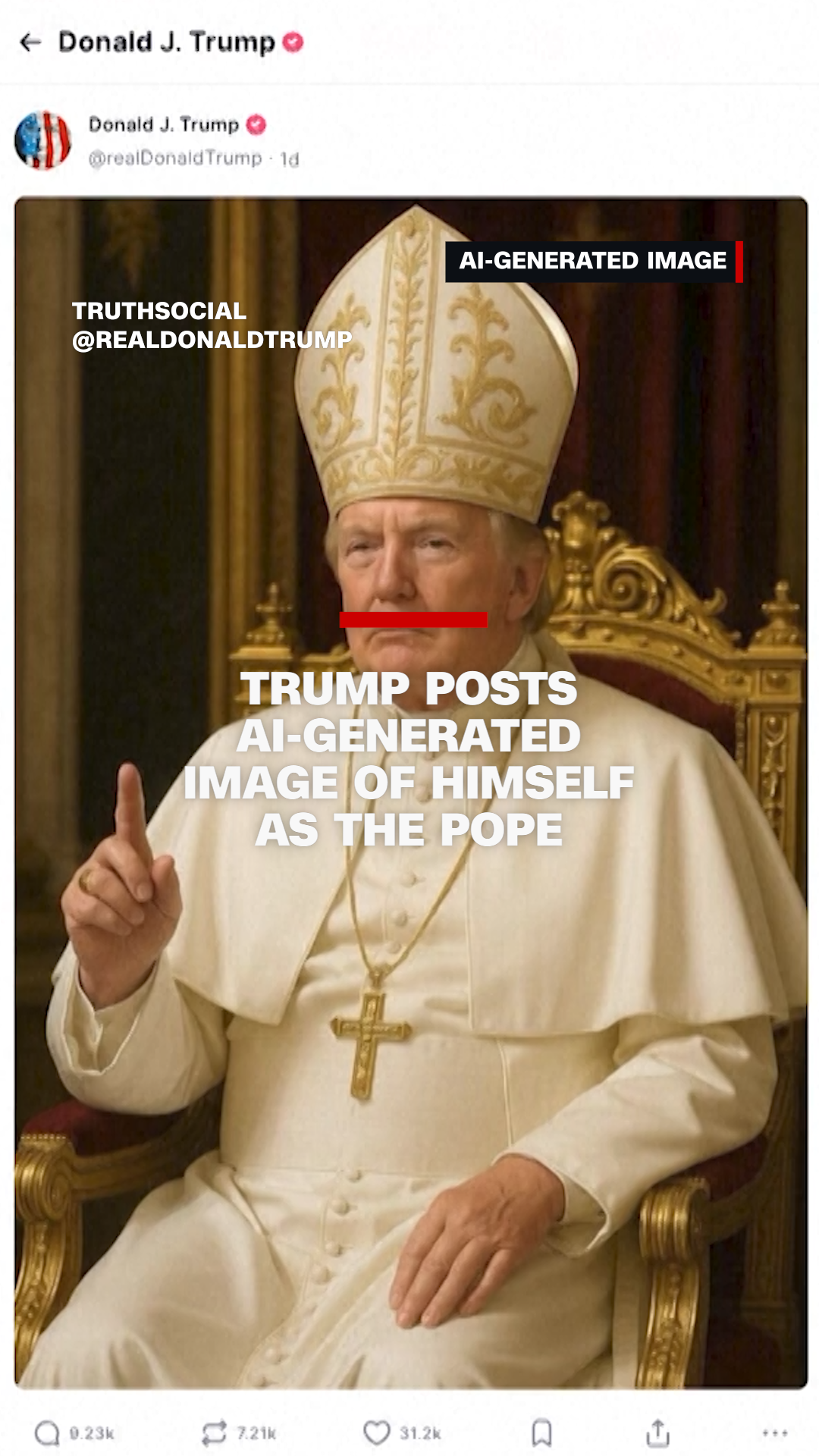
Donald Trump has sparked a global conversation regarding the intersection of political power, artificial intelligence, and religious imagery. On Sunday, April 12, the former president shared an AI-generated image on Truth Social that depicted him as a Jesus-like figure People.
The post arrived amidst a escalating public disagreement between Mr. Trump and Pope Leo. The use of artificial intelligence to create a portrayal of himself as Jesus Christ followed a series of criticisms Mr. Trump directed toward the Pope YouTube.
The incident has drawn significant attention from both political analysts and religious leaders, highlighting the volatile nature of AI-generated content in modern political communication. While the image was initially presented as a bold statement, it quickly became a flashpoint for controversy.
The Truth Social Post and AI Imagery
The controversy began when Mr. Trump utilized AI technology to produce and share a visual representation of himself as a Jesus-like figure. This Trump AI image of himself as Jesus was posted to his Truth Social account on Sunday, April 12 People.
The image served as a digital extension of Mr. Trump’s ongoing friction with the Vatican. By adopting the likeness of a central religious figure, the post appeared to challenge the traditional authority of the papacy during a period of heightened tension.
Conflict with Pope Leo
The digital portrayal was not an isolated event but rather the culmination of a feud. Mr. Trump had previously criticized Pope Leo, with reports indicating he accused the pontiff of catering to the “radical left” WSJ.
Pope Leo responded to the tensions with a firm stance on his own autonomy and the nature of his office. In a direct response to Mr. Trump, the Pope stated, “I have no fear of the Trump administration” WSJ.
Backlash and Deletion of the Image
The reaction to the AI-generated image was swift and largely critical. The portrayal of a political figure as a divine entity provoked significant backlash across social media and within religious communities.

Following this wave of criticism, Mr. Trump deleted the image from his Truth Social account WSJ. The removal of the post suggests a recognition of the intensity of the response, though it does not erase the discourse surrounding the use of synthetic media to project religious authority.
Key Takeaways
- Event: Donald Trump posted an AI-generated image of himself as a Jesus-like figure on April 12.
- Platform: The image was shared via Truth Social.
- Context: The post followed a feud in which Mr. Trump criticized Pope Leo.
- Response: Pope Leo stated he had “no fear of the Trump administration.”
- Outcome: The image was deleted following significant public backlash.
As the digital landscape continues to evolve, the use of AI to create provocative political and religious imagery remains a contentious issue. The rapid creation and dissemination of such content can intensify existing political divides and challenge traditional institutional norms.
At this time, there are no further scheduled official statements from the Vatican or the Trump camp regarding this specific incident. We will continue to monitor for any updated filings or official responses.
What are your thoughts on the use of AI in political messaging? Share your views in the comments below and share this story with your network.