
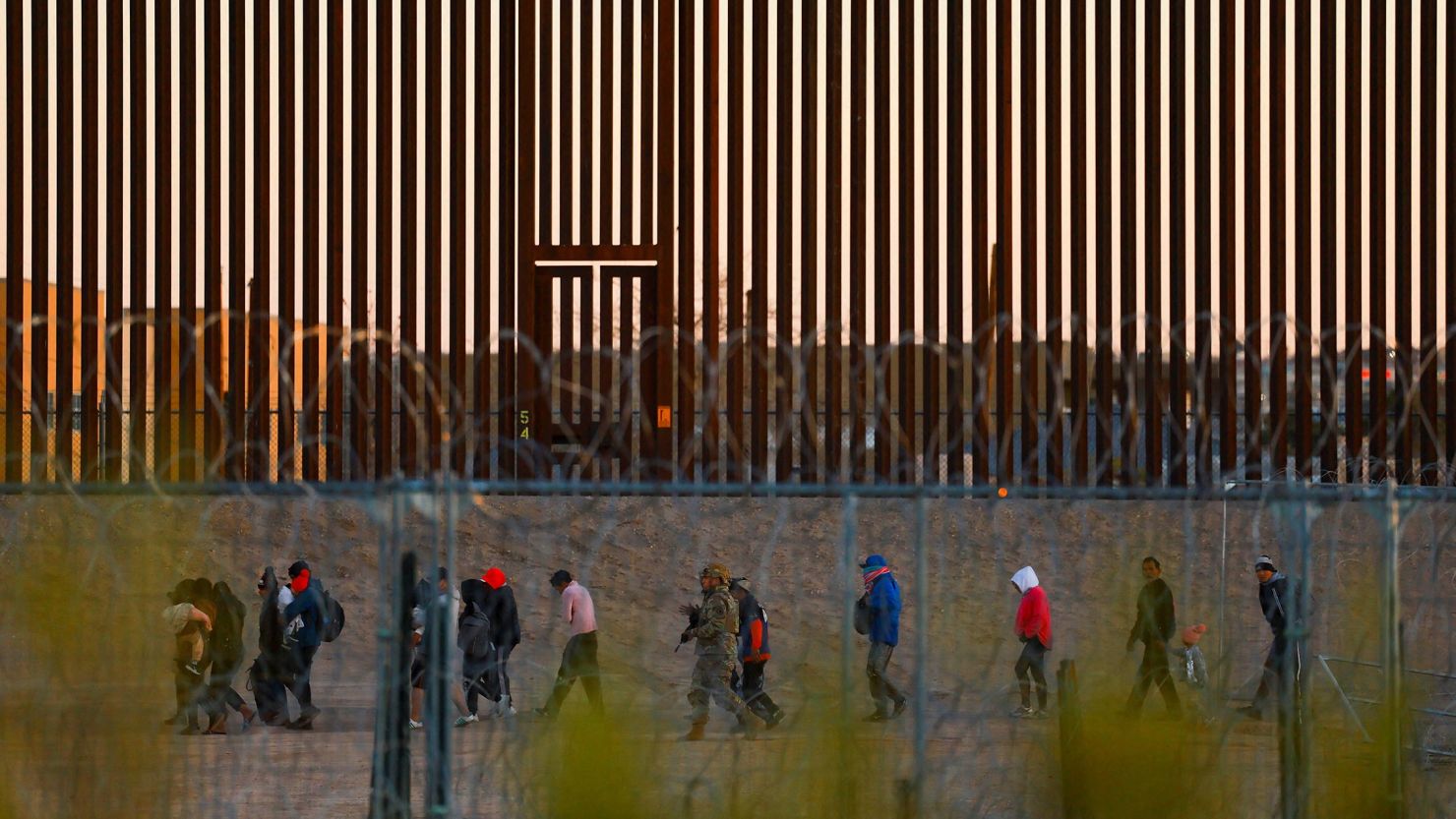
On April 24, 2026, reports emerged from Latin American media outlets indicating that Mexican authorities had rejected an attempt by the Trump administration to restrict asylum access at the U.S.-Mexico border. The development occurred amid ongoing diplomatic tensions between Washington and Mexico City over migration policy, with both nations exchanging formal complaints following a violent incident in northern Mexico that resulted in the deaths of two U.S. Law enforcement agents.
The incident in question took place on April 20, 2026, when a convoy of Mexican state police returning from an operation targeting synthetic drug laboratories in Chihuahua was ambushed. According to official statements from Mexican authorities cited in regional news reports, the attack resulted in the fatalities of two U.S. Agents who were participating in the mission as part of bilateral security cooperation. The event prompted immediate diplomatic friction, with the U.S. Expressing concern over the safety of its personnel operating in Mexican territory and Mexico calling for a full investigation into the circumstances surrounding the ambush.
In response to the killings, U.S. Officials reportedly explored unilateral measures to strengthen border controls, including potential restrictions on asylum seekers arriving from Mexico. But, Mexican government representatives formally objected to any such actions, asserting that migration policy decisions affecting cross-border movement must be made through bilateral consultation and cannot be imposed unilaterally by the United States. This position was reiterated in public statements by Mexican foreign affairs officials, who emphasized national sovereignty and the importance of mutual respect in managing shared border challenges.
The broader context of U.S.-Mexico relations in early 2026 has been shaped by competing priorities on security, trade, and migration. While both countries maintain deep economic integration under the United States-Mexico-Canada Agreement (USMCA), disagreements have persisted over how to address transnational crime, particularly the flow of synthetic opioids like fentanyl into U.S. Communities. Mexican authorities have repeatedly pointed to U.S. Demand as a key driver of drug production within their borders, while American officials have urged greater interdiction efforts south of the border.
Migration remains another persistent point of negotiation. Despite a decline in apprehensions at the Southwest Border compared to peak years, the U.S. Continues to process tens of thousands of asylum claims monthly, many originating from Central American and Mexican nationals fleeing violence or economic hardship. The Trump administration’s approach to border management has included efforts to limit access to asylum procedures, arguing that current systems are vulnerable to abuse. These efforts have faced legal challenges in U.S. Courts and resistance from international partners who argue such measures violate refugee protection obligations under international law.
Mexico, for its part, has maintained a policy of offering humanitarian visas and temporary protection to individuals in transit, while similarly cooperating with U.S. Authorities on deportation flights for those found ineligible for refuge. This dual approach reflects Mexico’s attempt to balance its role as a transit country with its responsibilities under regional migration frameworks. However, tensions flare whenever either nation perceives the other as acting outside agreed-upon protocols, particularly when actions are perceived as unilateral.
As of late April 2026, no official announcement had been made by the U.S. Department of Homeland Security or the Executive Office of the President regarding a formal policy change to restrict asylum at the Mexican border. Similarly, Mexico’s Secretariat of Foreign Affairs had not issued a public statement confirming receipt of a specific proposal from Washington, though diplomatic channels remained active. Observers noted that any significant shift in asylum policy would likely trigger immediate legal scrutiny within the U.S. System, given existing court precedents limiting executive authority over immigration procedures.
The situation underscores the complexity of managing one of the world’s most active international borders, where security concerns, humanitarian obligations, and domestic political pressures intersect. Analysts suggest that sustainable progress will require not only enhanced intelligence sharing and joint operations against criminal networks but also long-term investment in addressing the root causes of migration in origin communities. Until such measures take effect, diplomatic friction over border governance is likely to persist, with each incident testing the resilience of bilateral cooperation mechanisms.
For ongoing developments, readers are encouraged to consult official updates from the U.S. Department of State, the Mexican Ministry of Foreign Affairs, and reputable international news organizations that maintain bureaus in both Washington, D.C., and Mexico City. These sources provide the most reliable information on policy shifts, diplomatic exchanges, and security operations affecting the U.S.-Mexico relationship.
As this story continues to evolve, the importance of verified reporting cannot be overstated. In an environment where misinformation can spread rapidly, particularly around emotionally charged topics like border security and migration, relying on authoritative sources helps ensure public understanding is grounded in fact rather than speculation.
Stay informed. Share this article to support others access accurate, context-rich reporting on global affairs.