
Trump Endorsement Power On Display As South Carolina GOP Governor Race Nears Decision
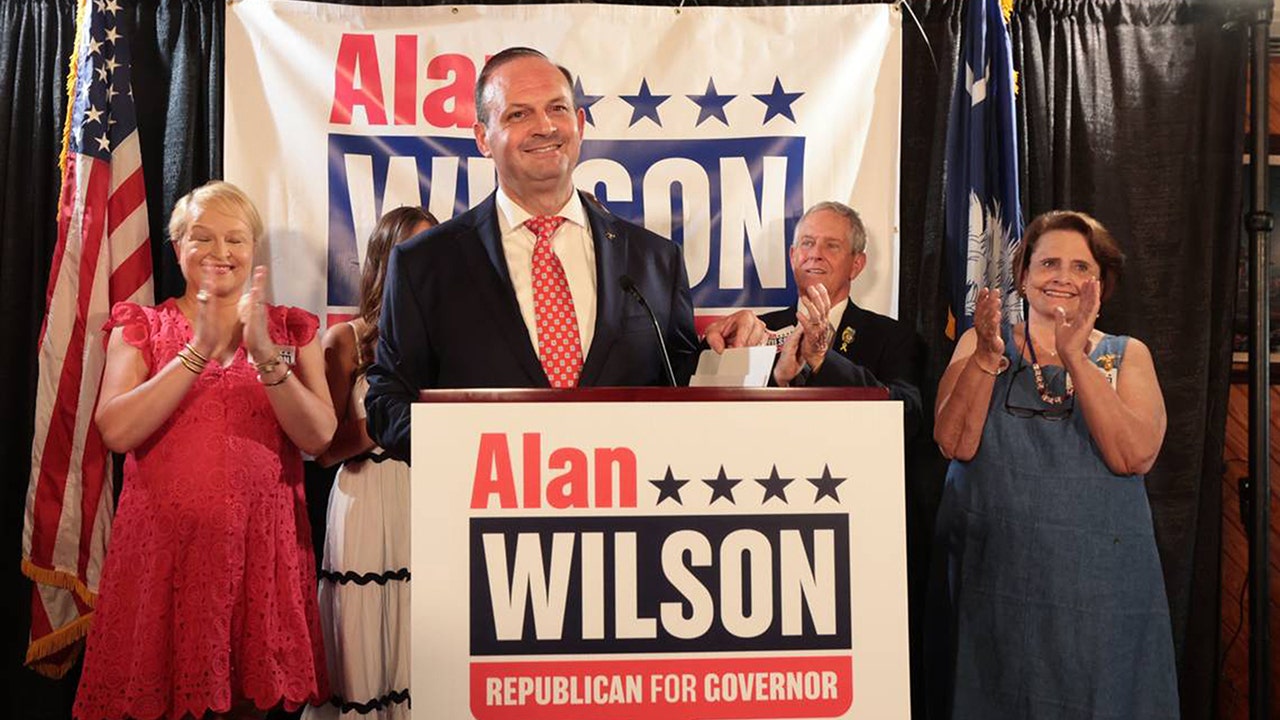
Former President Donald Trump’s dual endorsement strategy in South Carolina’s GOP gubernatorial runoff has secured victory for Attorney General Alan Wilson, who defeated Lieutenant Governor Pamela Evette to capture the Republican nomination for governor. The result underscores Trump’s continued influence over the Republican Party, even as his endorsement power faces occasional setbacks in other states.
Wilson’s victory in Tuesday’s runoff election was announced just 26 minutes after polls closed, according to the Associated Press. The race to succeed term-limited Governor Henry McMaster marks the latest test of Trump’s political clout, particularly after his controversial decision to endorse both candidates in what analysts described as a “hedging” strategy. With no candidate securing a majority in the June 9 primary, Evette and Wilson advanced to the runoff, where Wilson emerged victorious with 53% of the vote to Evette’s 47%.
The unusual scenario of Trump endorsing both candidates—first Evette on June 2, then Wilson on June 17—created political chaos. Evette, who had led the primary with 30% of the vote, framed herself as an outsider and businesswoman, while Wilson, the state’s attorney general, emphasized his experience as a prosecutor and combat veteran. The runoff debate between the two candidates grew heated, with both accusing each other of misrepresenting their records.
Wilson’s campaign highlighted his tenure as attorney general, where he oversaw criminal prosecutions and law enforcement policies, while Evette argued that her role as lieutenant governor—often seen as ceremonial—provided a broader perspective on governance. The race also featured sharp contrasts in fundraising, with Wilson receiving backing from Senator Ted Cruz a week before Trump’s endorsement, while Evette was supported by outgoing Governor McMaster.
Key Facts in the South Carolina GOP Governor Race
- Wilson’s Victory: Attorney General Alan Wilson won the runoff with 53% of the vote, defeating Pamela Evette, who had 47%. Results were certified by the South Carolina Election Commission here.
- Trump’s Dual Endorsement: Trump endorsed Evette on June 2, then Wilson on June 17, a move described by political analysts as an attempt to “hedge his bets.”
- Primary Results: Evette led the June 9 primary with 30% of the vote, followed by Wilson with 25%. The field included Reps. Nancy Mace, Ralph Norman, and businessman Rom Reddy.
- General Election Outlook: Wilson is now the clear favorite to win the general election against Democratic nominee Jermaine Johnson, a state representative. The last Democrat to win a gubernatorial race in South Carolina was in 1994.
- Fundraising Disparity: Evette’s campaign raised $5.2 million, while Wilson’s campaign raised $3.8 million, according to OpenSecrets.
Why Trump’s Endorsement Strategy Matters in South Carolina
Trump’s dual endorsement in South Carolina is part of a broader pattern where his political backing has reshaped Republican primaries across the U.S. Over the past two months, Trump-backed candidates have won high-profile races in Indiana, Louisiana, Kentucky, and Texas, often ousting incumbent officeholders. However, his endorsement power is not invincible—three weeks ago, his late support for Iowa Republican Randy Feenstra failed to secure victory against businessman Zach Lahn, who was backed by the Make America Healthy Again (MAHA) movement and Turning Point USA.
The South Carolina runoff is particularly significant because it follows a string of victories for Trump-aligned candidates in Georgia and Alabama last week. In Alabama, Rep. Barry Moore defeated former Navy SEAL Jared Hudson in the Senate runoff, while in Georgia, Rep. Mike Collins secured a victory over former college football coach Derek Dooley. These wins are critical for the GOP’s hopes of maintaining control in the Senate during the midterm elections.
Yet, not all Trump-endorsed candidates have succeeded. In Georgia’s gubernatorial runoff, Trump-backed Lt. Gov. Burt Jones lost to Rick Jackson, who outspent his opponent by a record margin, spending over $100 million—comparable to the campaigns of billionaire donors in larger states. A Trump political operative attributed Jackson’s victory to his aggressive spending and messaging, noting that the race was “not really a referendum on Trump.”
The mixed results highlight the evolving dynamics of Trump’s influence. While his endorsements continue to move the needle in many races, they are no longer a guarantee of victory, particularly when opponents can match or exceed his candidates in funding and grassroots support.
Who Are the Candidates and What Do They Stand For?
Alan Wilson: A 52-year-old attorney general and former prosecutor, Wilson has positioned himself as a law-and-order candidate with a strong conservative record. He served in the U.S. Marine Corps and has been a vocal supporter of Trump’s policies, including immigration enforcement and criminal justice reforms. Wilson’s campaign emphasized his experience in executive leadership, contrasting it with Evette’s role as lieutenant governor, which he described as largely ceremonial.

Pamela Evette: A 58-year-old businesswoman and former lieutenant governor, Evette framed her campaign as an outsider’s challenge to the political establishment. She has been a longtime Trump ally, traveling to campaign events and fundraising for his campaigns. Evette’s platform focused on economic development and reducing regulations, appealing to business owners in South Carolina.
The two candidates clashed in their final debate, with Wilson accusing Evette of lacking executive experience, while Evette countered that Wilson was a “career politician” who had failed to deliver on key promises. Their rivalry underscored the divisions within the South Carolina GOP, where Trump’s endorsement of both candidates created confusion among voters.
“The president had a lot of confidence in me when it was a crowded field, and I won it for him on June 9. I’m going to win it for him again on June 23.”
“I’ve been fighting and defending his agenda for the better part of a decade, and to have the president reflect that understanding in his endorsement a few days ago means so much to me.”
What Happens Next in the General Election?
With Wilson now the Republican nominee, the general election against Democratic state Rep. Jermaine Johnson will be closely watched. Johnson, a 42-year-old former teacher and community activist, has positioned himself as a progressive alternative in a state where Democrats have not won a gubernatorial race since 1994. His campaign has focused on healthcare, education, and economic equity, contrasting with Wilson’s conservative platform.
The general election is expected to be competitive, particularly in urban areas like Charleston and Columbia, where Johnson has strong support. However, South Carolina remains a deeply conservative state, and Wilson’s experience as attorney general and his ties to Trump could give him an edge in rural and suburban districts.
The outcome of this race will have broader implications for the GOP. A Wilson victory would reinforce Trump’s influence in the party, while a Johnson win could signal shifting dynamics in South Carolina’s politics. Additionally, the race is part of a larger trend where Trump’s endorsements are being tested in states with growing diversity and urban populations.
For updates on the general election campaign, voters can track official filings and debate schedules through the South Carolina Election Commission. The general election is scheduled for November 5, 2024.
How Trump’s Endorsement Power Compares to Past Elections
Trump’s ability to influence Republican primaries has been a defining feature of his political legacy. In 2016, his endorsements helped propel candidates like Wisconsin Governor Scott Walker and Indiana Senator Todd Young to victory. During his presidency, his backing was credited with boosting the careers of figures like Texas Senator Ted Cruz and Florida Governor Ron DeSantis.

However, the effectiveness of Trump’s endorsements has varied. In 2020, some of his endorsed candidates lost primary races, including in South Carolina’s Senate race, where incumbent Lindsey Graham faced a challenge from conservative activist Katie Arrington. This year, his mixed results—winning in Alabama and Georgia but losing in Georgia’s gubernatorial race—suggest that his influence is evolving.
Political scientists attribute Trump’s continued sway to his ability to mobilize his base, particularly through social media and grassroots organizing. However, they also note that opponents can now counter his influence with significant funding and alternative messaging, as seen in Georgia’s gubernatorial race.
For a deeper analysis of Trump’s political strategy, readers can explore the Brookings Institution’s research on modern campaign dynamics or the Pew Research Center’s data on voter behavior in primaries.
What This Means for the 2024 Midterms
The South Carolina gubernatorial race is one of several high-stakes contests that will shape the political landscape ahead of the 2024 midterms. With control of the Senate hanging in the balance, victories like Wilson’s in South Carolina and Collins’ in Georgia are critical for the GOP’s hopes of maintaining its slim majority.
Analysts suggest that Trump’s continued influence in primaries could help the party consolidate its base, but his mixed track record also raises questions about whether his endorsements are sustainable in an era of rising progressive turnout. The general election campaigns in South Carolina and other battleground states will provide further insight into how Trump’s political legacy is being tested.
For readers interested in tracking these races, the Federal Election Commission provides detailed campaign finance reports, while RealClearPolitics offers up-to-date polling data and analysis.
Key Takeaways
- Trump’s Dual Endorsement: His strategy of backing both Evette and Wilson in South Carolina’s runoff highlights the complexities of his political influence, which remains strong but not absolute.
- Wilson’s Victory: The attorney general’s win positions him as the favorite in the general election against Democratic nominee Jermaine Johnson.
- Fundraising and Messaging: While Trump’s endorsements matter, opponents can still win by outspending and crafting compelling narratives, as seen in Georgia’s gubernatorial race.
- Broader Implications: The race is part of a larger trend where Trump’s endorsements are being tested in an evolving political landscape.
- General Election Outlook: South Carolina’s governor race will be a bellwether for the GOP’s ability to retain control in conservative states.
The next major checkpoint in this race will be the general election on November 5, 2024. Voters can track official campaign updates, debate schedules, and polling data through the South Carolina Election Commission and RealClearPolitics. For those interested in the broader implications of Trump’s political strategy, the Brookings Institution and Pew Research Center offer in-depth analysis.
We welcome your insights on this developing story. Share your thoughts in the comments below or on our contact page. For more updates on U.S. politics and elections, subscribe to our newsletter or follow us on X/Twitter.