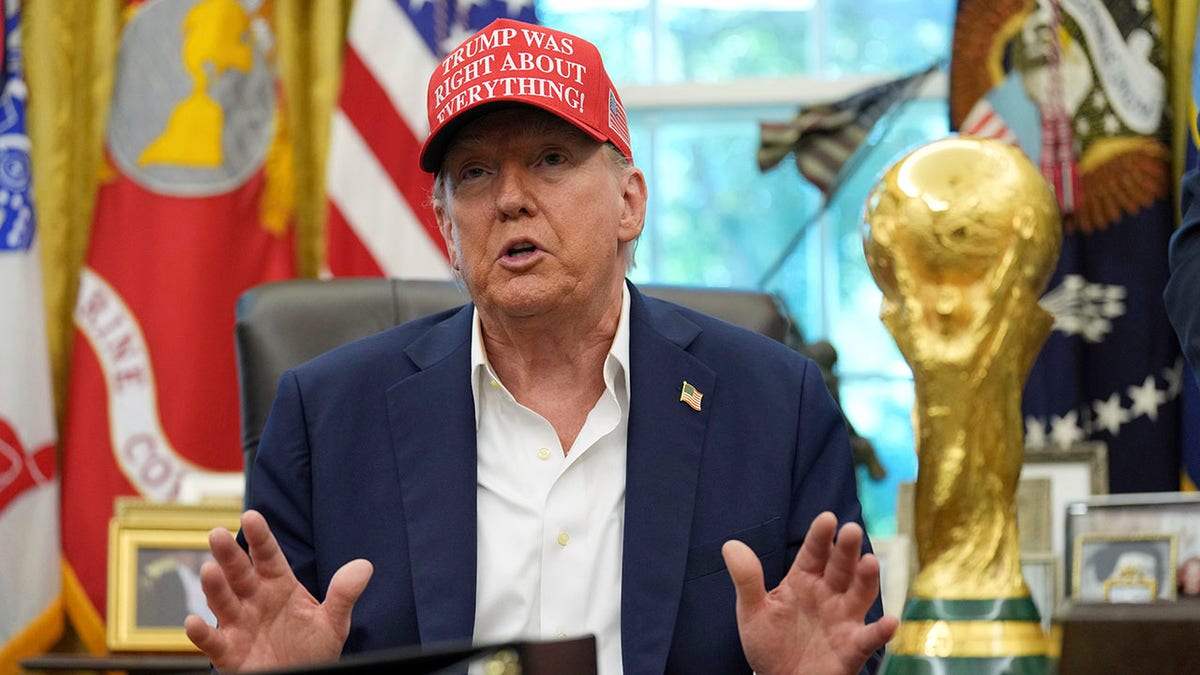
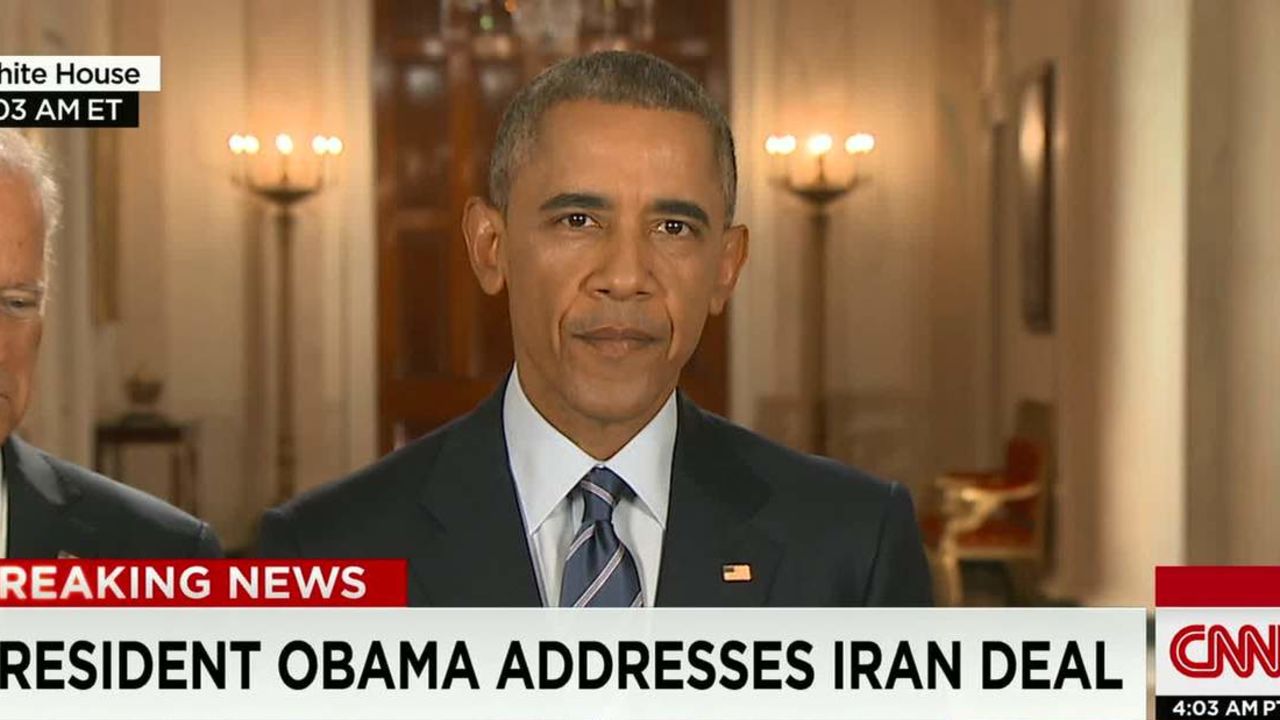
Donald Trump has launched a series of personal and political attacks against former President Barack Obama following reports of a leaked 14-point agreement concerning Iran’s nuclear program. The former president’s comments, which reportedly included profanity, center on the perceived failures of the 2015 Joint Comprehensive Plan of Action (JCPOA) and the current diplomatic efforts to manage Iran’s nuclear capabilities.
According to reports from The New York Times and The Daily Beast, Trump’s recent remarks have focused heavily on his long-standing criticism of the Obama administration’s approach to Middle East diplomacy. The renewed tension follows the circulation of details regarding a 14-point agreement, a development that has resurfaced older criticisms regarding the original 2015 nuclear deal.
The controversy stems from leaked details of a framework that appears to outline specific constraints on Iran’s nuclear activities. While the official status of this 14-point agreement remains unconfirmed by the White House or the State Department, the leak has prompted a significant reaction from Trump, who has frequently utilized the Iran deal as a focal point for his critiques of the previous administration.
The Catalyst: Leaked 14-Point Agreement and Trump’s Response
The recent surge in political rhetoric follows reports from The Independent regarding a leaked 14-point agreement. This document, which has not been officially released by any government body, allegedly outlines a series of technical and political concessions intended to address international concerns over Iran’s nuclear enrichment levels. The leak has caused immediate political friction, providing a new platform for Trump to revisit his opposition to the JCPOA.
In response to these leaks, Trump’s rhetoric has reportedly shifted between defending the necessity of a strong stance and expressing intense personal animosity toward Barack Obama. The New Republic reports that Trump used profane language to describe the former president in direct relation to the “disastrous” nature of the original Iran deal. These comments appear to coincide with the resurgence of Trump’s 2015 social media posts, which originally blasted the Obama administration’s negotiations with Iranian officials.
Political analysts suggest that the focus on the 14-point agreement serves to highlight a recurring theme in Trump’s campaign: the characterization of the Obama era’s foreign policy as fundamentally flawed. By linking the current leaks to the 2015 deal, Trump is attempting to frame the ongoing diplomatic struggle as a continuation of a failed policy lineage.
A History of Hostility: From the 2015 JCPOA to the 2018 Withdrawal
To understand the current friction, it is necessary to examine the timeline of the Iran nuclear negotiations. The original Joint Comprehensive Plan of Action (JCPOA) was reached in July 2015 between Iran and the P5+1—a group consisting of the United States, the United Kingdom, France, China, Russia, and Germany, along with the European Union. The deal was designed to limit Iran’s ability to develop a nuclear weapon in exchange for relief from economic sanctions.
The JCPOA established several key technical requirements, including:
- Limiting uranium enrichment to 3.67% for a period of 15 years.
- Reducing Iran’s stockpile of enriched uranium to 300 kilograms.
- Implementing rigorous, long-term monitoring by the International Atomic Energy Agency (IAEA).
- Restricting the number of centrifuges Iran could operate.
In May 2018, the Trump administration officially withdrew the United States from the JCPOA, citing the deal’s failure to address Iran’s ballistic missile program and its regional influence. This move initiated a period of “maximum pressure,” characterized by the reimposition of heavy economic sanctions designed to cripple Iran’s economy and force a return to the negotiating table under more stringent terms.
The current tension involving the 14-point agreement represents a modern iteration of this decade-long debate. While the 2015 deal focused on nuclear containment, the reported 14-point framework appears to be a response to the vacuum left by the U.S. withdrawal and the subsequent escalation of Iran’s nuclear activities.
The Mechanics of the Iran Nuclear Deal: What Is at Stake?
The technical details of any agreement with Iran are subject to intense scrutiny by the International Atomic Energy Agency (IAEA). The IAEA is the United Nations’ nuclear watchdog, responsible for verifying that states are complying with their non-proliferation obligations. Under the original JCPOA, the IAEA was granted unprecedented access to Iranian nuclear sites to ensure that no clandestine activities were taking place.
Since the U.S. withdrawal in 2018, Iran has significantly increased its uranium enrichment levels. According to reports from the IAEA, Iran has produced uranium enriched to 60% purity, which is much closer to the 90% threshold required for weapons-grade material. This escalation has heightened global concerns regarding nuclear proliferation and the stability of the Middle East.
The stakes of the reported 14-point agreement involve several critical components:
- Enrichment Caps: Determining the maximum percentage of enriched uranium Iran is permitted to produce.
- Inspection Protocols: Establishing the frequency and depth of IAEA inspections at sensitive sites.
- Sanctions Relief: Balancing the lifting of economic sanctions with verifiable Iranian compliance.
- Centrifuge Limits: Defining the technology and quantity of hardware Iran can maintain.
If the 14-point agreement is eventually formalized, it will likely face the same political hurdles that the JCPOA encountered. Opponents argue that any deal providing sanctions relief is insufficient, while proponents argue that without a formal framework, the risk of nuclear escalation is significantly higher.
Comparing Diplomatic Approaches: Obama, Trump, and Current Frameworks
The different approaches to Iran’s nuclear program represent a fundamental disagreement on how to achieve regional stability. The following table compares the primary strategies used by different administrations and the reported current framework.

| Feature | 2015 JCPOA (Obama Era) | Maximum Pressure (Trump Era) | Reported 14-Point Framework |
|---|---|---|---|
| Primary Strategy | Diplomatic engagement and sanctions relief. | Economic coercion and unilateral sanctions. | Technical containment and reported concessions. |
| U.S. Status | Full participant and guarantor. | Withdrawn from the agreement. | [Status unconfirmed/Leaked context]. |
| Nuclear Focus | Limiting enrichment and stockpile. | Total cessation of enrichment activities. | [Specifics pending official verification]. |
| Key Mechanism | Multilateral IAEA monitoring. | Economic isolation. | Reported technical constraints. |
The transition from the Obama-era multilateralism to the Trump-era unilateralism has fundamentally altered the landscape of international diplomacy. The reported 14-point agreement suggests an attempt to find a middle ground, though the political fallout demonstrates that the divide between these two philosophies remains deep.
Geopolitical Consequences of the Iran-US Standoff
The ongoing dispute over Iran’s nuclear program has implications far beyond the borders of the Middle East. The stability of global energy markets is closely tied to the security of the Persian Gulf, a region where any conflict involving Iran could lead to significant disruptions in oil supplies.
Furthermore, the efficacy of the non-proliferation regime depends on the ability of international bodies like the IAEA to enforce agreements. If the United States and other major powers cannot maintain a unified front or a consistent policy, it may signal to other nations that nuclear agreements are temporary and subject to the political whims of changing administrations.
The personal nature of the conflict between Donald Trump and Barack Obama also introduces a layer of domestic political complexity. For Trump, the Iran deal remains a potent symbol of what he describes as the “weakness” of his predecessor. For his supporters, his aggressive rhetoric serves as a promise to return to a policy of strength and unpredictability in foreign affairs.
As the international community awaits official confirmation or denial regarding the 14-point agreement, the political tension in Washington is expected to remain high. The next major checkpoint for this issue will be the upcoming sessions of the IAEA Board of Governors, where the agency’s reports on Iran’s nuclear activities will be formally reviewed and debated.
What are your thoughts on the impact of these diplomatic leaks on international relations? Share your comments below and share this article to join the conversation.
Worth a look
- Trump Administration Urges US Colleges to Pledge Education Reforms by 2026
- Ariana Grande Breaks Silence on Public Hiatus and West End Exit
- BP Q2 Profit Hits $5.7 Billion Amid Trump Criticism of Big Oil Windfalls (time.news)
- Trump Administration Begins Systematic Appropriation of Japanese Manga (newsdirectory3.com)