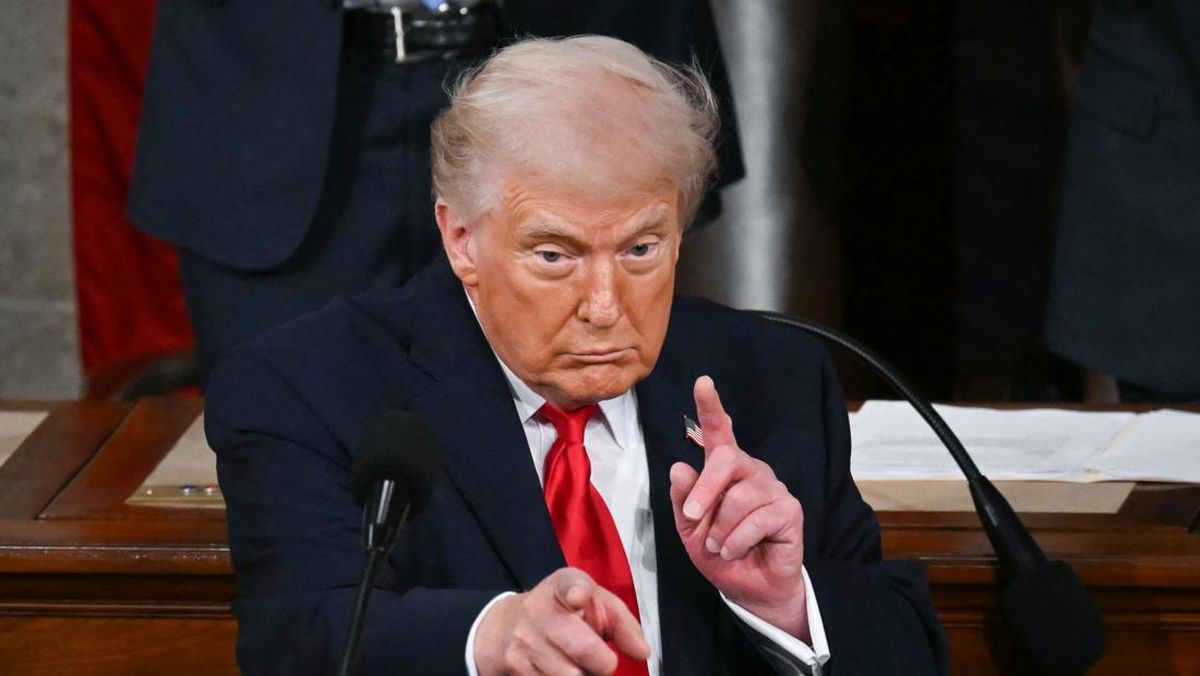
The escalating tensions between Iran and Israel, coupled with increasingly assertive rhetoric from former U.S. President Donald Trump, have plunged the Middle East into a volatile state. Recent days have witnessed a direct military exchange, with Iran launching missile attacks targeting both Israel and Gulf Arab states, prompting widespread concern and international diplomatic efforts. This follows a series of statements and threats from Trump, adding another layer of complexity to an already fraught situation. The situation remains highly fluid, with ongoing attacks across the region as of Friday, April 3, 2026.
The immediate trigger for the recent escalation appears to be a response to a Wednesday evening address delivered by President Trump. Whereas the specifics of that address haven’t been fully detailed in available reporting, it evidently prompted a retaliatory barrage of attacks from Iran. These attacks, as reported by PBS NewsHour and The Hill, demonstrate Iran’s continued capacity to project force throughout the region, despite ongoing international efforts to curb its military capabilities. The attacks have raised fears of a wider regional conflict, prompting urgent calls for de-escalation from numerous international actors.
Trump’s Shifting Stance and Renewed Threats
Donald Trump’s involvement in the current crisis has been marked by a series of pronouncements that have alternately suggested a willingness to negotiate and a readiness for forceful action. Earlier this week, Trump threatened widespread destruction of Iran’s energy resources, a move that significantly ratcheted up tensions. However, he subsequently indicated that the U.S. Is engaged in negotiations with Iran’s parliamentary speaker, signaling a potential, albeit tentative, opening for dialogue. This apparent shift in approach – a pattern described as “mencla-mencle” by some observers – has added to the uncertainty surrounding the situation. The Associated Press reported on March 30, 2026, that these negotiations are ongoing, even as the military exchanges continue.
The ambiguity of Trump’s statements has drawn criticism from some quarters, with analysts suggesting that his unpredictable behavior could further destabilize the region. His past decisions regarding the Iran nuclear deal, formally known as the Joint Comprehensive Plan of Action (JCPOA), have already had a significant impact on the geopolitical landscape. The withdrawal of the United States from the JCPOA in 2018 under Trump’s administration led to increased uranium enrichment by Iran and a breakdown in diplomatic efforts to constrain its nuclear program. The current situation can be seen, in part, as a consequence of those earlier decisions.
Recent Attacks and Regional Impact
The recent attacks launched by Iran have targeted Israel and several Gulf Arab states. Reports indicate that a significant number of missiles and drones were utilized in the assault, demonstrating Iran’s military capabilities. International news sources have confirmed that at least one key infrastructure target – a bridge in the Middle East – was successfully struck, causing significant damage. According to international.sindonews.com, this targeted infrastructure was the “highest bridge in the Middle East,” though the specific location and name of the bridge have not been independently verified. The destruction of this bridge has raised concerns about disruption to regional trade and transportation networks.
The attacks have prompted a strong response from Israel, which has vowed to retaliate. The potential for further escalation is high, and the risk of a wider regional conflict remains a serious concern. The United States has also condemned Iran’s actions and has reaffirmed its commitment to supporting Israel’s security. However, the Biden administration has also emphasized the importance of de-escalation and a return to diplomatic negotiations. The situation is further complicated by the ongoing war in Ukraine, which has diverted international attention and resources away from the Middle East.
International Response and Diplomatic Efforts
The international community has reacted with alarm to the escalating tensions in the Middle East. The United Kingdom is leading efforts to gather support from more than 40 countries to pressure Iran to reopen the Strait of Hormuz, a vital waterway for global oil supplies. Disruptions to shipping through the Strait of Hormuz could have a significant impact on the global economy. Numerous countries have called for restraint and a return to diplomatic negotiations. The United Nations Security Council is expected to hold an emergency meeting to discuss the situation, but the prospects for a unified response are uncertain, given the differing views of its member states.
The role of Russia in the current crisis is also a factor to consider. Russia has close ties to both Iran and Syria, and its actions could influence the course of events. While Russia has called for de-escalation, it has also criticized the United States and Israel for their policies towards Iran. The ongoing war in Ukraine has further complicated the geopolitical landscape, and the potential for a broader conflict involving multiple actors remains a concern.
The Strait of Hormuz and Global Oil Supplies
The Strait of Hormuz is a strategically important waterway that connects the Persian Gulf to the Gulf of Oman and the Arabian Sea. It is a critical chokepoint for global oil supplies, with approximately 20% of the world’s oil passing through the strait each day. Any disruption to shipping through the Strait of Hormuz could have a significant impact on global energy markets, leading to higher oil prices and economic instability. The UK’s efforts to secure the reopening of the strait underscore the importance of this waterway to the global economy. The potential for Iran to disrupt shipping through the strait is a major concern for international policymakers.
Looking Ahead
The situation in the Middle East remains highly volatile and unpredictable. The ongoing military exchanges between Iran and Israel, coupled with the assertive rhetoric from Donald Trump, have created a dangerous and unstable environment. The next steps in this crisis are uncertain, but several key developments are likely to shape the future course of events. Continued diplomatic efforts to de-escalate tensions and a return to negotiations over Iran’s nuclear program are crucial. The outcome of the negotiations between the U.S. And Iran’s parliamentary speaker will be a key indicator of whether a diplomatic solution is possible. The international community must remain engaged and work together to prevent a wider regional conflict.
As of this writing, there is no sign of the war winding down, with attacks continuing across the region. The world watches with bated breath, hoping for a swift and peaceful resolution to this escalating crisis. The situation demands careful diplomacy, strategic restraint, and a commitment to finding a sustainable solution that addresses the underlying causes of conflict.
We will continue to provide updates on this developing story as new information becomes available. Please share your thoughts and perspectives in the comments below.