
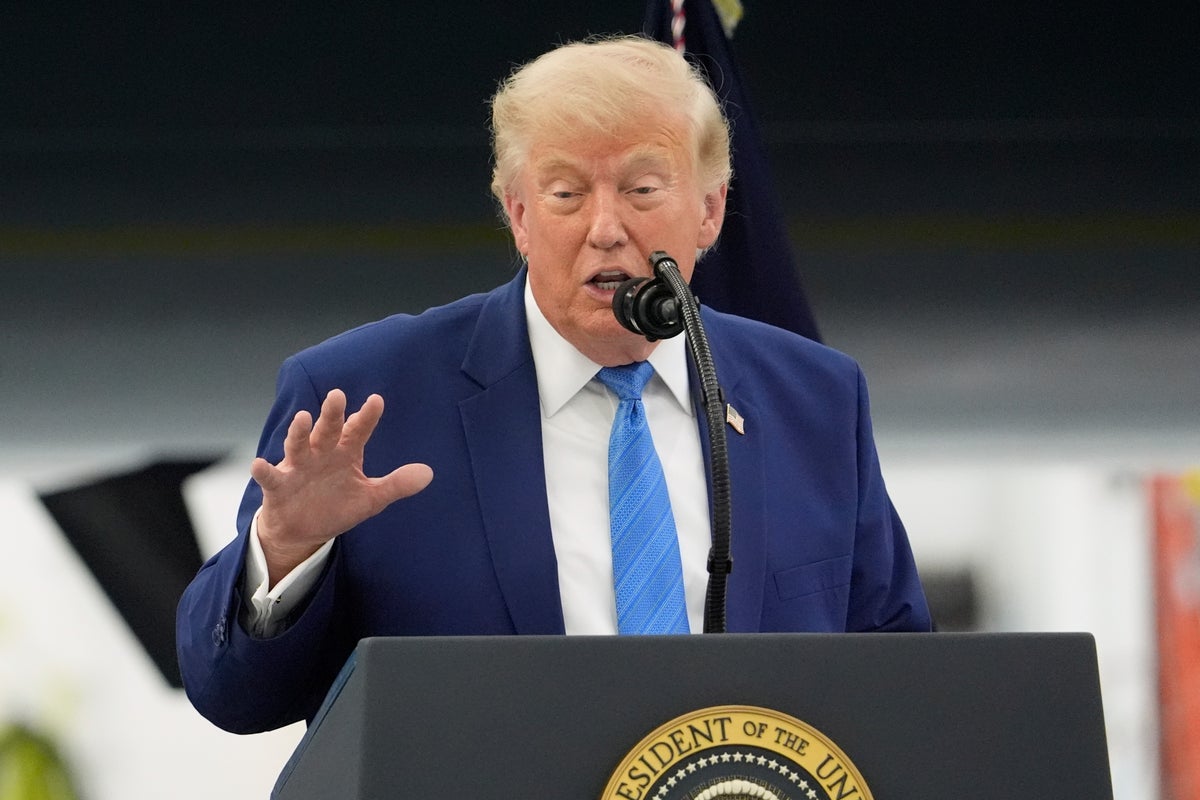
Former US President Donald Trump has warned Iran that the United States will begin charging tolls on shipping through the strategically vital Strait of Hormuz unless Tehran agrees to a final nuclear deal within 60 days. The threat, made during a recent speech in New Hampshire, escalates tensions between Washington and Tehran at a time when global oil markets are already volatile. Analysts describe the proposal as a potential flashpoint that could disrupt 20% of the world’s oil supply and trigger military confrontation.
Trump’s remarks come as negotiations over Iran’s nuclear program remain stalled, with no clear path to a revived agreement. The Strait of Hormuz, a narrow waterway connecting the Persian Gulf to the Gulf of Oman, is a critical chokepoint for global energy trade, with an estimated 20% of the world’s oil passing through its waters daily, according to the US Department of Energy.
While Trump’s specific proposal to impose tolls has not been formally adopted by the Biden administration, his comments have reignited concerns about potential military action. Iranian officials have repeatedly warned against any attempt to block the Strait, calling it a “red line” that would provoke an immediate response. The last major crisis in the region occurred in 2019 when Iran seized a British-flagged oil tanker and US forces conducted a foiled Iranian plot to attack Saudi oil facilities.
What Trump’s Proposal Means for Global Oil Markets
The Strait of Hormuz is one of the most strategically important waterways in the world, with an average of 17 million barrels of oil per day transiting its waters, according to Bloomberg. Any disruption—whether through tolls, blockades, or military action—would send shockwaves through global energy markets.
Historically, even the threat of closure has triggered sharp spikes in oil prices. In 2019, when tensions between the US and Iran reached a peak, Brent crude prices rose by nearly 20% in a single week. Analysts at the International Energy Agency (IEA) have warned that a prolonged disruption could push prices above $100 per barrel, exacerbating inflationary pressures already felt in Europe and Asia.

Trump’s suggestion to “charge a toll” is particularly significant because it frames the issue not just as a military threat but as an economic one. While the US has never formally imposed tolls on the Strait, the concept of treating the waterway as a commercial asset rather than a strategic passage could be seen as an act of economic warfare. Iranian officials have dismissed the idea outright, with Foreign Minister Hossein Amir-Abdollahian stating in a recent press conference that “the Strait of Hormuz is an international waterway and no country has the right to impose tolls on it.”
Iran’s Nuclear Talks: The 60-Day Deadline
Trump’s ultimatum is directly tied to the stalled negotiations over Iran’s nuclear program. The current talks, led by the EU, aim to revive the 2015 Joint Comprehensive Plan of Action (JCPOA), which was abandoned by the Trump administration in 2018. The Biden administration has been engaged in indirect negotiations with Iran since April 2021, but progress has been slow.
In a May 23 statement, US State Department spokesperson Matt Miller confirmed that “the United States remains committed to diplomacy and a return to the JCPOA,” but added that “time is not on our side.” The 60-day deadline Trump referenced aligns with internal US assessments that Iran’s nuclear program is advancing, with the International Atomic Energy Agency (IAEA) reporting in its May 2024 report that Iran has increased uranium enrichment levels beyond the limits set by the JCPOA.
Iranian officials have not publicly responded to Trump’s 60-day ultimatum, but analysts suggest Tehran may see it as a distraction tactic rather than a serious proposal. “Trump is using this as a way to pressure the Biden administration to take a harder line on Iran,” said Ali Vaez, director of the Iran Project at the International Crisis Group. “But the reality is that neither side wants a military confrontation, especially not over the Strait of Hormuz.”
Military Escalation Risks: What Could Go Wrong?
The Strait of Hormuz has been a flashpoint for decades, with multiple crises since the 1980s. The most recent major incident occurred in 2019, when Iran seized the Stena Impero, a British-flagged oil tanker, and the US conducted a foiled attack on Iranian targets in Iraq. The US also disrupted an Iranian plot to attack Saudi oil facilities using limpet mines.

If Trump’s proposal were to be implemented—or even perceived as credible—it could trigger a chain reaction. Iran has repeatedly stated that any attempt to block the Strait would be met with force. In 2019, Iranian Revolutionary Guard Commander Ali Shamkhani warned that “any attempt to close the Strait of Hormuz will be met with a decisive response.” The US, for its part, has maintained a strong military presence in the region, including the USS Abraham Lincoln carrier strike group, which has been deployed to the Persian Gulf since 2023.
Analysts at the RAND Corporation have modeled potential scenarios in the event of a Strait closure. Their findings, published in a 2020 report, suggest that even a partial blockade could lead to:
- A 30–50% spike in global oil prices within 48 hours.
- Disruptions to shipping lanes, leading to a 20% increase in insurance premiums for vessels transiting the region.
- Potential military clashes between US and Iranian forces, possibly involving proxy groups in Iraq, Syria, and Yemen.
- Economic sanctions on both Iran and the US by global trading partners.
How the Biden Administration Is Responding
The Biden administration has not yet commented on Trump’s proposal, but officials have made it clear that they are pursuing a diplomatic solution. In a May 23 statement, the State Department reiterated that “the United States remains committed to a diplomatic resolution” and that “military action is not our preferred path.”
However, some members of Congress have expressed support for Trump’s hardline stance. Senator Tom Cotton (R-AR) told Fox News that “the Biden administration needs to take a stronger stand on Iran, and if that means imposing tolls or other measures, they should do it.” Meanwhile, Democratic Senator Chris Murphy (D-CT) warned against escalation, stating that “we are playing with fire when it comes to Iran, and Trump’s rhetoric only makes things worse.”
White House National Security Advisor Jake Sullivan has not publicly addressed Trump’s comments, but in a May 23 briefing, he emphasized that “the Biden administration is focused on diplomacy and will not be distracted by political posturing.”
What Happens Next: Key Developments to Watch
The next critical juncture in the Iran-US standoff will be the June 12 deadline set by Trump for a final nuclear deal. If no agreement is reached, analysts expect:

- Escalation in rhetoric: Both sides are likely to ramp up their public statements, with Iran possibly threatening to expand its nuclear program further and the US considering additional sanctions.
- Military posturing: The US may increase its naval presence in the Persian Gulf, while Iran could conduct drills involving its Revolutionary Guard and proxy forces in the region.
- Market reactions: Oil prices are expected to remain volatile, with traders closely monitoring any signs of diplomatic progress or further escalation.
- Congressional action: Lawmakers may introduce new legislation related to Iran, including potential measures to impose sanctions on Iranian officials or restrict US energy exports to countries buying Iranian oil.
Key Takeaways
- Trump’s proposal to impose tolls on the Strait of Hormuz is a major escalation in US-Iran tensions, framing the conflict as both military and economic.
- The Strait of Hormuz is a critical global energy chokepoint, with 20% of the world’s oil transiting its waters daily.
- Iran has rejected the toll proposal as illegal, calling the Strait an international waterway.
- The Biden administration is pursuing diplomacy but faces pressure from both Congress and Trump to take a harder line.
- A disruption in the Strait could trigger a 30–50% spike in oil prices and potential military clashes.
- The next critical deadline is June 12, when Trump has set a 60-day ultimatum for a nuclear deal.
How to Stay Updated: Official Sources and Advisories
For the latest developments on the Iran-US standoff and the Strait of Hormuz, readers are advised to monitor the following official sources:
- US Department of State – Official statements on Iran policy and nuclear negotiations.
- International Atomic Energy Agency (IAEA) – Regular updates on Iran’s nuclear program.
- US Department of Energy – Reports on global oil flows and market impacts.
- Central Intelligence Agency (CIA) World Factbook – Background on the Strait of Hormuz and regional geopolitics.
- Reuters Energy – Real-time coverage of oil market reactions.
This story is developing rapidly. For live updates, follow World Today Journal and monitor official statements from the US State Department and IAEA. Share your thoughts in the comments below or discuss this breaking news on our social media channels.