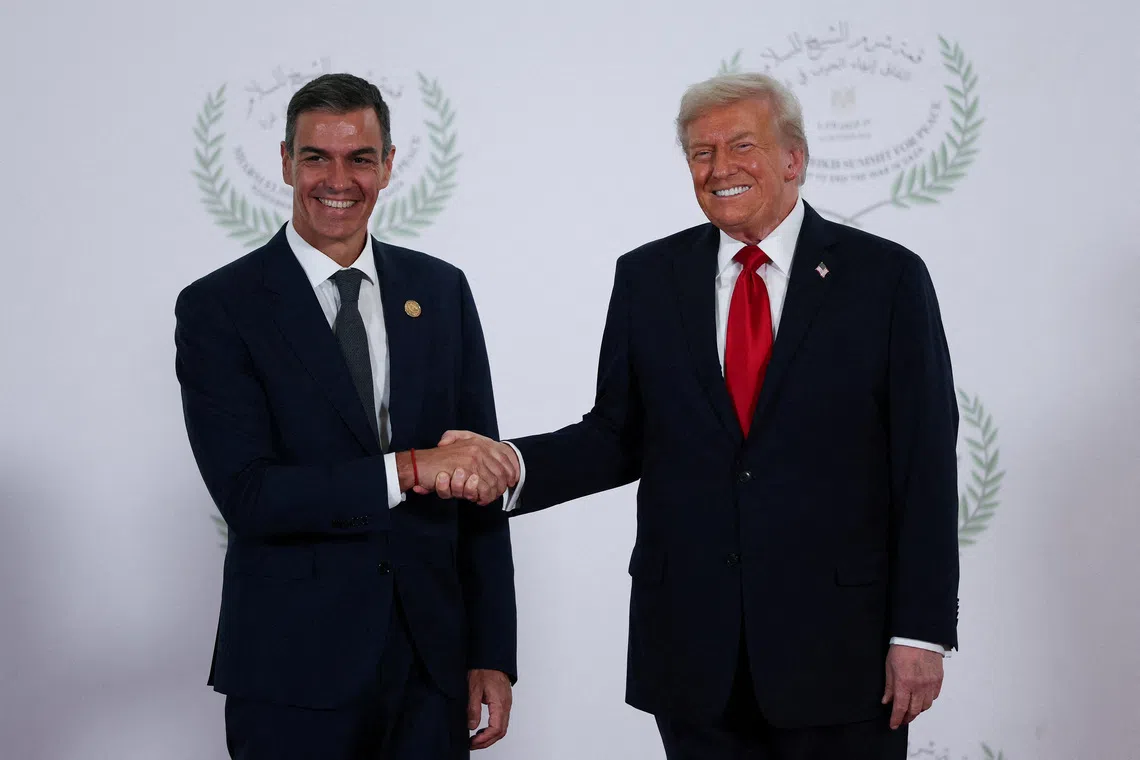
Trump Threatens Trade Action Against Spain Over NATO Spending – A Deep Dive
Recent tensions have flared between the United States adn Spain following former President Trump’s criticism of Spain’s commitment to increased defense spending within NATO. This dispute highlights broader concerns about burden-sharing within the alliance and raises the specter of potential trade repercussions. Here’s a comprehensive analysis of the situation, its implications, and potential outcomes.
The Core of the Dispute: The 5% Target
At a recent NATO meeting, a push emerged for member states to commit to spending 5% of their GDP on defense by 2035 – a significant increase from the current guideline of 2%. Trump has publicly expressed his “unhappiness” with Spain being the sole nation to resist this new objective, even hinting at “punishing” the country. He previously suggested Spain should “pay twice as much” in trade negotiations, signaling a willingness to leverage economic pressure.
EU Response: A United Front
The European commission has swiftly defended its member state. Commission spokesperson Olof Gill affirmed that Brussels would “respond appropriately” to any unilateral U.S.measures targeting Spain or other EU nations. The existing trade agreement between the EU and the U.S., signed in July, is seen as the proper framework for addressing any disagreements.
Spain’s Position: Prioritizing Current Needs
Spain argues that the focus should be on addressing current security threats, notably the ongoing conflict in Ukraine, rather than committing to a future spending target. The Spanish economy and Trade Ministry emphasized their dedication to developing necessary capabilities and contributing to collective defense.
* Spain has already more than doubled its defense spending, increasing from 0.98% of GDP in 2017 to 2% this year (approximately €32.7 billion / $38 billion).
* Defense Minister Margarita Robles indicated a willingness to revisit Spain’s position, but stressed the immediate priority is supporting Ukraine.
What Retaliatory measures Could the U.S. Take?
While targeting individual EU member states with tariffs is uncommon, the U.S. has precedent. Here’s a breakdown of potential actions:
* Targeted Tariffs: The U.S. could impose tariffs on specific European products largely manufactured in Spain. This echoes past actions, such as the 1999 tariffs on products like chocolate and pork in response to the EU’s ban on hormone-treated beef (with Britain notably excluded).
* Anti-Dumping Penalties: Washington could levy anti-dumping duties on European goods with significant Spanish production.
* Spanish Olive Industry Impact: A recent example of this occurred in 2018 with over 30% duties imposed on Spanish black table olives, dramatically reducing Spain’s market share in the U.S. (from 49% in 2017 to 19% in 2024).
* Base Relocation: A more drastic option, proposed by former Trump official Robert Greenway, involves relocating U.S.naval and air bases from southern Spain to Morocco. This would inflict significant economic damage on the local economies reliant on those bases.
Expert Analysis: The Risks and Realities
Ignacio Garcia bercero, a senior fellow at Bruegel, notes that while rare, targeted tariffs are a possibility. The past precedent demonstrates the U.S. is willing to use trade as leverage in disputes with the EU. Juan Carlos Martinez Lazaro, a professor at Madrid’s IE business school, highlights the vulnerability of specific Spanish industries to such measures.
Looking Ahead: De-escalation and Dialogue are Key
The current situation underscores the importance of continued dialogue and a nuanced understanding of each nation’s security priorities. While Trump’s rhetoric is assertive, a full-blown trade war would likely be detrimental to both the U.S. and Spain, as well as the broader transatlantic relationship.
* Focus on Capabilities, not Just Spending: A more productive approach would be to focus on the capabilities member states are developing, rather than solely on arbitrary spending percentages.
* addressing Underlying Concerns: The U.S. needs to articulate clearly its security concerns and work with allies to address them collaboratively.
* Leveraging Existing Agreements: Utilizing the existing EU-U.S. trade agreement as a platform for resolving disputes is crucial.
This situation remains fluid. Continued monitoring of diplomatic exchanges and potential policy
Keep reading
- Paramount-Warner Antitrust Trial: California Attorney General Seeks April Start Date
- Swedish Retail Investors: Top Stocks and Funds Bought and Sold in July
- The Senate Blue Slip, Explained: The Custom Trump Wants Gone (daybreakwire.com)
- At typically tranquil Camp David, Trump publicly lashes out at political enemies (archyworldys.com)