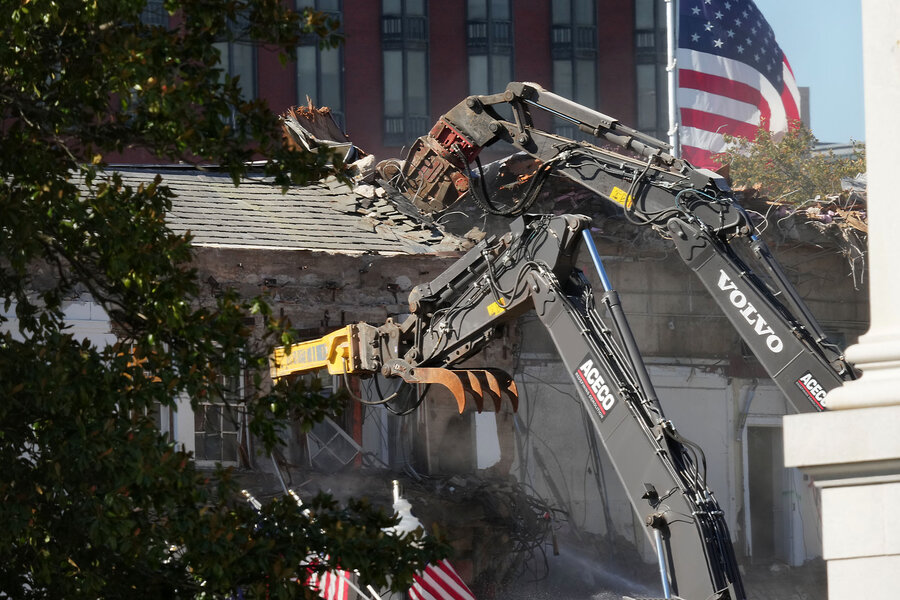
A grand Vision or Presidential Overreach? The Controversial Expansion of the White House
The White House is undergoing a dramatic transformation.President Donald Trump has initiated a major construction project - the addition of a 650-999 person capacity ballroom to the East Wing. This isn’t a simple renovation; it involves demolishing a portion of the historic building adn sparking a national debate about presidential authority, historical preservation, and the very symbolism of “the people’s house.”
A Project Bypassing Traditional Oversight
Traditionally, significant alterations to the White House involve the national Capital Planning Commission (NCPC). This time, however, the NCPC wasn’t consulted. White House Staff Secretary Will Scharf, appointed by President Trump to head the NCPC, maintains that their involvement wasn’t necessary.
This approach echoes a pattern from previous administrations. President Harry Truman, during his extensive White House renovation, secured a congressional law establishing a commission to oversee the project. Though, Trump’s current strategy leans towards a more direct, expedited path.
Trump’s “Can-Do” Approach: A History
This isn’t the first time President Trump has championed a swift,decisive approach to large-scale projects. He frequently references his success with Wollman Skating Rink in Central Park. As detailed in his book, “The Art of the Deal,” he completed the rink’s renovation in just three months, under budget, after a six-year standstill.
He’s applying that same “can-do” spirit to the White House expansion, framing it as a exhibition of efficiency and vision. but the stakes are considerably higher when dealing with a national landmark.
Public Reaction and White House Defense
The project has ignited significant public backlash. Images of the demolition site quickly spread online, drawing criticism from across the political spectrum.The White House responded swiftly with a lengthy statement.
They characterized the criticism as “manufactured outrage” from “unhinged leftists and their Fake News allies.” The statement highlighted past White House renovations, attempting to contextualize the current project within a historical framework.
Witnessing History in the Making
On Tuesday, onlookers gathered near the construction site. Reactions were varied. One local university employee described the project as an expression of “Trump’s ego.” A marathon runner visiting from Lebanon opted to have his picture taken with the nearby Treasury building, the construction visible in the background.A family from the United Kingdom expressed intrigue at the spectacle.
What Does This Mean for the Future?
The new ballroom, when completed, may eventually become an accepted part of the White House landscape. However, it currently represents a defining moment of the Trump era. It raises critically important questions about:
* presidential Authority: How much leeway should a president have when altering national landmarks?
* Historical Preservation: What obligation do we have to protect the integrity of historically significant buildings?
* Clarity & Oversight: Should major projects like this be subject to independent review and public input?
This project isn’t just about adding a ballroom. It’s about the evolving relationship between the presidency, the public, and the symbols that represent the nation.
Resources for Further Exploration:
* AP News: Trump Ballroom Approval
* Truman Library commission Records
* NPR: White house Demolition
* White House Statement on Ballroom
Worth a look
- Palantir Shares Surge After Beating Expectations and Raising Full-Year Guidance
- Jeff Walton: 2,000x Return on MSTR Options and New Bitcoin Strategy
- Trump Administration Invites AI Giants to Discuss New Cybersecurity Safety Tests (time.news)
- Kieran Tierney’s Impact in Celtic’s Victory Over Dundee (newsdirectory3.com)