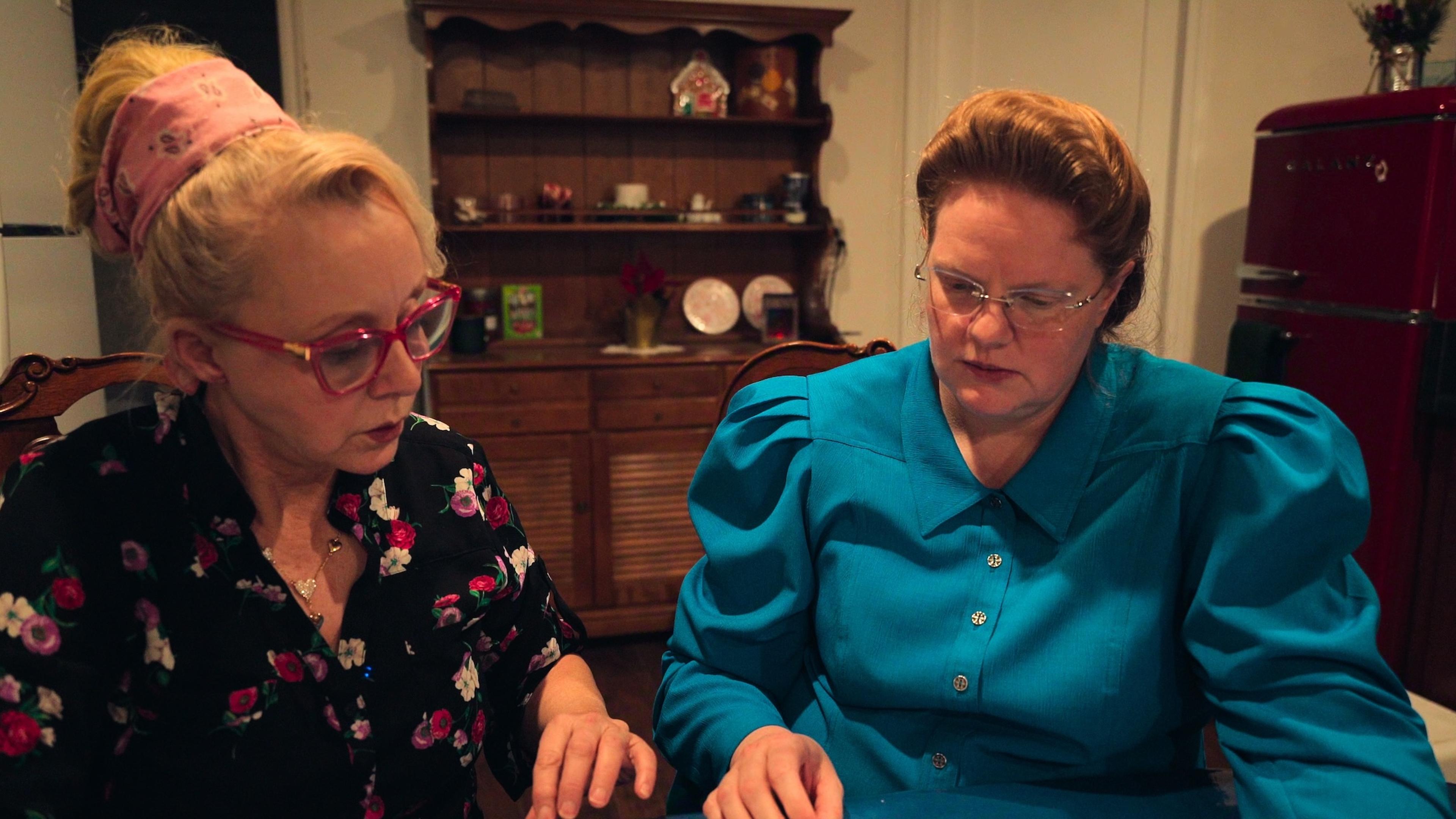
The intersection of faith, power, and exploitation often leaves a trail of devastation that takes years to fully uncover. This is the central theme of the Netflix docuseries Trust Me: The False Prophet, which examines the rise and fall of Samuel Rappylee Bateman. Rather than following a standard true crime format, the four-part series functions as a primary source reconstruction, utilizing hundreds of hours of recorded conversations and firsthand testimony to reveal how Bateman established a predatory grip on a vulnerable community.
Bateman claimed divine authority to lead a breakaway sect of the Fundamentalist Church of Jesus Christ of Latter-Day Saints (FLDS), operating primarily in the Short Creek area—a community spanning Colorado City, Arizona, and Hildale, Utah. In reality, this religious facade masked a multi-state conspiracy involving the sexual abuse of minors. The documentary highlights the critical role played by cult researcher Christine Marie and videographer Tolga Katas, whose infiltration of Bateman’s inner circle provided the evidence necessary for federal investigators to dismantle the operation.
The fallout from Bateman’s actions has been severe, resulting in a 50-year prison sentence for the self-proclaimed prophet. However, the impact extends far beyond a single conviction, as the community continues to grapple with the trauma of his crimes and the systemic failures that allowed him to operate for years under the guise of spiritual leadership.
A Leadership Vacuum and the Rise of the ‘Samuelites’
To understand the true story behind Trust Me: The False Prophet, one must glance at the fragmentation of the FLDS. The community was historically led by Rulon Jeffs until 2002, after which his son, Warren Jeffs, took control. When Warren Jeffs was convicted in 2011 for sexually assaulting two girls and sentenced to life in prison, it left a significant leadership vacuum in Short Creek Samuel Bateman Now: All About the Convicted Cult Leader.
Samuel Rappylee Bateman, born around 1976, emerged in this environment of instability. He positioned himself not as a modern leader, but as a continuation of Jeffs’ authority, claiming that Jeffs was either dead or “translated” and that Bateman was the sole conduit for Jeffs’ communications. By approximately 2019, Bateman had successfully established a breakaway sect of about 50 people, often referred to as the “Samuelites” Samuel Bateman Now: All About the Convicted Cult Leader.
Bateman consolidated control through a combination of religious language, isolation, and financial pressure. Followers were required to demonstrate loyalty through financial contributions and testimony. Most disturbingly, this loyalty often extended to the surrender of daughters to Bateman as plural “wives,” with some victims as young as nine years aged. Compliance was enforced by relocating families, limiting communication with the outside world, and framing any dissent as a spiritual failure.
The documentary focuses on two specific properties in Short Creek: the “Blue House,” where Bateman resided with select wives, and the “Green House,” a more crowded property where filmmakers Marie and Katas first noticed patterns of distress among the women and girls.
Infiltration and the Documentation of Abuse
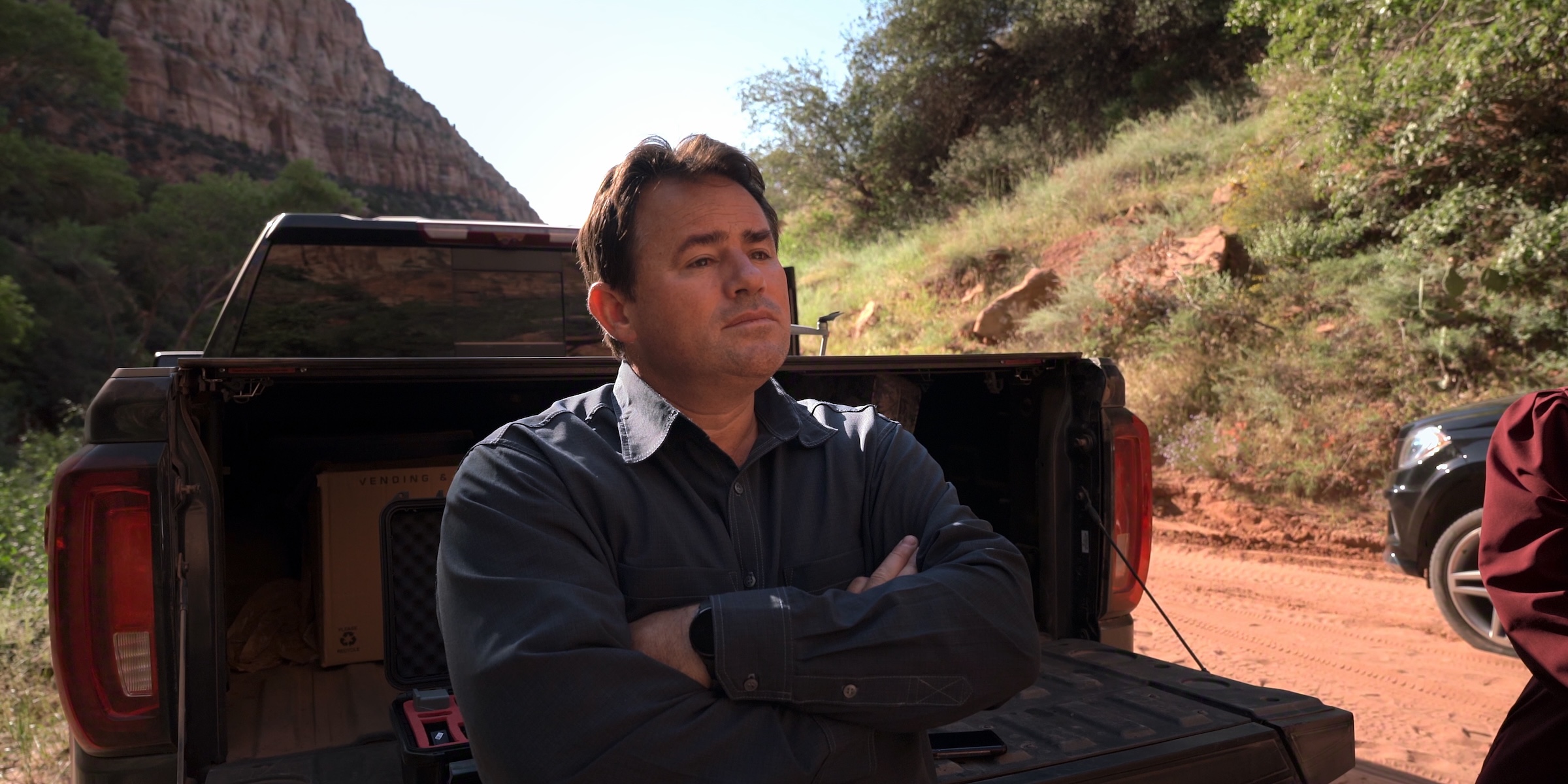
The downfall of the “False Prophet” was precipitated by the work of Christine Marie and Tolga Katas. Marie first entered Short Creek in 2015 to assist with relief efforts following a deadly flash flood and later founded the nonprofit Voices for Dignity to support victims of human trafficking. Together with Katas, she built relationships within the community, eventually gaining access to Bateman’s inner circle in 2021.
Because Katas was working on a documentary about FLDS life, Bateman viewed their presence as a potential promotional opportunity and granted them access to his properties. This allowed the couple to record routine gatherings and, eventually, the more sinister dynamics of the group. Marie acted as a “mole,” gaining the trust of the followers while secretly documenting the environment.
A pivotal moment occurred in late 2021 when Marie recorded Bateman describing an “Atonement” ceremony. In this recording, Bateman detailed the practice of “giving away” his wives to followers and ordering them to engage in sex while he watched. This evidence was turned over to local law enforcement and subsequently referred to federal authorities due to the scale of the crimes.
Marie worked as an FBI informant, while Katas provided critical video evidence and logistical support, including the employ of drones to map the group’s properties. Their engagement shifted from periodic visits to near full-time documentation, prioritizing the evidence gathering over other professional work.
The Path to Conviction and Sentencing
The legal collapse of Bateman’s operation began in August 2022 with a traffic stop in Arizona. Law enforcement intervened after reports that children were being transported inside an enclosed trailer towed by Bateman; three girls were recovered during this incident.
Although Bateman was initially released on bail, federal authorities quickly obtained warrants for his arrest related to kidnapping and child sexual abuse. On September 13, 2022, the FBI coordinated a series of raids on the Blue House, the Green House, and a warehouse. Katas assisted the raid by arranging a meeting with Bateman at the warehouse under the pretense of an interview, at which point FBI agents arrested him.
In April 2024, Bateman pleaded guilty to conspiracy to commit kidnapping and conspiracy to transport a minor for criminal sexual activity. The investigation revealed that his activities spanned multiple states, including Nebraska, Colorado, Utah, and Arizona. His followers were found to have facilitated the abuse by arranging access and transporting minors across state lines.
On December 9, 2024, Samuel Bateman was sentenced to 50 years in prison, followed by lifetime supervised release Samuel Bateman Now: All About the Convicted Cult Leader. Several co-defendants have also been convicted through trials or guilty pleas, with some sentencing proceedings still ongoing.
Timeline of Key Events
| Date | Event |
|---|---|
| ~2019 | Bateman establishes the “Samuelite” breakaway sect in Short Creek. |
| 2021 | Christine Marie and Tolga Katas initiate documenting Bateman’s inner circle. |
| August 2022 | Initial arrest following a traffic stop in Arizona; three girls recovered from a trailer. |
| Sept 13, 2022 | FBI arrests Bateman at a warehouse following a coordinated raid. |
| April 2024 | Bateman pleads guilty to conspiracy charges regarding kidnapping and sexual activity. |
| Dec 9, 2024 | Bateman is sentenced to 50 years in prison. |
The Aftermath for Victims and Survivors
The recovery of the victims was complicated by the continued devotion of some of Bateman’s followers. After the initial arrests, identified minors were placed in the custody of the Arizona Department of Child Safety. However, in November 2022, followers who still believed in Bateman organized an effort to remove these children from state care. Eight girls were transported out of Arizona, through California, and into Washington before law enforcement located and returned them to state custody.
This event underscored the depth of the psychological control Bateman exerted over his followers and the coordinated nature of the abuse. The victims remained under state protection as the legal process unfolded, and their testimonies were instrumental in securing the 50-year sentence.
The case of Samuel Bateman serves as a stark reminder of how leadership vacuums in isolated communities can be exploited by predators. Through the work of independent researchers and federal agencies, the “False Prophet” was removed from power, though the process of healing for the survivors continues.
As sentencing proceedings for co-defendants continue, the legal system is still processing the full extent of the conspiracy’s reach. We encourage readers to share their thoughts on the series and the complexities of cult recovery in the comments below.