
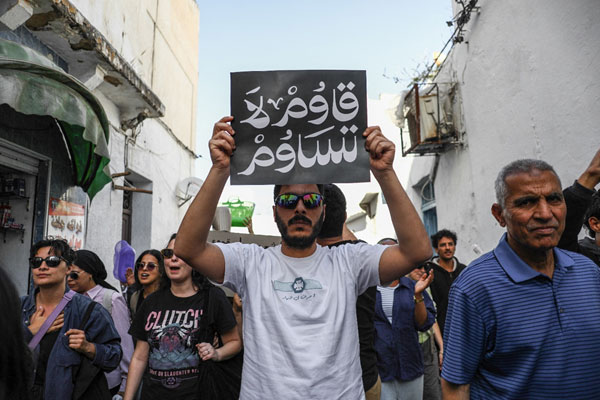
Tunisian lawyer and journalist Sonia Dahmani has received a two-year prison sentence following her public criticism of prison conditions in the country, marking her second criminal conviction of the year. This judicial action follows an earlier 18-month sentence related to her public comments on government anti-migrant policies. Dahmani currently faces five more charges under a 2022 cybercrime law that criminalises the spreading of what it calls ‘false information’.
The intensifying legal pressure on Dahmani is part of a broader trend involving the prosecution of civil society figures, journalists, and political opponents in Tunisia. International monitors have repeatedly raised concerns regarding the use of legislative tools to restrict freedom of expression. According to the United Nations Office of the High Commissioner for Human Rights (OHCHR), the law has been utilized to target individuals for their online speech, raising significant questions about the state of judicial independence and civil liberties in the North African nation.
The Legal Framework Behind Recent Prosecutions
At the center of these prosecutions is a 2022 cybercrime law. The law carries severe penalties for the spread of what it calls ‘false information’. Critics argue that the language within the law is intentionally vague, allowing the judiciary to interpret protected political speech as criminal activity.

Legal experts observe that the application of this law has surged. The law mandates prison terms for those who use communication networks to produce, promote, or publish false information that could be construed as infringing on the rights of others or threatening public order. For professionals like Dahmani, who frequently engage in public commentary, the law has become a primary instrument for state-led litigation.
Impact on Tunisian Civil Society
The conviction of Dahmani and the ongoing charges against other activists signify a narrowing space for public discourse in Tunisia. The Tunisian National Syndicate of Journalists (SNJT) has issued multiple statements condemning the use of military courts and specialized anti-cybercrime legislation to silence dissenting voices. The union maintains that these actions undermine the democratic gains achieved following the 2011 revolution.

Government officials, however, have consistently defended these legal actions as necessary measures to maintain national stability and combat the spread of misinformation that could incite public unrest. In various public addresses, President Saied has emphasized that the judiciary acts independently and that no individual is above the law, regardless of their professional background or status as an activist.
Ongoing Legal Challenges
Sonia Dahmani remains in custody as her legal team prepares for further hearings related to the five additional charges pending against her. The nature of these charges, also stemming from the provisions of the 2022 cybercrime law, highlights the cumulative nature of the legal risks facing independent voices in the country. The international community continues to monitor these developments closely, with various diplomatic missions in Tunis expressing concern over the adherence to international human rights standards.
The next steps in the legal process involve upcoming court appearances to address the remaining counts. Observers suggest that the outcome of these trials will serve as a significant indicator of the current trajectory for human rights and press freedom in the region. As the situation remains fluid, human rights groups encourage the public to follow updates provided by local legal aid organizations and established international monitoring bodies for verified information regarding trial dates and judicial rulings.
We invite our readers to share their perspectives on these developments in the comments section below.