Decoding Nature’s Patterns: How Imperfection Fuels Biological Design
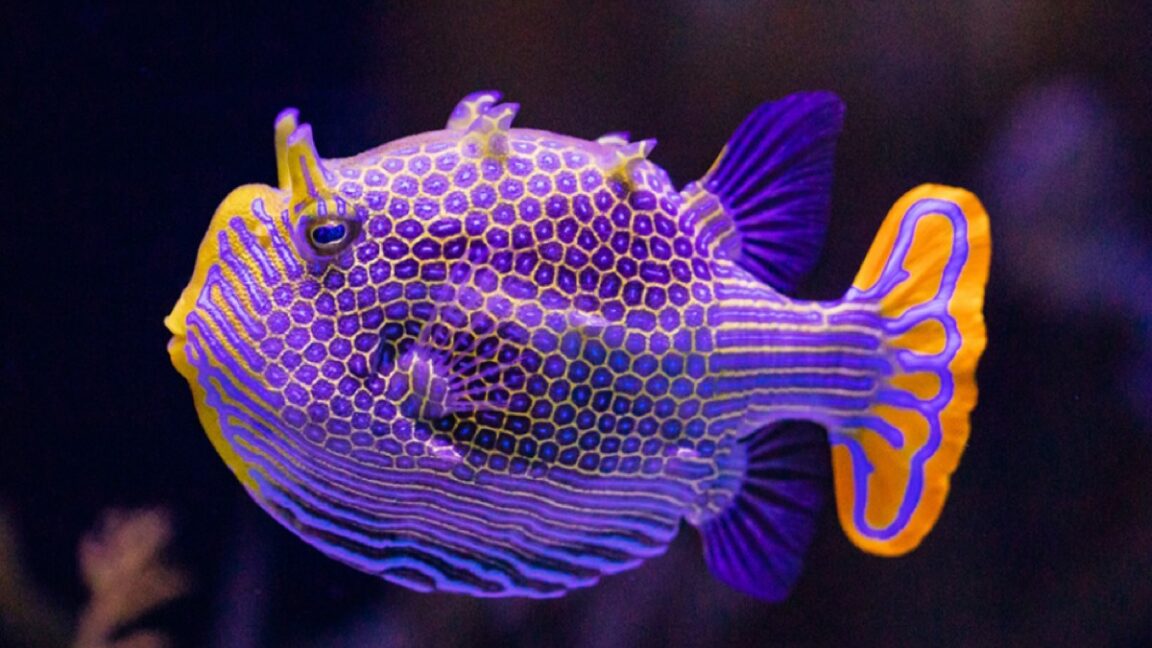
For decades, scientists have sought too understand the intricate patterns adorning the natural world – from the stripes of a zebra to the spots of a leopard, and the hexagonal plates on a boxfish. A foundational theory, proposed by Alan Turing in 1952, suggested these patterns arise from reaction-diffusion systems, where chemicals interact and spread, creating self-organizing formations. However, early models based on this theory consistently fell short of replicating the nuanced complexity seen in real life.
These initial simulations often produced overly uniform and “perfect” patterns. Nature, as you’ve likely observed, rarely adheres to strict symmetry or flawless repetition. The resulting digital patterns lacked the subtle variations, grain-like textures, and inherent imperfections that characterize biological designs.
The Missing Piece: Diffusiopherosis
Recent breakthroughs are changing this. Researchers have integrated a crucial element into the reaction-diffusion model: diffusiopherosis. It’s a captivating process where particles move in response to differences in solute concentration gradients. Think of how soap lifts dirt from clothes – the soap diffuses, carrying particles along wiht it.
This addition proved pivotal. By incorporating diffusiopherosis, scientists were able to simulate the distinctive hexagonal pattern found on the ornate boxfish, a native of Australia, with significantly improved accuracy and sharper outlines compared to previous attempts.
Beyond Perfection: Embracing Cellular Variation
Even with diffusiopherosis,the simulations still presented a challenge. The generated patterns remained too uniform,lacking the natural variations observed in living organisms. To address this, researchers focused on the individual “cells” within the model.
They discovered that defining specific sizes for these cells dramatically impacted the resulting patterns. Here’s how:
* Larger cells create thicker outlines, contributing to bolder patterns.
* Cell clustering leads to broader,more expansive designs.
* Cell “jams” and disruptions introduce breaks and irregularities within stripes or repeating elements.
Essentially, by introducing controlled imperfections at the cellular level, they unlocked a pathway to more realistic and biologically accurate simulations. The revised models now generate patterns and textures remarkably similar to those found in nature.
The Power of imperfection
“Imperfections are everywhere in nature,” one researcher explained. “We proposed a simple idea that can explain how cells assemble to create these variations.” This isn’t just about aesthetic accuracy; it’s about understanding the underlying principles of biological self-assembly.
By drawing inspiration from the “imperfect beauty” of natural systems, scientists hope to harness these principles for innovative applications. Consider the possibilities:
* Smart camouflage fabrics that dynamically adapt to their surroundings.
* Targeted drug delivery systems that navigate the body with greater precision.
These advancements demonstrate that embracing imperfection isn’t a compromise, but a key to unlocking new levels of functionality and design. The research, detailed in recent publications, signifies a major step forward in our ability to understand and replicate the elegance and efficiency of the natural world.