
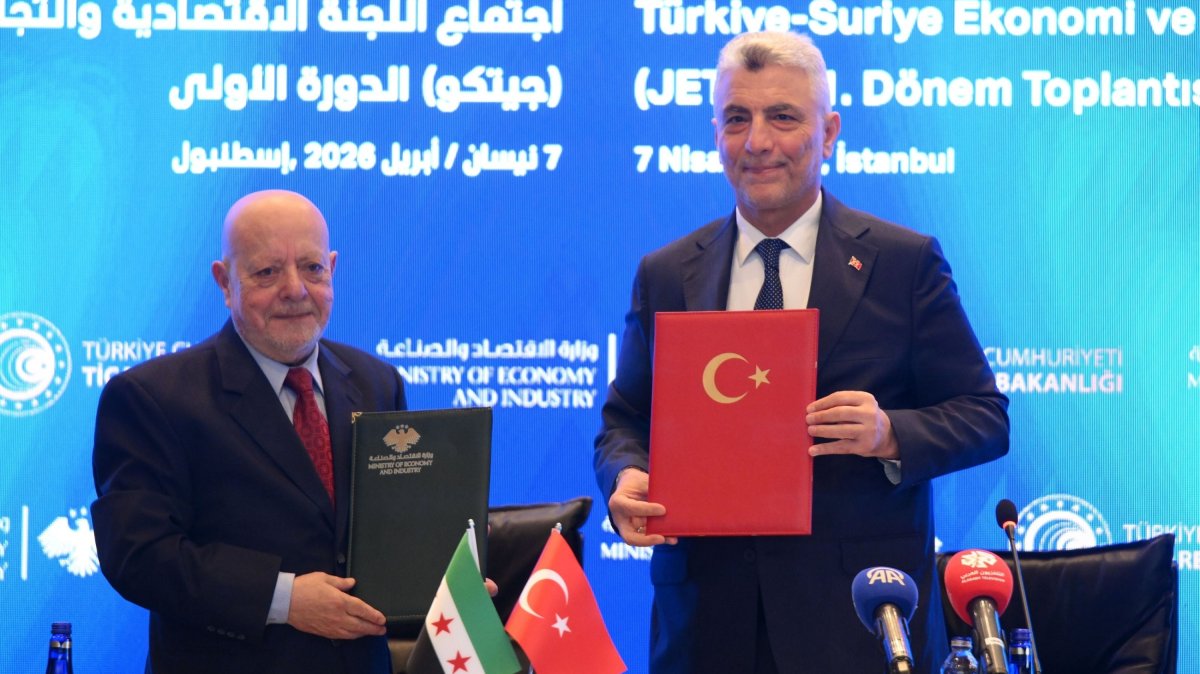
Türkiye has officially addressed emerging reports suggesting that recent changes to customs regulations in Syria were designed to specifically target and hinder Turkish exports. In a move to clarify the situation, government representatives have denied that the monthly customs updates issued by Syrian authorities are intended as a targeted economic measure against Ankara.
The denial comes amid a complex landscape of cross-border trade and diplomatic navigation between the two neighbors. While customs adjustments are common in regional trade to manage inflation and import flows, the perception that these rules were weaponized against a specific trading partner had begun to circulate, prompting a formal response from the Turkish government.
According to reports, the Presidency’s Disinformation Combat Center issued a statement on Thursday, May 7, 2026, explicitly rejecting the claims that Syria’s customs framework was being used as a tool for targeted economic pressure. The center categorized the allegations as misleading, asserting that the regulations in question do not specifically isolate or penalize Turkish goods.
Denial of Targeted Trade Restrictions
The core of the dispute centers on Syria’s practice of implementing monthly customs regulations. In many emerging markets, frequent adjustments to tariff schedules and import requirements are used to stabilize local currencies or protect domestic industries. However, in the context of the strained relationship between Ankara and Damascus, such administrative changes are often viewed through a geopolitical lens.
The response from the Presidency’s Disinformation Combat Center aims to dampen concerns among Turkish exporters who may have feared a systematic increase in trade barriers. By clarifying that the rules are not specifically targeted, the Turkish government is signaling a desire to avoid unnecessary panic within its export sector, which remains a vital component of the national economy.
Trade disputes of this nature often hinge on the distinction between general protectionist policies and discriminatory trade practices. Under the guidelines provided by the World Trade Organization (WTO), member states and trading partners typically seek to ensure that customs regulations are applied transparently and without unfair discrimination against specific nations.
The Role of Customs in Regional Trade
Customs regulations serve as the primary mechanism for governments to control the flow of goods across borders. When regulations change monthly, it can create significant volatility for businesses attempting to forecast costs and manage supply chains. For Turkish firms exporting to Syria, any perceived shift in the “rules of the game” can lead to immediate concerns regarding profitability and market access.

The Syrian government’s use of monthly updates is a known administrative pattern, but the sensitivity of the Türkiye-Syria border means that even routine bureaucratic shifts can be interpreted as political signals. The Turkish government’s decision to use its Disinformation Combat Center to address these claims suggests that the narrative of “targeted” restrictions was gaining enough traction to require a formal correction to maintain market stability.
Non-tariff barriers—such as complex customs documentation, sudden changes in import licenses, or stringent sanitary requirements—can often be more restrictive than actual tariffs. By denying that these rules are targeted, Ankara is effectively stating that the current frictions are administrative rather than a deliberate policy of economic warfare.
Broader Economic Implications
Türkiye remains one of the most significant economic players in the region, characterized as a major emerging economy with a diverse export portfolio. Maintaining stable trade corridors is essential for the continued growth of its industrial sector. Any instability in the Syrian market, regardless of whether it is caused by targeted rules or general economic instability, impacts the logistics and revenue streams of regional traders.

The intersection of diplomacy and trade in the Levant is notoriously volatile. Economic diplomacy often precedes or accompanies political rapprochement. The Turkish government’s effort to frame the Syrian customs rules as non-targeted may be an attempt to keep the door open for future trade normalization, avoiding a public escalation of trade tensions that could harden political positions on both sides.
For businesses operating in this corridor, the primary challenge remains the lack of long-term predictability. When customs rules are subject to monthly revisions, the risk premium for exporters rises. This often leads to higher prices for consumers in the destination market and reduced volumes for the exporting nation.

Official updates regarding trade policies and diplomatic communications are typically disseminated through the Presidency of the Republic of Türkiye, which serves as the central authority for the nation’s strategic international positioning.
As the situation evolves, the focus will likely shift toward whether these customs regulations are adjusted in the coming months and if the volume of Turkish exports to Syria remains steady. The ability of both nations to separate administrative trade management from political disputes will be a key indicator of the region’s economic stability.
The next confirmed checkpoint for monitoring this development will be the release of the next monthly Syrian customs schedule and the subsequent trade volume reports from Turkish export associations.
We invite our readers to share their perspectives on regional trade dynamics in the comments below or share this report with colleagues in the international trade sector.