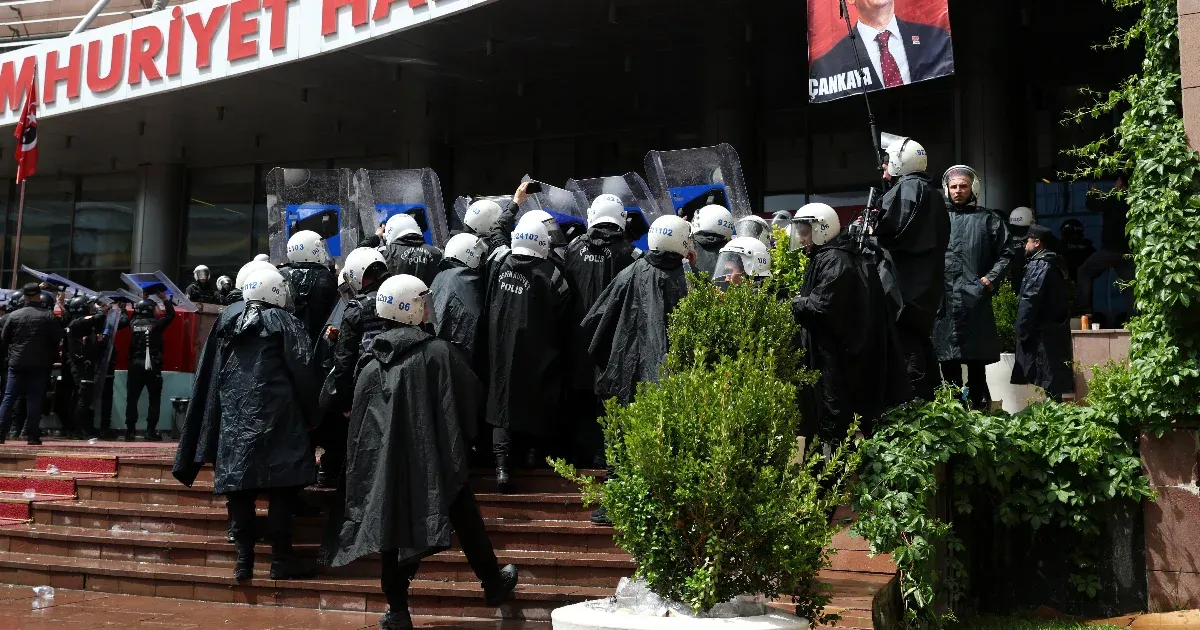
In a significant escalation of political tensions within Turkey, recent reports of law enforcement operations targeting the headquarters of the Republican People’s Party (CHP) have drawn international scrutiny. The events, which unfolded against a backdrop of intensifying friction between the ruling Justice and Development Party (AKP) and the primary opposition, underscore the fragile state of democratic discourse in the country. As the leading opposition force, the CHP remains a central pillar in the ongoing debate over the trajectory of Turkey’s governance and its commitment to institutional independence.
The recent police activity involving the Republican People’s Party (CHP) has sparked urgent questions regarding the separation of powers and the protection of political associations. For those of us monitoring the region, the situation is particularly concerning given the importance of the CHP as a counterweight to the administration of President Recep Tayyip Erdoğan. As an editor specializing in global affairs, I have followed the evolution of these dynamics closely, noting that such interventions often signal broader shifts in the political landscape that affect both domestic stability and international relations.
The Context of Political Friction in Ankara
The relationship between the Turkish government and its opposition has been characterized by deep-seated polarization for years. The recent actions taken against the party, led by Özgür Özel, are being interpreted by many analysts as part of a wider trend of judicial and police pressure on political rivals. According to the Organization for Security and Co-operation in Europe (OSCE), which has closely monitored Turkey’s electoral and political environments, the shrinking space for opposition activity remains a critical point of concern for regional stability.
The Republican People’s Party (CHP) has long advocated for a return to parliamentary norms and has been the most vocal critic of the executive-led governance model currently in place. The party’s leadership has frequently cited the need for judicial reform and the protection of civil liberties as core tenets of their platform. However, these objectives often place them in direct conflict with the central government, leading to legal and administrative hurdles that critics argue are politically motivated.
For context, the Turkish constitution guarantees the freedom of political parties to operate, yet the implementation of these protections has been a subject of intense debate. The Venice Commission of the Council of Europe has previously highlighted concerns regarding the independence of the judiciary in Turkey, noting that political pressures can influence the interpretation of laws, particularly those related to “public order” and “national security.”
Understanding the Current Standoff
The recent incidents involve what the opposition describes as an overreach by law enforcement. While the authorities often cite legal mandates for such operations, the timing—often during periods of political sensitivity—invites skepticism. It is essential to distinguish between standard administrative procedures and actions that may infringe upon the operational autonomy of an opposition political party. In Turkey, the Law on Political Parties (Law No. 2820) provides the framework for party activities, yet its application has become a focal point of domestic contention.
The role of party leaders like Özgür Özel has become increasingly prominent as they navigate these legal challenges. By maintaining a presence and continuing to challenge government policies, the CHP aims to preserve its influence despite the pressures exerted through the legal system. This dynamic is a classic feature of modern competitive authoritarianism, where legal instruments are utilized to constrain political competition without necessarily banning it outright.
Key Takeaways on the Current Situation
- Political Polarization: The divide between the AKP and the CHP continues to deepen, affecting the functionality of civil institutions.
- Legal Scrutiny: The use of police interventions against political offices is being viewed by international observers as a test of Turkey’s democratic resilience.
- Institutional Independence: The ability of political parties to operate without interference remains a primary indicator of democratic health as defined by international standards.
Implications for Turkey’s Democratic Future
The international community, including bodies like the European Union, remains attentive to these developments. As Turkey continues to balance its strategic role in NATO with its internal political challenges, the treatment of opposition parties serves as a barometer for its alignment with democratic norms. A healthy democracy requires not only the existence of an opposition but also its ability to function, campaign and criticize the government without fear of arbitrary intervention.

Looking ahead, the next scheduled updates will likely stem from legal filings by the CHP’s legal team or official statements from the Ministry of Interior regarding the justifications for these police actions. Observers are particularly waiting to see if there will be any formal court challenges brought by the opposition to contest the legality of these raids. Such legal battles are expected to test the independence of the Turkish judiciary once more, providing a clearer picture of the current legal climate.
We invite our readers to share their perspectives on these developments in the comments section below. How do you see the role of opposition parties evolving in the current geopolitical climate? Your insights are a vital part of our ongoing coverage of global affairs.
Note: This report is based on available information as of the current date. Further details will be provided as official records and independent investigations become available.
Related reading