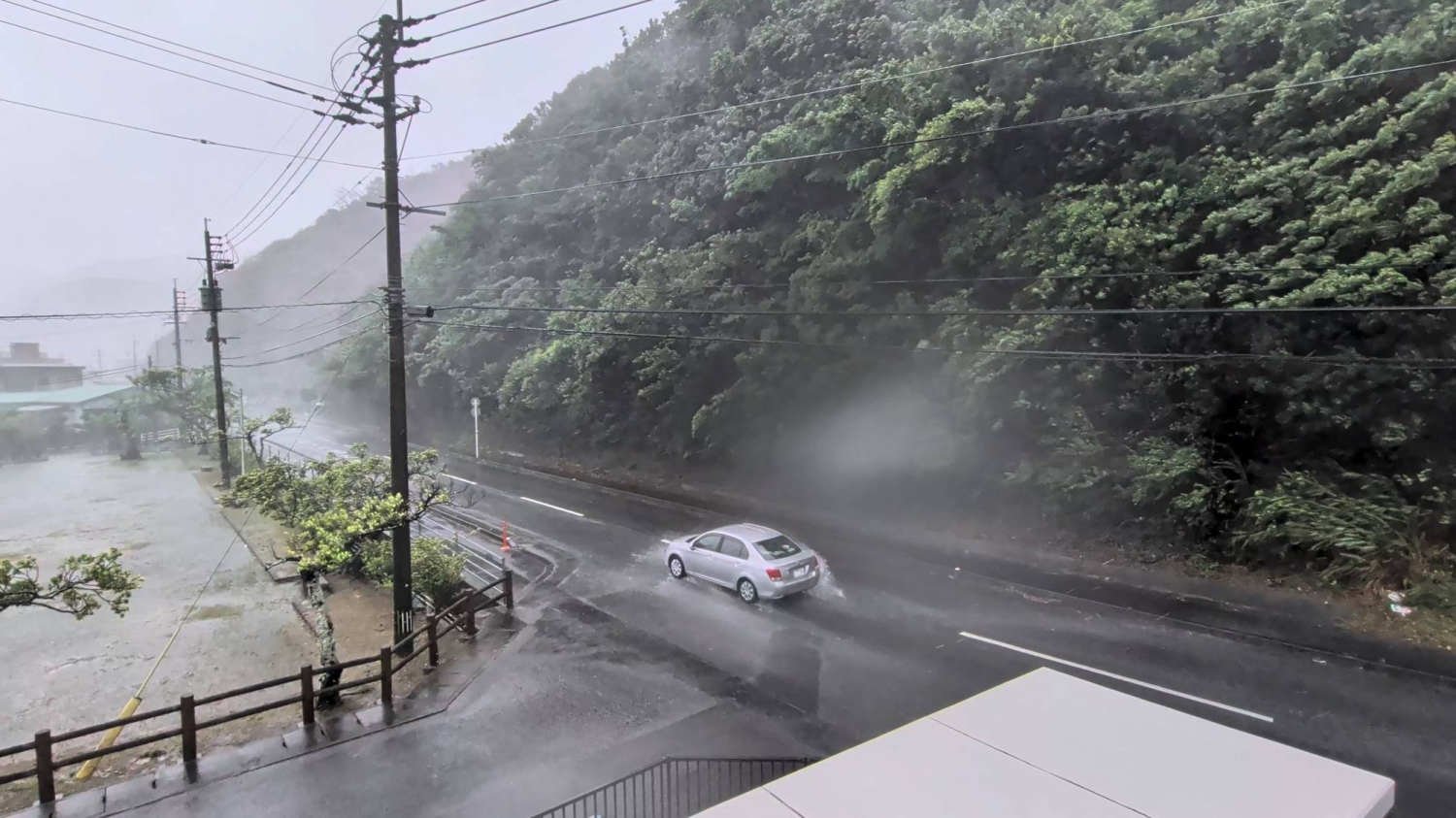
Typhoon Dolphin lashed Japan’s southern Okinawa prefecture on Saturday, injuring five elderly people and knocking out power to thousands of buildings as the slow-moving storm advanced toward the east coast of China. According to the wionews.com, the storm was located about 160 kilometers northwest of Kume Island in Okinawa, moving northwest at roughly 15 kilometers per hour. The typhoon packed maximum sustained winds of 162 kph with powerful gusts reaching 216 kph.
Typhoon Dolphin Batters Southern Japan and Triggers Extensive Closures Across Eastern China
The Okinawa Prefectural Government reported that five elderly residents suffered non-life-threatening injuries, with three individuals falling due to fierce winds. Major domestic carriers, including ANA and Japan Airlines, canceled flights to the region. The storm’s primary impact zones in Japan included Okinawa and Amami island in Kagoshima prefecture. Ahead of the typhoon’s arrival, authorities had previously issued evacuation orders for nearly 260,000 residents in Kagoshima and Okinawa prefectures, while Toyota suspended work at nine factories.
China Enacts Highest-Level Coastal Alerts and Halts Transportation
As Typhoon Dolphin tracked away from Japan, authorities across eastern China braced for landfall, which was expected between late Sunday and early Monday. National authorities declared a level III emergency response, the second-lowest level, while local officials designated the storm as an orange-category typhoon, representing the second-highest level. The RTHK projected landfall most likely between Zhoushan city in Zhejiang province and Fuding city in Fujian province, bringing central winds of 38 to 45 meters per second.

Zhejiang province escalated its coastal typhoon alert to the highest level, halting port operations and suspending 162 passenger ferry routes. Educational facilities and tourist sites were heavily disrupted; authorities in Ningbo ordered schools and other educational facilities to close for the weekend, alongside widespread closures of water-based activities and tourist destinations. Ningbo Lishe International Airport announced it would halt operations beginning late Saturday night and suspend all flights on Sunday. Furthermore, Shanghai’s Yangshan port was cleared of vessels by late Friday, and select rail services in the Yangtze River Delta faced suspensions starting Sunday. Forecasters warned that heavy rain and strong winds would impact eastern China through August 12, with some areas of eastern Zhejiang potentially receiving more than 600 millimeters of rainfall, raising severe risks of flooding and landslides.
Flight Disruptions and Maritime Disputes Impacting Taiwan
The storm’s expansive reach also disrupted travel in Taiwan, where government officials reported that 63 international flights were canceled. Heavy rain was anticipated across northern parts of the island over the weekend, though authorities had not ordered evacuations as of Saturday.
The severe weather further inflamed regional tensions in the Taiwan Strait. Beijing issued an order requiring ships passing through the strategic waterway to obey its traffic-control instructions. Taipei strongly denounced the directive as “ridiculous”, asserting that Beijing holds no right to restrict passage through international waters. China claims the strategic strait alongside democratically governed Taiwan, which it regards as its own territory.
Related reading