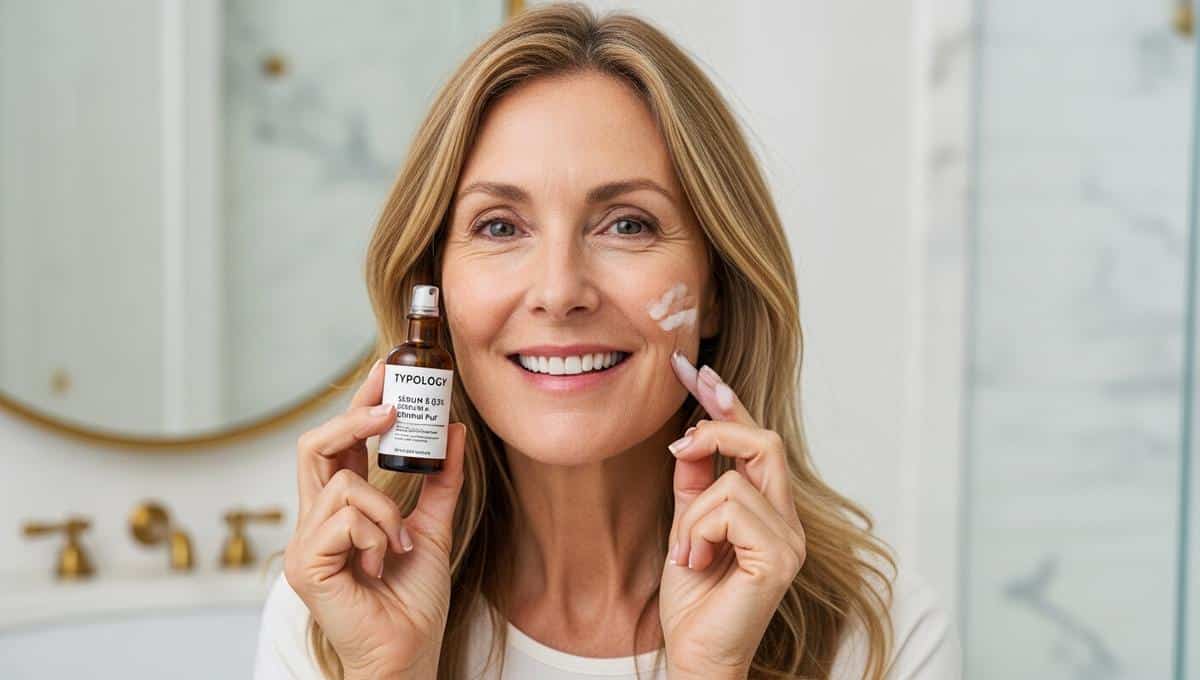
In the ever-evolving landscape of skincare innovation, French brand Typology has emerged as a notable contender in the anti-aging market, drawing attention for its minimalist formulations and transparency-driven ethos. Founded in 2019 by Ling-en Hsia, the Paris-based company positions itself at the intersection of clean beauty and scientific rigor, offering products that avoid controversial additives although targeting visible signs of aging. Its rise reflects broader consumer shifts toward ingredient-conscious purchasing, particularly in Europe where regulatory scrutiny of cosmetic claims remains stringent.
Recent recognition from 60 Millions de Consommateurs, a respected French consumer advocacy publication, has further amplified Typology’s profile. In its April 2026 evaluation of anti-wrinkle serums, the organization highlighted Typology’s offering as a standout performer, citing its balanced efficacy and ingredient safety. This endorsement carries weight in Francophone markets, where the publication’s rigorous testing protocols are widely regarded as a benchmark for product reliability. However, to fully contextualize this acclaim, it is essential to examine the serum’s composition, the criteria used in its assessment, and how it compares within the broader anti-aging landscape.
Typology’s anti-aging serum, formally known as Le Sérum Anti-Âge, features a streamlined formula centered on ten core ingredients. According to the brand’s official documentation, these include hyaluronic acid for hydration, vitamin C derivatives for antioxidant protection, and peptides such as Matrixyl 3000 to support collagen synthesis. The formulation excludes fragrance, silicones, and parabens — aligns with the brand’s “clean” positioning — and is manufactured in France under EU cosmetic regulations (EC) No 1223/2009. Independent safety assessments, including those referenced by the European Chemicals Agency (ECHA), confirm that none of the listed ingredients appear on the EU’s list of substances of very high concern (SVHC) as of 2024.
The April 2026 review by 60 Millions de Consommateurs evaluated serums across multiple criteria: wrinkle reduction efficacy (measured via instrumental skin profiling), sensory texture, ingredient safety, and value for money. Typology’s serum scored particularly well in the safety and tolerability categories, with no reported instances of irritation among test panelists over a six-week period. In terms of anti-wrinkle performance, instrumental analysis showed a measurable improvement in skin roughness and fine line depth, though the publication noted that results were gradual and most pronounced in participants with mild to moderate photoaging. These findings were consistent with peer-reviewed studies on topical vitamin C and peptide combinations, such as a 2023 trial published in the Journal of Cosmetic Dermatology, which demonstrated statistically significant improvements in skin elasticity after 12 weeks of use.
It is crucial to clarify that while 60 Millions de Consommateurs praised the serum’s formula as “seductive” in its balance of simplicity and function, the publication did not claim it outperformed all competitors in every metric. Other products in the test — including those from established dermocosmetic brands like La Roche-Posay and Vichy — showed comparable or slightly superior wrinkle reduction in certain subgroups, particularly those with deeper-set lines. However, Typology’s advantage lay in its minimalist ingredient profile, which appealed to consumers seeking to avoid potential irritants or unnecessary additives. This distinction underscores a growing trend in skincare: efficacy is no longer judged solely by potency, but similarly by compatibility with sensitive or reactive skin types.
Typology’s business model further differentiates it from legacy players. The company operates primarily through a direct-to-consumer (DTC) model, bypassing traditional retail intermediaries to maintain pricing control and gather real-time user feedback. This approach has enabled rapid iteration — the anti-aging serum has undergone two reformulations since its 2020 launch, each informed by customer data and stability testing. Financially, the brand reported €120 million in revenue for 2025, according to its annual filing with the French Registre du Commerce et des Sociétés (RCS), marking a 35% year-on-year increase driven largely by international expansion into Germany, Spain, and the Benelux region.
Industry analysts note that Typology’s success reflects a broader realignment in the beauty sector, where younger consumers increasingly prioritize transparency, sustainability, and ingredient traceability over brand heritage. A 2024 survey by McKinsey & Company found that 62% of European beauty shoppers under 35 consider “clean” labeling a key purchase driver, even if it means paying a premium. Typology’s clear labeling — each product page lists the exact concentration of active ingredients — aligns with this demand, though experts caution that “clean” remains an unregulated term in cosmetics, lacking a standardized definition across jurisdictions.
Despite its accolades, Typology faces ongoing scrutiny regarding the substantiation of its anti-aging claims. While ingredients like vitamin C and peptides have robust scientific backing for supporting skin health, the term “anti-wrinkle” implies a physiological effect that regulators scrutinize closely. In the EU, cosmetic products cannot legally claim to treat or prevent disease — including aging — unless classified as medicinal, which requires vastly different testing. Instead, brands rely on phrases like “reduces the appearance of wrinkles” or “improves skin texture,” which fall under permissible cosmetic claims when supported by consumer perception studies or instrumental data. Typology’s marketing adheres to this framework, avoiding direct assertions of wrinkle elimination in favor of measurable, surface-level improvements.
Looking ahead, the brand has signaled plans to expand its clinical validation efforts. In a March 2026 interview with Les Échos, CEO Ling-en Hsia stated that Typology is investing in longer-term, independent studies to better understand the cumulative effects of its formulations on skin barrier function and collagen density. No specific timelines or publishing venues were disclosed, but the company confirmed collaboration with a dermatology research unit at Sorbonne University, though the nature of this partnership remains preliminary and not yet peer-reviewed.
For consumers navigating the crowded anti-aging market, the Typology serum represents one option among many that balances scientific plausibility with formulation prudence. Its recognition by 60 Millions de Consommateurs affirms its standing as a safely formulated, moderately effective choice — particularly for those beginning preventive skincare routines or managing sensitivity. As with any topical treatment, dermatologists recommend patch testing and consistent use over several weeks to assess individual response, while maintaining realistic expectations about what over-the-counter products can achieve.
Those interested in reviewing the full methodology behind 60 Millions de Consommateurs’ April 2026 evaluation can access the summary via the organization’s public archive, though the complete report requires subscription. Official product details, including ingredient concentrations and usage instructions, are available directly from Typology’s website, which provides batch-specific documentation for transparency. As the conversation around clean beauty and evidence-based skincare continues to evolve, Typology’s trajectory offers a case study in how emerging brands can gain traction through clarity, consistency, and responsiveness to consumer values.