The United States government is expanding its export control framework—a regulatory tool previously reserved for nuclear technology and advanced semiconductors—to include frontier artificial intelligence (AI) models. This shift aims to prevent adversarial nations from accessing high-level AI capabilities, though the move has raised international concerns regarding global “AI dependency” and the potential for a technological divide between the U.S. and the rest of the world.
The move signals a significant change in how Washington approaches technological hegemony. While previous restrictions focused on the hardware required to train AI, such as high-end graphics processing units (GPUs), the new focus targets the software and the intelligence itself. This transition from controlling “compute” to controlling “intelligence” could fundamentally alter how global developers access the most advanced machine learning capabilities.
The Department of Commerce, specifically through the Bureau of Industry and Security (BIS), is the primary agency tasked with managing these restrictions. By treating advanced AI models as dual-use technologies—meaning they have both civilian and military applications—the U.S. seeks to ensure that cutting-edge reasoning capabilities do not enhance the military or surveillance infrastructure of strategic competitors.
Why the U.S. is targeting AI models instead of just hardware
For several years, U.S. policy has centered on limiting the export of advanced semiconductors. Restrictions placed on companies like NVIDIA have aimed to block the flow of powerful chips to countries like China, effectively slowing their ability to train massive AI models. However, policymakers have identified a potential loophole: even if a nation cannot acquire the latest hardware, they may still find ways to access high-level AI capabilities through cloud computing or by utilizing model weights developed by American firms.
According to recent discussions within the Bureau of Industry and Security, controlling the models themselves provides a more direct method of limiting technological advancement in adversarial territories. If the U.S. can regulate the “weights”—the numerical parameters that define an AI’s behavior and knowledge—it can effectively stop the export of the “intelligence” regardless of the hardware used to run it.
This strategy addresses the rise of “inference-as-a-service,” where users from around the world access powerful models via the cloud rather than running them on local hardware. By implementing controls on the models, the U.S. government aims to close the gap between hardware restrictions and software accessibility.
The shift from semiconductor restrictions to intelligence controls
To understand the scale of this shift, it is necessary to compare the current approach with the existing semiconductor controls. The distinction lies in the layer of the technology stack being targeted.
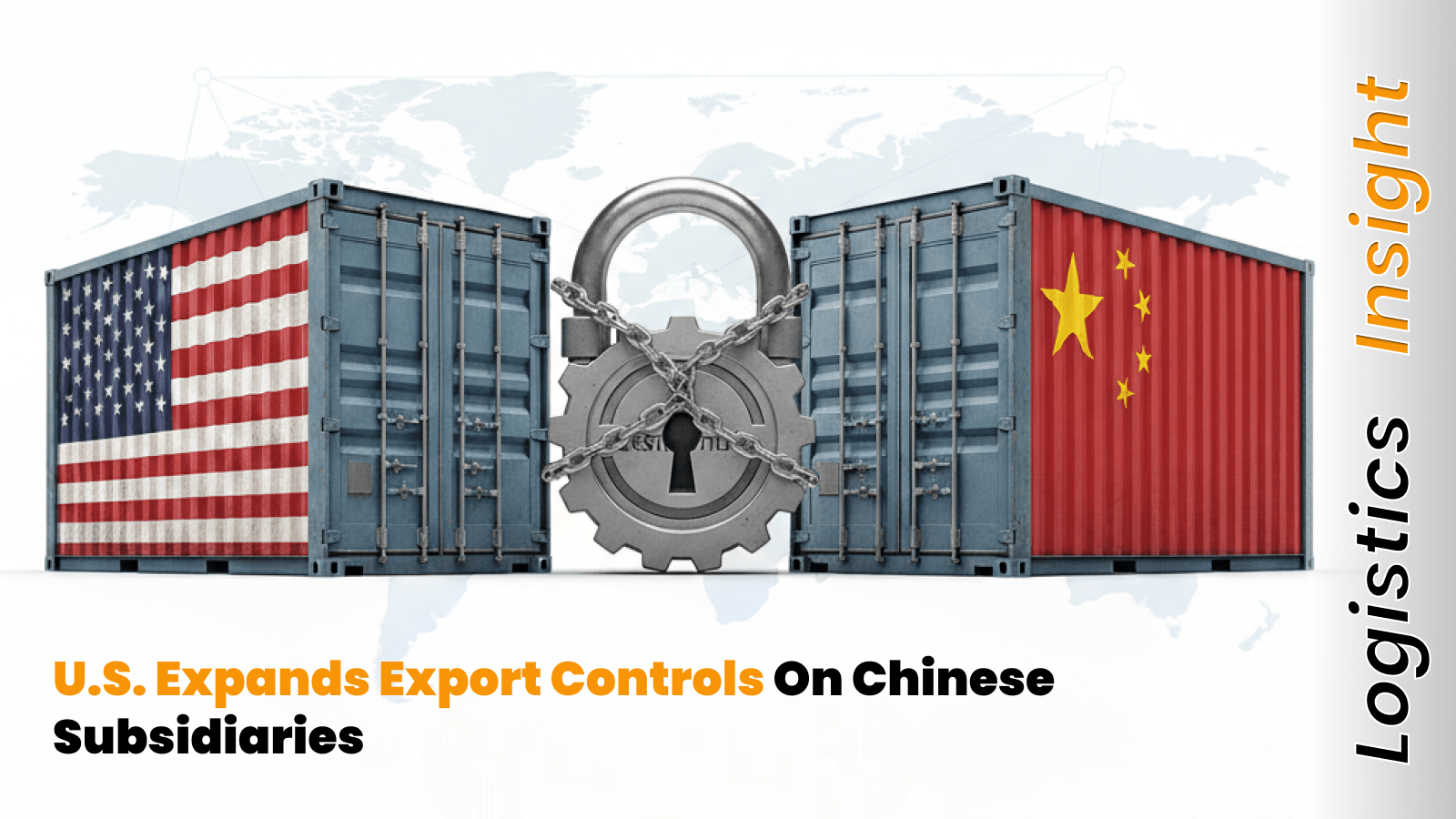
The semiconductor controls, established in recent years, focus on the physical layer. These regulations target the manufacturing equipment and the chips themselves, such as the NVIDIA H100 or Blackwell architectures. These are tangible goods that move through physical supply chains. In contrast, AI model controls target the digital layer. A model is essentially a massive file of data that can be transmitted instantly across borders, making it much harder to monitor and intercept than a shipment of silicon wafers.
The implications of this shift are twofold:
- Complexity of Enforcement: Monitoring the digital transfer of model weights or the use of API-based access requires a different set of regulatory tools than tracking physical shipments.
- Scope of Impact: While semiconductor controls primarily affect chipmakers and manufacturers, AI model controls will directly impact software developers, cloud service providers, and the research community.
Growing concerns over global AI dependency and sovereignty
The expansion of these controls has sparked a debate over “AI sovereignty.” As the U.S. tightens its grip on frontier models, many nations are expressing concern that they will become perpetually dependent on American-controlled technology. This creates a risk where non-U.S. entities may find themselves unable to develop independent AI capabilities or may be forced to adhere to U.S.-defined safety and ethical standards to maintain access.
Critics argue that these restrictions could lead to a bifurcated global AI ecosystem. On one side, a group of U.S.-aligned nations would have seamless access to the most advanced “frontier” models. On the other, nations excluded from these technologies might be forced to develop their own, potentially less advanced, alternatives or fall behind in critical sectors like biotechnology, materials science, and cybersecurity.
The concept of “AI dependency” refers to the scenario where a nation’s digital economy and scientific research become reliant on infrastructure and intelligence that can be revoked by a foreign government. This concern is particularly acute for nations that lack the massive capital and computational resources required to train models that rival those produced by companies like OpenAI, Google, or Anthropic.
Comparing Hardware vs. Model Controls
| Feature | Semiconductor Controls (Hardware) | AI Model Controls (Software/Intelligence) |
|---|---|---|
| Primary Target | GPUs, AI Accelerators, Lithography machines | Frontier model weights, API access, training datasets |
| Regulatory Agency | Department of Commerce (BIS) | Department of Commerce (BIS) / Executive Orders |
| Main Challenge | Supply chain tracking and physical smuggling | Digital distribution and cloud-based inference |
| Geopolitical Goal | Limit computational capacity | Limit cognitive/reasoning capabilities |
What happens next for the global tech industry?
The tech industry is currently awaiting more specific guidance on how these controls will be implemented. While the intent to regulate frontier models is clear, the exact thresholds for what constitutes a “frontier model”—whether it is based on total compute used for training, the number of parameters, or specific capabilities—remain a subject of intense negotiation between the government and industry leaders.
For companies operating globally, the uncertainty is significant. Developers must now consider whether their products could be classified under new export categories, which would require them to obtain specific licenses before offering services to certain international markets. This regulatory burden could slow the pace of global collaboration in AI research.
The next major checkpoint for these regulations will be the formalization of the “compute threshold” definitions and any subsequent updates to the Executive Order on Artificial Intelligence, which outlines the framework for managing these emerging risks. Industry analysts expect further clarity from the Department of Commerce as they refine the technical metrics used to define high-capability models.
How do you think these restrictions will affect global innovation? Do you believe they are necessary for security, or do they risk creating a technological divide? Share your thoughts in the comments below and share this article with your network.
Keep reading