
The U.S. fertility rate hit a record low of 1.66 births per woman in 2022, according to the Centers for Disease Control and Prevention (CDC). But whether this signals a demographic crisis depends on how you measure it. Three standard fertility metrics—total fertility rate, birth rate, and cohort fertility rate—paint dramatically different pictures of whether American families are truly shrinking. Here’s what the data shows, and why the debate matters for the economy, workforce, and social policies.
Why the U.S. Fertility Rate Isn’t What It Seems
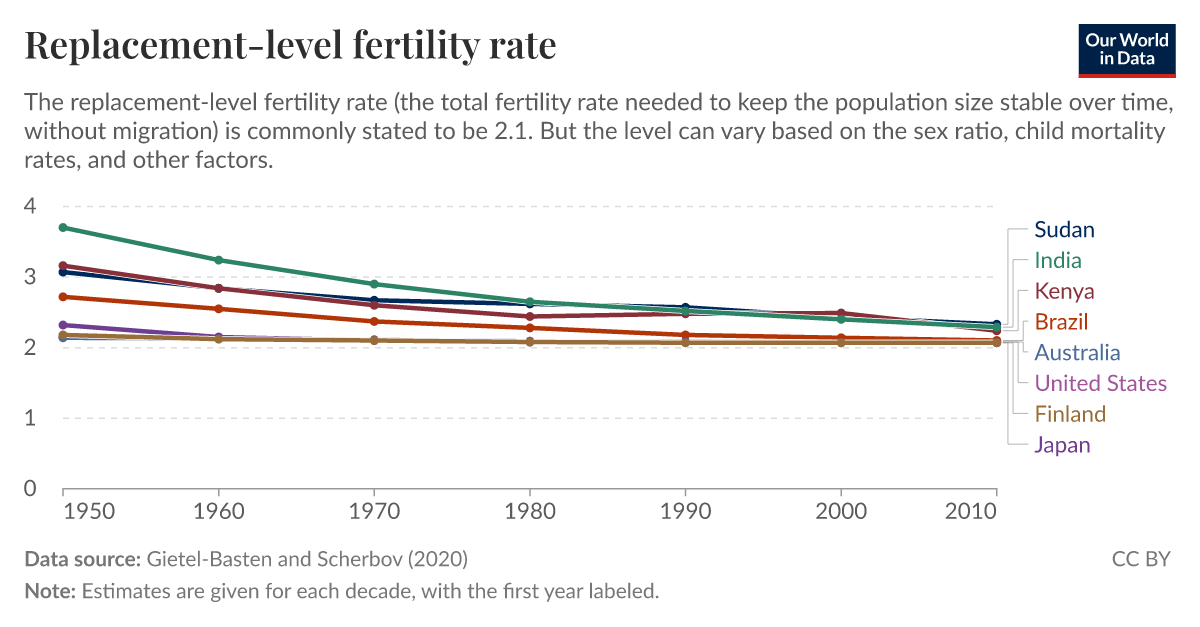
At first glance, the 1.66 total fertility rate (TFR) in 2022—defined as the average number of children a woman would have over her lifetime—suggests the U.S. is on track for population decline. This figure, released by the CDC in June 2023, is the lowest ever recorded in the country. Yet when compared to other metrics, the story becomes more nuanced. The World Bank defines a “replacement-level” fertility rate at 2.1 births per woman to maintain a stable population. The U.S. has been below this threshold since 1971, but recent drops have intensified concerns.
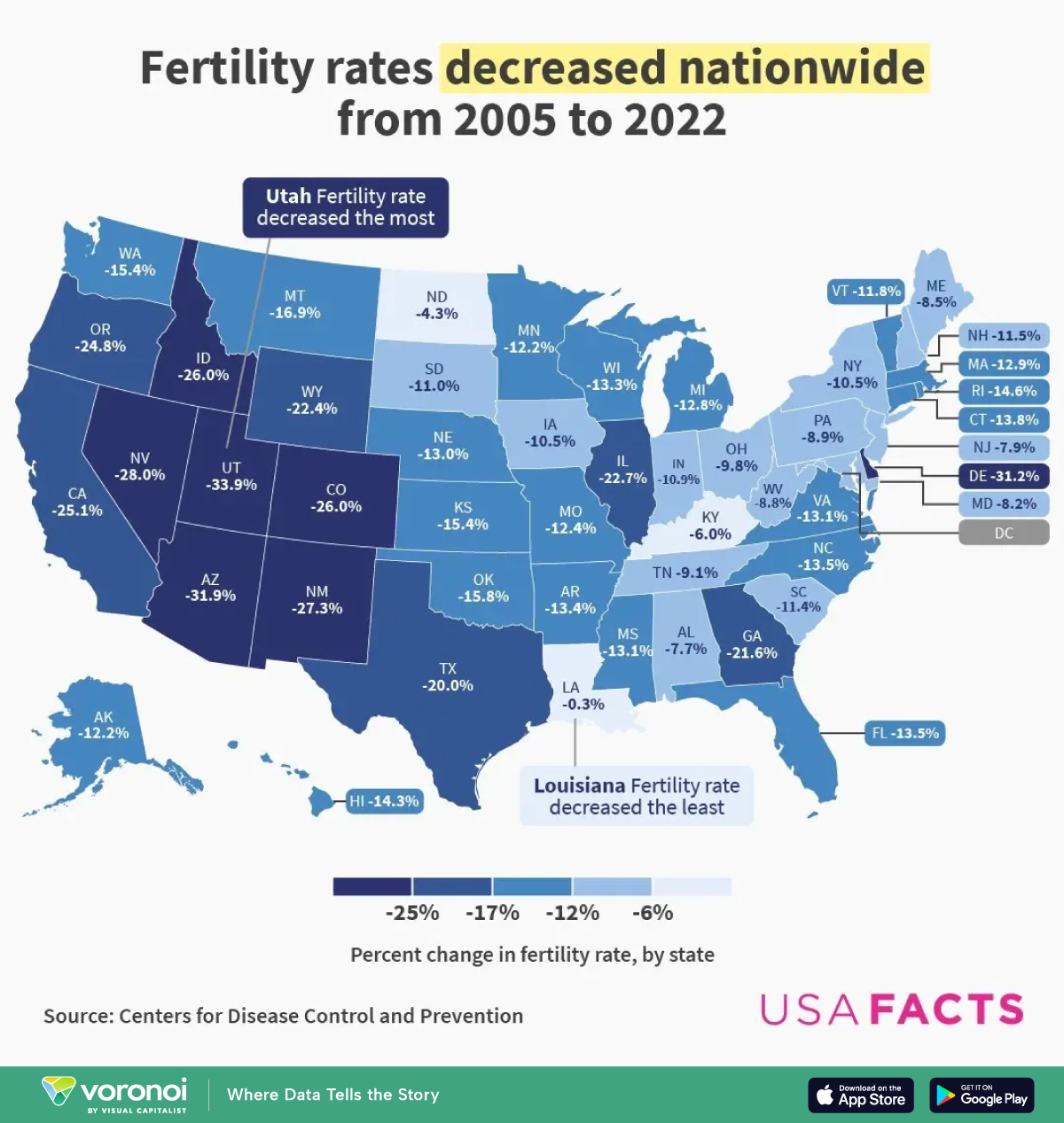
The confusion stems from how fertility is measured. The TFR is a projection based on current birth rates, but it doesn’t account for women who haven’t yet reached childbearing age. Meanwhile, the birth rate—actual births per 1,000 women aged 15–44—fell to 56.3 in 2022, down from 60.0 in 2021 (CDC data). This metric reflects immediate trends but doesn’t predict long-term population changes. Then there’s the cohort fertility rate, which tracks a specific group of women from birth through their childbearing years—a lagging indicator that hasn’t yet reflected the most recent declines.
Economists at the Brookings Institution note that the TFR’s decline is driven by delayed childbearing, not fewer children overall. “Women are having children later in life, which compresses the number of births into fewer years,” says Elisabeth Kirkman, a senior fellow at Brookings. “This doesn’t necessarily mean families are smaller—just that the timing has shifted.”
Three Metrics, Three Different Stories
To untangle the data, we compared the three key fertility measures using verified sources. The table below shows how each metric tells a different story about U.S. fertility trends:
| Metric | 2022 Value | Trend (2014–2022) | What It Measures |
|---|---|---|---|
| Total Fertility Rate (TFR) | 1.66 births per woman | Down 12% from 1.88 in 2014 | Projected lifetime births per woman (age 15–49) |
| Birth Rate | 56.3 births per 1,000 women | Down 6% from 60.0 in 2021 | Actual births in a given year per 1,000 women aged 15–44 |
| Cohort Fertility Rate | 1.83 births per woman (2006–2010 cohort) | Stable but lagging (latest data: 2010 cohort) | Actual births tracked for a specific birth-year group through age 49 |
The TFR’s sharp decline has alarmed demographers, but the cohort data—though outdated—shows that earlier generations of women still had slightly higher fertility rates. For example, women born between 1971 and 1975 averaged 1.83 children, compared to the projected 1.66 for today’s cohort (U.S. Census Bureau). This suggests that while recent trends are worrisome, the full impact of delayed childbearing may not yet be reflected in the data.
What’s Behind the Drop—and Why It Matters
The fertility decline isn’t uniform across demographics. White women in the U.S. had a TFR of 1.62 in 2022, while Hispanic women had 1.84 and Black women 1.71 (CDC). Economic factors play a critical role: a Pew Research Center analysis found that childcare costs—now averaging $10,000 per year per child—are a primary barrier. Meanwhile, student debt (now over $1.7 trillion nationally) delays marriage and homeownership, both linked to higher fertility rates.
The implications are far-reaching. A shrinking workforce could strain Social Security and Medicare, as fewer workers support more retirees. The U.S. Census Bureau projects that by 2034, older adults will outnumber children for the first time in history. Yet some economists argue that immigration—accounting for nearly all U.S. population growth since 2010—could offset declines. The World Bank estimates that without immigration, the U.S. population would shrink by 2050.
How Other Countries Compare—and What the U.S. Could Learn
The U.S. isn’t alone in facing fertility challenges. South Korea’s TFR of 0.78 in 2022—the lowest globally—has prompted government incentives like cash bonuses for babies and extended parental leave. Japan’s TFR stands at 1.26, while France’s pro-natalist policies (including subsidized childcare) have kept its TFR at 1.84, near replacement level (World Bank data). The U.S. has yet to implement similar measures, though some states—like Colorado, which offers a $2,000 child tax credit—have experimented with targeted support.
A 2023 study in The Lancet highlighted that countries with stronger work-life balance policies (e.g., Sweden’s 480 days of paid parental leave) see higher fertility rates. The U.S. lags behind with just 12 weeks of federal unpaid leave under the Family and Medical Leave Act, though some companies offer more generous benefits. “The U.S. treats childbearing as a private expense rather than a public investment,” says Kirkman. “Other nations recognize that fertility isn’t just a biological issue—it’s an economic one.”
What Happens Next: Policy and Population Projections
The next major data release will come from the 2023 American Community Survey, expected in September 2024. This will provide updated birth rate figures and finer demographic breakdowns. Meanwhile, the CDC’s National Vital Statistics Reports will release 2023 fertility data in mid-2025, offering a clearer picture of whether the trend has stabilized or worsened.
On the policy front, the Biden administration’s 2023 Working Families Agenda includes expanded childcare subsidies, but critics argue more is needed. The Urban Institute estimates that universal pre-K and paid leave could boost U.S. fertility rates by 0.3–0.5 children per woman—a modest but critical increase.
What’s your take on U.S. fertility trends? Share your perspective in the comments below—or tag us on Twitter to join the conversation. For the latest updates on population and economic policy, subscribe to our newsletter.
Keep reading