US-Iran Tensions Escalate as Trump Threatens Hormuz Blockade Lift and Netanyahu Warns of Ongoing Threats
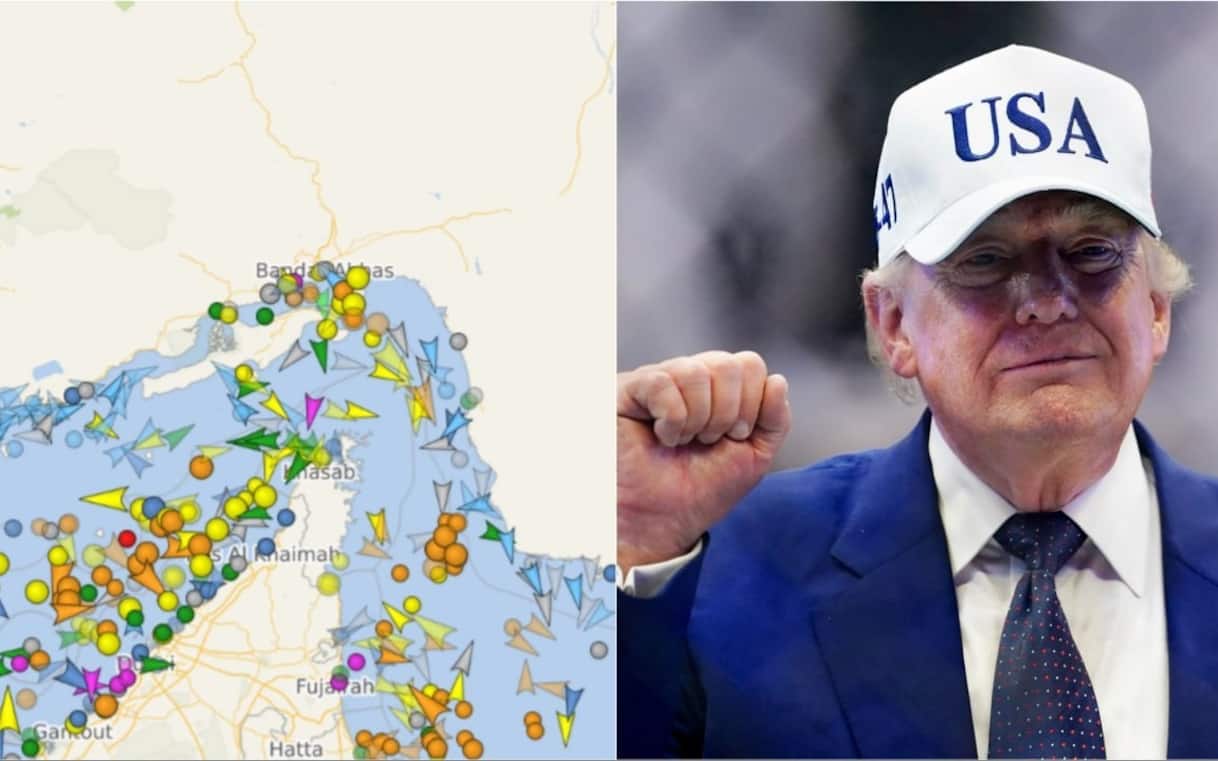
Former US President Donald Trump has declared that the Strait of Hormuz will be “completely open” by Friday, June 14, 2024, amid escalating tensions between Washington and Tehran. The statement comes as reports emerge of a preliminary agreement between the US and Iran, raising concerns in Israel, where Prime Minister Benjamin Netanyahu has described the talks as “a victory for Israel” while cautioning that the conflict with Iran is “far from over.”
According to Reuters, the US and Iranian negotiators have been engaged in indirect talks in Oman, with sources indicating progress on reducing tensions in the region. However, no formal deal has been reached, and both sides remain cautious about publicizing details. The Strait of Hormuz, a critical chokepoint for global oil shipments, has been a flashpoint in recent months, with Iran-backed Houthi attacks in the Red Sea and US-led naval operations in the Gulf raising fears of broader conflict.
Trump’s statement, made during a campaign rally in New Hampshire, comes as he seeks to position himself as a strong leader on Iran policy ahead of the November US presidential election. “The Strait of Hormuz will be completely open by Friday,” Trump said, according to The New York Times. “We will not allow Iran to threaten our allies or disrupt global energy supplies.” His remarks were met with skepticism from some analysts, who noted that the US has no direct military presence in the Strait of Hormuz and that any decision to “open” or “close” it would involve coordination with regional allies, including Saudi Arabia and the UAE.
In Jerusalem, Israeli Prime Minister Benjamin Netanyahu addressed the situation in a speech to his cabinet, acknowledging that the US-Iran talks have “saved Israel from a direct confrontation with Iran” but warning that the threat from Tehran remains significant. “We have bought time, but the war against Iran is not over,” Netanyahu said, according to The Times of Israel. His comments reflect Israel’s deep concerns about Iran’s nuclear program and its support for proxy groups like Hezbollah and Hamas.
What Happens Next: The Strait of Hormuz, US-Iran Talks, and Israel’s Role
- Trump’s Hormuz Statement: The former president’s declaration that the Strait of Hormuz will be “completely open” by Friday is seen as a political move ahead of the US election. However, no concrete military actions have been announced, and the statement lacks operational clarity.
- US-Iran Talks: Indirect negotiations in Oman have made progress, but no formal agreement has been reached. The talks focus on reducing tensions, particularly in the Red Sea and Gulf regions, but key issues like Iran’s nuclear program and regional proxies remain unresolved.
- Israel’s Position: Netanyahu has framed the talks as a temporary reprieve, emphasizing that Israel will not allow Iran to achieve nuclear capabilities or expand its influence in the region.
- Regional Allies: Saudi Arabia and the UAE have been monitoring the talks closely, with Riyadh reportedly seeking guarantees on Iran’s behavior before considering any normalization with Tehran.
- Global Oil Markets: The Strait of Hormuz accounts for about 20% of the world’s seaborne oil trade. Any disruption in the region could lead to sharp increases in oil prices, as seen in recent months due to Houthi attacks and US-led naval operations.
Why the Strait of Hormuz Is a Global Flashpoint
The Strait of Hormuz, a narrow waterway between Iran and Oman, is one of the world’s most strategically important maritime chokepoints. It connects the Persian Gulf to the Gulf of Oman and the open ocean, serving as a critical route for oil tankers transporting approximately 21 million barrels of oil per day—about 20% of global oil supplies, according to the US Energy Information Administration.
Iran has repeatedly threatened to close the strait in response to US sanctions and military actions, including the 2020 killing of Iranian General Qasem Soleimani. In 2019, Iranian forces seized foreign oil tankers in the strait, and in 2021, Iran-backed Houthi rebels in Yemen launched attacks on commercial ships, including those linked to Saudi Arabia and the UAE. The US has responded with naval patrols and strikes on Houthi positions, further escalating tensions.
Analysts warn that any disruption in the strait could trigger a sharp spike in oil prices, similar to the 2022 crisis when Russia’s invasion of Ukraine sent global markets into turmoil. The International Monetary Fund has previously estimated that a prolonged closure of the strait could push oil prices above $200 per barrel, leading to a global economic slowdown.
Netanyahu Calls US-Iran Talks a “Victory for Israel” but Warns of Ongoing Threats
Israeli Prime Minister Benjamin Netanyahu has framed the US-Iran talks as a necessary step to avoid direct conflict but has made it clear that Jerusalem will not accept any deal that allows Iran to advance its nuclear program or expand its influence in the region.
“We have saved Israel from a direct confrontation with Iran, but this is not the end of the story,” Netanyahu said in a speech to his cabinet, according to Haaretz. His remarks reflect Israel’s long-standing policy of opposing any diplomatic engagement with Iran unless it fully suspends its nuclear activities and ceases supporting militant groups like Hezbollah and Hamas.
Israel has been particularly concerned about Iran’s uranium enrichment program, which international inspectors have confirmed is advancing despite the 2015 nuclear deal (JCPOA). The International Atomic Energy Agency (IAEA) reported in May that Iran’s stockpile of enriched uranium had reached 3,000 kilograms, far exceeding the limits set by the JCPOA. Israel has repeatedly called for a return to full compliance with the deal, though the US and other Western powers have been reluctant to revive it without significant concessions from Iran.
Netanyahu’s warning also comes as Israel faces multiple fronts in its conflict with Hamas in Gaza and Hezbollah in Lebanon. Israeli officials have privately expressed fears that any US-Iran deal could embolden Hezbollah to escalate attacks along the northern border, forcing Israel to divert military resources from Gaza.
US-Iran Talks: Progress, Sticking Points, and What’s Next
Diplomatic sources confirm that US and Iranian negotiators have been meeting indirectly in Oman since early June, with a focus on reducing tensions in the Red Sea and Gulf regions. While no formal agreement has been reached, participants have described the talks as “constructive,” according to Al-Monitor.
The talks are reportedly centered on three key issues:
- Red Sea Security: The US and Iran are discussing measures to reduce Houthi attacks on commercial ships, which have disrupted global trade and prompted US naval operations in the region.
- Gulf Stability: Iran has reportedly agreed to reduce its support for militias in Iraq and Syria, though details remain unclear. The US is seeking assurances that Iran will not escalate attacks on US forces or regional allies.
- Nuclear Program: While the nuclear issue is not the primary focus of the current talks, the US has reportedly pressed Iran to return to compliance with the JCPOA, particularly on uranium enrichment levels.
However, significant hurdles remain. Iran has demanded that the US lift sanctions, particularly those targeting its oil exports and financial sector, while the US insists on verifiable Iranian concessions before any relief. Additionally, Saudi Arabia and the UAE have expressed skepticism, with Riyadh reportedly seeking ironclad guarantees that Iran will not resume attacks on its territory.
Analysts suggest that any agreement is unlikely to be comprehensive, with both sides focusing on short-term confidence-building measures rather than a broad deal. “This is not going to be a grand bargain,” said Trita Parsi, executive vice president of the Quincy Institute. “But if both sides can reduce tensions, it could buy time for further negotiations.”
How Regional Powers Are Responding to US-Iran Talks
Saudi Arabia and the UAE have been closely monitoring the US-Iran talks, with both countries seeking assurances that any deal will lead to lasting stability in the Gulf. Riyadh, in particular, has been cautious, given its history of tensions with Iran, including the 2019 attacks on its oil facilities.
In a statement, the Saudi Foreign Ministry said it “welcomes any efforts to reduce tensions in the region,” but added that “any agreement must be comprehensive and address all sources of instability,” according to Saudi Gazette. The UAE, which has been engaged in its own diplomatic outreach to Iran, has similarly called for a “step-by-step” approach to any potential deal.
In Turkey, President Recep Tayyip Erdoğan has expressed optimism about the talks, suggesting that Ankara could play a mediating role. “We believe that dialogue is the only way to resolve differences,” Erdoğan said in a recent speech, according to Hürriyet Daily News. Turkey has historically maintained close ties with both the US and Iran, positioning itself as a potential bridge in regional diplomacy.
Meanwhile, in Baghdad, Iraqi officials have reported a reduction in Iranian-backed militia activity, though tensions remain high. The US has been working with Iraqi authorities to counter Iranian influence, particularly in the southern provinces where militias aligned with Tehran have clashed with US forces.
Frequently Asked Questions About US-Iran Tensions and the Strait of Hormuz
1. What is the Strait of Hormuz, and why is it important?
The Strait of Hormuz is a narrow waterway between Iran and Oman that connects the Persian Gulf to the Gulf of Oman and the open ocean. It is one of the world’s most critical chokepoints for global oil trade, with about 20% of the world’s seaborne oil passing through it daily. Any disruption could lead to sharp increases in oil prices and global economic instability.
2. What does Trump mean by saying the Strait of Hormuz will be “completely open” by Friday?
Trump’s statement is likely a political move ahead of the US election, signaling his commitment to securing the strait. However, there is no clear military plan to “open” it, as the US relies on regional allies like Saudi Arabia and the UAE for naval security in the area. Some analysts suggest his remarks may be aimed at reassuring voters rather than outlining a specific action.

3. Are the US and Iran really close to a deal?
Indirect talks in Oman have made progress, but no formal agreement has been reached. The negotiations focus on reducing tensions in the Red Sea and Gulf, but key issues like Iran’s nuclear program and regional proxies remain unresolved. Both sides are cautious about publicizing details, and any deal is unlikely to be comprehensive.
4. How is Israel reacting to the US-Iran talks?
Israeli Prime Minister Benjamin Netanyahu has described the talks as a temporary reprieve, acknowledging that they have “saved Israel from a direct confrontation with Iran.” However, he has warned that the conflict is “far from over” and that Israel will not accept any deal that allows Iran to advance its nuclear program or expand its influence in the region.
5. What could happen if the Strait of Hormuz is disrupted?
A disruption in the Strait of Hormuz could lead to a sharp spike in oil prices, potentially pushing Brent crude above $200 per barrel, according to some analysts. This would trigger a global economic slowdown, with significant impacts on inflation, supply chains, and energy-dependent industries. The International Monetary Fund has previously warned that such a scenario could have severe consequences for the global economy.
Related reading