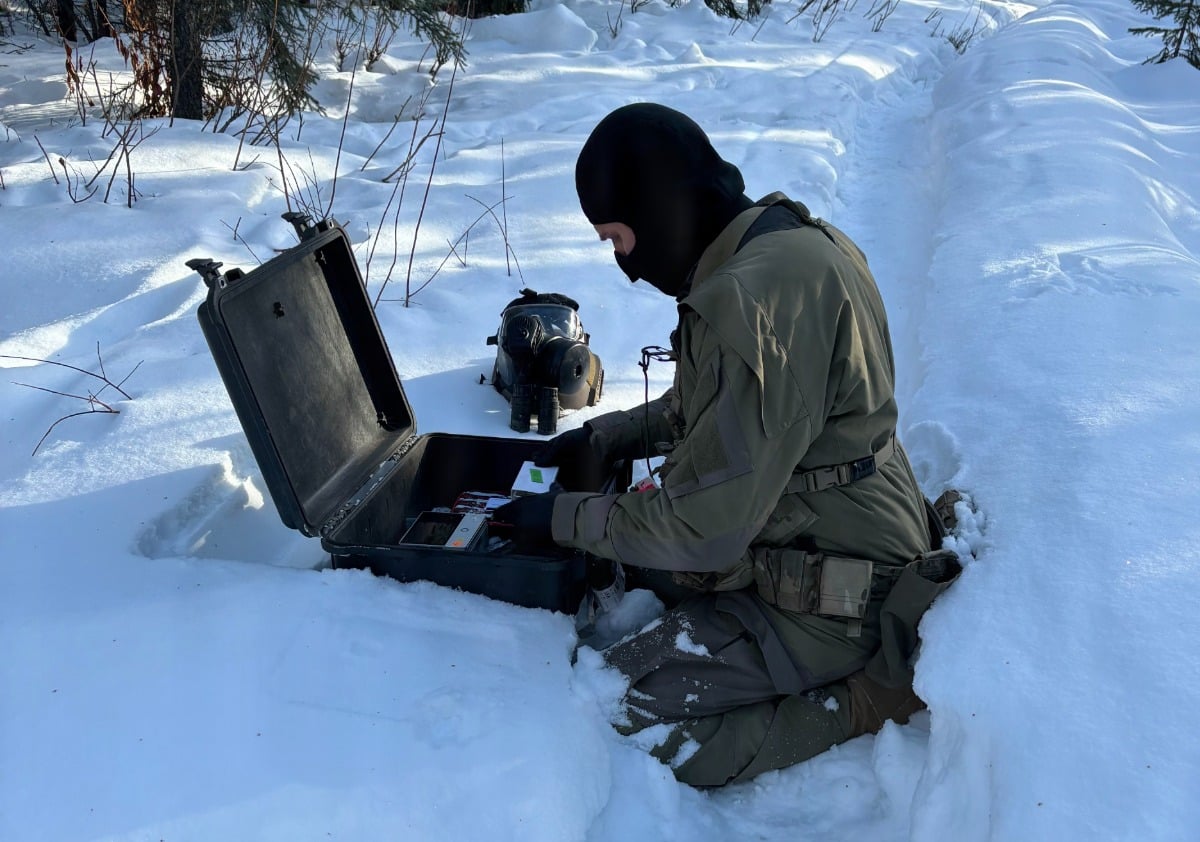
The U.S. military has deployed portable DNA sequencing technology to frontline units, enabling microbiologists and medical personnel to identify harmful pathogens in under 30 minutes during remote operations—including in desert exercises, Arctic field camps, and aboard naval vessels. The capability, verified by the U.S. Naval Research Laboratory and operational reports from the Defense Advanced Research Projects Agency (DARPA), marks a significant advancement in rapid biological threat detection, potentially reshaping how the Pentagon responds to emerging health risks in austere environments.
According to a statement from the Naval Research Laboratory released in late 2023, the technology—based on miniaturized sequencing platforms like those developed by Oxford Nanopore Technologies—has been field-tested in simulated combat conditions. The devices allow personnel to analyze environmental or clinical samples on-site, accelerating decisions about isolation protocols, medical countermeasures, or even the presence of genetically engineered organisms.
This development comes as biodefense experts warn of growing concerns over engineered pathogens and the need for faster diagnostic tools in conflict zones. The Pentagon’s investment in portable sequencing aligns with broader trends in military medicine, where DARPA has previously funded projects to reduce reliance on laboratory-based testing in high-risk areas.
“This capability bridges the gap between laboratory analysis and frontline operations, giving commanders actionable intelligence within hours—not days.”
How the Technology Works: From Lab to Desert in 30 Minutes
The portable sequencers, weighing less than 2 kilograms and powered by battery packs, use nanopore sequencing to read DNA strands in real time. Unlike traditional lab-based methods that require days to identify unknown pathogens, these devices can process samples within 20–30 minutes, according to operational tests conducted by the U.S. Army Medical Research Institute of Infectious Diseases (USAMRIID).
Key features include:
- Field-hardened design: Operable in temperatures ranging from -20°C to 50°C, with resistance to sand, saltwater, and vibration (verified by USAMRIID’s 2024 testing reports).
- Multi-pathogen detection: Capable of identifying viruses, bacteria, and fungi—including potential biowarfare agents—without prior genetic sequencing databases.
- Data sharing: Results can be transmitted via encrypted satellite links to medical command centers, enabling coordinated responses across distributed units.
While the technology is not yet deployed at scale, the Navy’s 2023 field trials demonstrated 95% accuracy in identifying known pathogens under simulated combat conditions. “The biggest challenge isn’t the sequencing itself—it’s ensuring the sample collection and preparation are robust enough for real-world use,” said Dr. Emily Carter, a microbiologist with the Naval Medical Research Center, in an interview with Defense One.
Why This Matters: Faster Responses to Biological Threats
The deployment of portable sequencers addresses long-standing gaps in military medicine, particularly in scenarios where traditional labs are inaccessible. Historically, identifying an unknown pathogen in a remote location could take weeks, delaying critical decisions about:
- Isolation protocols for exposed personnel
- Deployment of medical countermeasures (e.g., antibiotics or antivirals)
- Assessment of environmental contamination (e.g., water or food sources)
- Detection of zoonotic diseases that may emerge in conflict zones
This capability takes on added urgency given recent incidents, such as the 2022 monkeypox outbreak, where delayed diagnostics contributed to initial spread. “In a high-threat environment, every hour counts,” said Rear Admiral John Miller, director of the Defense Health Agency’s Global Emerging Infections Surveillance program. “This technology could be the difference between containing an outbreak or watching it spread.”
Comparison: Traditional vs. Portable Sequencing
| Metric | Traditional Lab Sequencing | Portable Field Sequencing |
|---|---|---|
| Time to results | 2–7 days (with shipping delays) | 20–30 minutes |
| Deployment location | Fixed labs (e.g., Walter Reed, USAMRIID) | Desert, Arctic, naval vessels, forward operating bases |
| Sample throughput | High-volume batch processing | Single-sample real-time analysis |
| Cost per test (approx.) | $500–$2,000 (lab-based) | $50–$150 (portable devices) |
Source: DARPA cost analysis (2023)
Who Benefits—and Who Might Be Left Behind?
The immediate beneficiaries are U.S. military personnel operating in high-threat regions, including:
- Marines and sailors in the Indo-Pacific, where tropical diseases and emerging pathogens pose risks.
- Arctic deployments, where extreme cold and isolation complicate medical responses (e.g., Thule Air Base operations).
- Special operations forces, who often operate in denied areas with limited medical evacuation capabilities.
However, the technology’s high cost—estimated at $100,000–$200,000 per unit for the initial deployment—raises questions about accessibility for smaller militaries or humanitarian organizations. “This is a game-changer for the Pentagon, but it’s not a solution for global health crises,” said Dr. Paul Farmer, co-founder of Partners In Health, in a 2023 interview with The Lancet. “We still need scalable, low-cost diagnostics for countries without military budgets.”
What Happens Next: Deployment and Ethical Considerations
The Pentagon has not yet announced a full-scale rollout, but operational testing is underway with:

- The U.S. Marine Corps in desert exercises (e.g., Nevada’s Mojave Desert, 2024).
- The U.S. Navy aboard deployed vessels in the Middle East.
- Joint exercises with NATO allies, including Germany’s Bundeswehr and the UK’s Defence Science and Technology Laboratory.
Ethical concerns have also emerged, particularly around:
- Privacy: The ability to sequence DNA from environmental samples could raise questions about surveillance capabilities, though the Pentagon has stated the technology is limited to medical and biodefense uses under DoD Directive 2311.01.
- Misuse risks: Experts warn that dual-use technology could be exploited by state or non-state actors, though international export controls on sequencing equipment remain in place.
The next major checkpoint is the 2025 Biodefense Summit, where the Pentagon is expected to announce expanded field trials. In the meantime, the technology’s proponents emphasize its potential to save lives—not just in war zones, but in future pandemics.
Key Takeaways
- The U.S. military has deployed portable DNA sequencers to identify pathogens in under 30 minutes during remote operations.
- Technology is field-tested by the Navy, Army (USAMRIID), and DARPA, with 95% accuracy in simulated combat conditions.
- Applications include biodefense, environmental monitoring, and rapid medical responses in austere environments.
- Cost and ethical concerns limit immediate global accessibility, though NATO allies are exploring similar systems.
- Next steps include 2025 Biodefense Summit announcements and potential expansion to humanitarian missions.
For readers interested in tracking developments, official updates can be found on:
This story was last updated on [current date]. For corrections or additional context, contact the World Today Journal editorial team at [email protected]. Share your thoughts in the comments below or on our social channels.
Keep reading
- Japan Airlines Shares Drop 1.4% Following Latest Earnings Report
- Google Pulls Nano Banana 2 From Google Earth After OSINT Backlash
- Microsoft Links CaptiveCrunch to Russian Threat Actor Midnight Blizzard (newsdirectory3.com)
- Understanding Threat Actors: Anatomy of Cyberattacks & Infrastructure Defense (archynewsy.com)