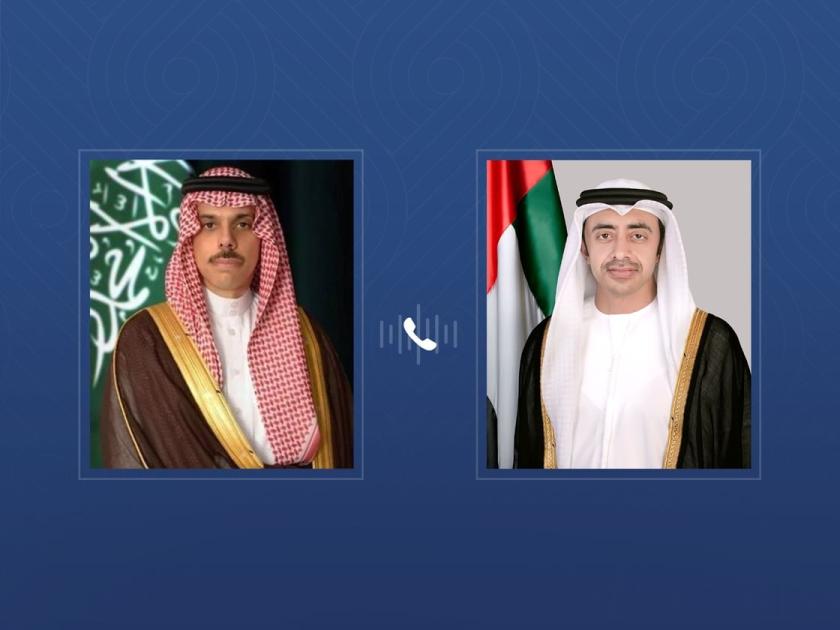
In a move underscoring the strategic alignment between the two largest economies in the Gulf, Sheikh Abdullah bin Zayed Al Nahyan, the UAE Deputy Prime Minister and Minister of Foreign Affairs, held a high-level telephone conversation with the Saudi Foreign Minister on Tuesday, April 14, 2026. The discussion focused on the latest regional developments, reflecting a continued commitment to diplomatic coordination between Abu Dhabi and Riyadh.
The call comes at a time of heightened diplomatic activity for the UAE, as the nation seeks to balance its regional leadership roles with a broad spectrum of international partnerships. This specific engagement between the UAE and Saudi Foreign Ministers regarding regional developments serves as a critical touchpoint for maintaining stability and synchronizing policy responses to evolving geopolitical shifts in the Middle East.
This bilateral coordination is part of a wider pattern of proactive diplomacy led by Sheikh Abdullah bin Zayed. Just three days prior to the call with his Saudi counterpart, the UAE Foreign Minister participated in the Munich Security Conference, where he met with a range of foreign ministers and senior officials to discuss global security challenges via recent reports on UAE diplomatic activities.
Strengthening Gulf Coordination and Regional Stability
The telephone dialogue between the UAE and Saudi Arabia highlights the essential nature of the “strategic axis” between the two nations. While the specific details of the “regional developments” discussed were not disclosed in official summaries, the timing of the call suggests a necessitate for immediate consultation on pressing issues affecting the Arabian Peninsula and the wider region.
Such consultations are typical of the UAE’s foreign policy approach, which emphasizes stability, moderation, and the prevention of escalation. By maintaining a direct and frequent line of communication with Riyadh, Abu Dhabi ensures that its regional strategies are harmonized with its closest neighbor, reducing the risk of diplomatic friction and presenting a united front on matters of mutual concern.
UAE’s Global Diplomatic Footprint: From New York to Munich
The recent call with the Saudi Foreign Minister is a modest piece of a much larger diplomatic puzzle. Sheikh Abdullah bin Zayed has recently engaged in an extensive series of high-level meetings across the globe, demonstrating the UAE’s ambition to act as a bridge between East and West.
During the 79th session of the United Nations General Assembly in New York, Sheikh Abdullah bin Zayed conducted a series of bilateral and multilateral meetings to discuss sustainable development and international cooperation according to diplomatic records from the UNGA session. His itinerary included discussions with several key global figures, including:
- Antony Blinken, U.S. Secretary of State
- Baiba Braže, Deputy Prime Minister and Foreign Minister of Latvia
- Dr. Ian Borg, Minister for Foreign and European Affairs and Trade of Malta
- Mohamad Hassan, Foreign Minister of Malaysia
- Dr. Vivian Balakrishnan, Foreign Minister of Singapore
- Maxim Ryzhenkov, Foreign Minister of Belarus
- Diana Mondino, Minister of Foreign Affairs, International Trade and Worship of Argentina
- Georgios Gerapetritis, Foreign Minister of Greece
These meetings indicate that the UAE is not merely focused on Gulf politics but is deeply integrated into the global governance structure, addressing issues ranging from trade and security to the overarching goals of the UN’s sustainable development agenda.
Mediation and Humanitarian Leadership
Beyond political discourse, the UAE has positioned itself as a critical mediator in some of the world’s most complex conflicts. A primary example of this is the nation’s role in facilitating prisoner exchanges between the Russian Federation and Ukraine.
The UAE Ministry of Foreign Affairs recently announced the success of new mediation efforts that resulted in the exchange of 175 prisoners from each side, totaling 350 prisoners as confirmed by the official UAE Ministry of Foreign Affairs website. This capability to facilitate high-stakes humanitarian operations enhances the UAE’s standing as a neutral and trusted broker on the international stage.
Environmental Diplomacy and the UN Water Conference 2026
The UAE’s diplomatic efforts too extend into the realm of environmental security, specifically regarding water scarcity—a critical issue for the Gulf region and the world. The UAE is currently co-hosting the “United Nations Water Conference 2026” alongside the Republic of Senegal.
On April 14, 2026, the UAE and Senegal held a high-level virtual meeting involving ministers and officials from 12 countries that are leading the conference’s six interactive dialogues according to a press release from the UAE Ministry of Foreign Affairs. This meeting followed an earlier preparatory session held in Dakar on January 26 and 27, 2026, underscoring a long-term commitment to addressing global water challenges through multilateral cooperation.
Key Takeaways: UAE Diplomatic Strategy 2026
- Regional Alignment: Maintains tight coordination with Saudi Arabia to ensure Gulf stability.
- Global Brokerage: Actively mediates in international conflicts, such as the Russia-Ukraine prisoner exchanges.
- Multilateral Engagement: Leverages platforms like the UN General Assembly and the Munich Security Conference to build diverse alliances.
- Specialized Leadership: Leads global initiatives on critical resources, exemplified by the UN Water Conference 2026.
Conclusion and Next Steps
The phone call between Sheikh Abdullah bin Zayed and the Saudi Foreign Minister is indicative of a broader, multi-layered diplomatic strategy. By combining regional synchronization with global mediation and specialized leadership in environmental issues, the UAE continues to expand its influence far beyond its geographic borders.
The next major diplomatic milestone will be the continued preparations and the eventual convening of the United Nations Water Conference 2026, where the UAE and Senegal will lead international efforts to secure global water resources.
World Today Journal encourages readers to share their perspectives on Gulf diplomatic coordination in the comments below.
Related reading