
UFO and alien claims have surged in global visibility over the past decade, fueled by government disclosures, high-profile testimonies, and a growing divide between scientific inquiry and fringe theories. While the U.S. government acknowledged in 2023 that some aerial phenomena remain unexplained, experts warn that the public’s fascination with extraterrestrial life often overshadows critical questions about evidence, methodology, and the broader implications of such claims. The debate now extends beyond the skies—into courts, laboratories, and cultural narratives—raising urgent questions about credibility, transparency, and the future of scientific exploration.
At the heart of the controversy lies a fundamental tension: the clash between empirical science and belief systems that defy conventional explanation. As governments release previously classified documents and whistleblowers share accounts of encounters, the line between fact and speculation blurs. Yet, for every claim of alien contact, skeptics point to psychological factors, misidentified technology, or hoaxes. The result? A landscape where trust in institutions—and even in the idea of extraterrestrial life—hangs in the balance.
This article examines the verified developments in UFO research, the skepticism surrounding alien claims, and the cultural shifts driving the debate. From the Pentagon’s 2023 report on Unidentified Anomalous Phenomena (UAP) to the rise of citizen science initiatives, the story is one of both progress and persistent uncertainty. What is clear is that the conversation has moved beyond mere speculation—it now shapes policy, influences public perception, and tests the limits of what we accept as possible.
What Do We Actually Know About UFOs—and Why Does It Matter?
The modern era of UFO disclosure began in earnest in 2017, when The New York Times revealed that the U.S. government had been secretly studying UFOs for decades. The story, based on leaked documents, triggered a wave of official responses, culminating in the Pentagon’s 2023 UAP report, which acknowledged that some observed phenomena could not be immediately explained by known human or natural causes.
However, the report also made it clear that no evidence of extraterrestrial origin had been found. Instead, it highlighted gaps in data collection, sensor limitations, and the need for standardized reporting. “The majority of the UAP reported since 2004 remain characterized as ‘unidentified,’” the report stated, adding that a 2023 Government Accountability Office (GAO) review found that the U.S. military lacks a coordinated strategy to investigate these phenomena.
This ambiguity has left room for both scientific inquiry and conspiracy theories to flourish. While agencies like NASA and the All-domain Anomaly Resolution Office (AARO) have emphasized transparency, critics argue that the lack of concrete evidence—such as physical debris or verifiable communication—keeps the debate in the realm of speculation. “The burden of proof lies with those making extraordinary claims,” said Dr. David Grinspoon, a planetary scientist at the Library of Congress, in a 2023 interview. “So far, we haven’t seen that proof.”
Why Are Alien Claims Gaining Traction—And Who Believes Them?
The rise in UFO and alien claims is not just a scientific question—it’s a cultural and psychological phenomenon. Polls show that belief in extraterrestrial life has grown significantly over the past two decades. A 2023 Gallup survey found that 53% of Americans believe intelligent life exists elsewhere in the universe, up from 33% in 1991. Among younger generations, the figure rises to 65%, reflecting a broader shift in how people engage with the unknown.
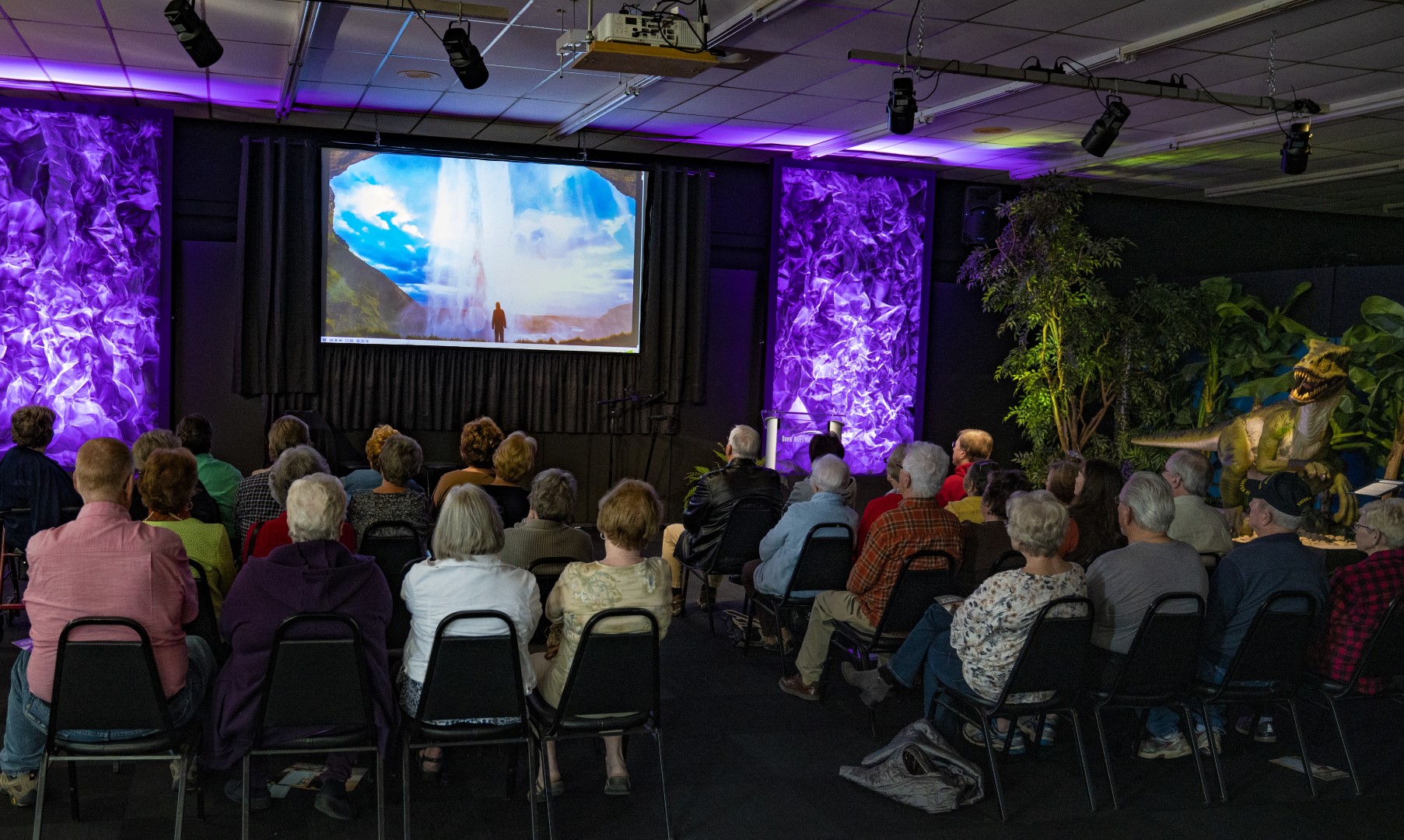
This belief is fueled by several factors:
- Government transparency: The release of declassified footage, such as the 2004 Nimitz incident video, has given credence to claims that UFOs are real—even if their origin remains unclear.
- Whistleblower testimonies: Figures like David Grusch, a former intelligence official, have asserted that the U.S. has recovered “non-human” craft, though his claims lack corroborating evidence.
- Pop culture influence: Movies, TV shows, and social media have normalized discussions about aliens, making the topic more accessible—and more accepted—than in previous generations.
- Psychological factors: Studies suggest that belief in UFOs and aliens is often tied to a need for meaning or control in an uncertain world, particularly during periods of social upheaval.
Yet, the divide between believers and skeptics remains stark. While some see UFOs as a potential breakthrough in science, others view them as a distraction from more pressing issues. “The obsession with aliens can overshadow real scientific challenges, like climate change or disease,” noted Dr. Seth Shostak, senior astronomer at the SETI Institute. “We should be careful not to let the search for extraterrestrial life become a substitute for solving problems here on Earth.”
The Skeptic’s Case: Why Most UFO Claims Fall Short
Despite the high-profile nature of UFO discussions, the scientific community remains deeply skeptical about most claims of alien visitation. The primary reasons include:
- Lack of physical evidence: No verifiable artifacts, such as alien technology or biological remains, have been recovered. The Roswell incident, often cited as proof of an alien crash, was later attributed to a weather balloon.
- Misidentification of natural phenomena: Many UFO sightings can be explained by drones, weather balloons, atmospheric optics, or even birds. A 2021 study in Scientific Reports found that 95% of UAP reports had conventional explanations.
- Psychological and sensory factors: The human brain is prone to pareidolia—seeing patterns where none exist—and sensory deprivation (e.g., in high-altitude flights) can distort perception.
- Hoaxes and fabrication: Cases like the 2019 “UFO over Albuquerque” hoax, revealed to be a drone, underscore how easily claims can be manufactured.
Even among those who take UFOs seriously, few argue that aliens have been definitively proven to exist. Instead, the debate often centers on whether some phenomena warrant further study—without jumping to extraterrestrial conclusions. “We should remain open-minded but not credulous,” said Dr. Grinspoon. “The goal should be to understand the unknown, not to assume we know the answer before we’ve done the science.”
What Happens Next? The Future of UFO Research
The U.S. government’s approach to UFOs is evolving, but slowly. In 2023, the AARO was established to centralize UAP reporting, and NASA announced a $100 million study to investigate the scientific potential of UAP. However, progress is hampered by:
- Classified data: Many military encounters remain undisclosed, making comprehensive analysis difficult.
- Public skepticism: Without concrete evidence, funding and public support for UAP research remain limited.
- Lack of standardized protocols: Different agencies collect data in inconsistent ways, complicating comparisons.
Meanwhile, private initiatives are filling the gap. Organizations like MUFON (Mutual UFO Network) and SETI continue to collect and analyze sightings, though their methods are often criticized for lacking rigor. Some scientists argue that the best path forward lies in citizen science, where the public can contribute verified data to a centralized database.
The next major checkpoint in the debate will likely be the 2025 release of additional UAP reports, as mandated by the 2022 UAP Reporting Act. This legislation requires the Pentagon to submit an annual report to Congress on UAP encounters, though critics note that past reports have been largely inconclusive.
Key Takeaways: What Readers Should Know
- UFOs are real—but their origin is not proven. The Pentagon’s 2023 report confirms some phenomena remain unexplained, but no evidence of extraterrestrial life has been found.
- Belief in aliens is rising, driven by culture, psychology, and government disclosures. Polls show over half of Americans now believe in extraterrestrial life, with younger generations leading the trend.
- Most UFO claims have conventional explanations. Studies suggest 95% of sightings can be attributed to drones, weather, or misidentification.
- Scientific skepticism remains strong. Experts emphasize the need for rigorous evidence before accepting extraordinary claims.
- The future of UAP research depends on transparency and coordination. The 2025 Pentagon report and NASA’s study could provide clearer answers—or deepen the mystery.
The debate over UFOs and aliens is more than a search for extraterrestrial life—it’s a reflection of how society grapples with the unknown. Whether through science, skepticism, or sheer curiosity, the conversation continues to evolve. For now, the most disturbing reality may not be the possibility of aliens, but the ease with which belief—and disbelief—can take hold in an age of misinformation.
What do you think? Share your perspective in the comments—or help advance the discussion by contributing to verified UAP research initiatives like AARO’s reporting portal.
Keep reading
- Open Bank Garden Grove Branch Celebrates 1st Anniversary
- Rights Groups Say Israel Committed War Crimes in Killing of Amal Khalil
- Canter Warns Acting Attorney General Blanche May Weaponize Justice Department (newsdirectory3.com)
- David R. Montgomery ReGen Book Explores Farming Food and Health Future (news-usa.today)