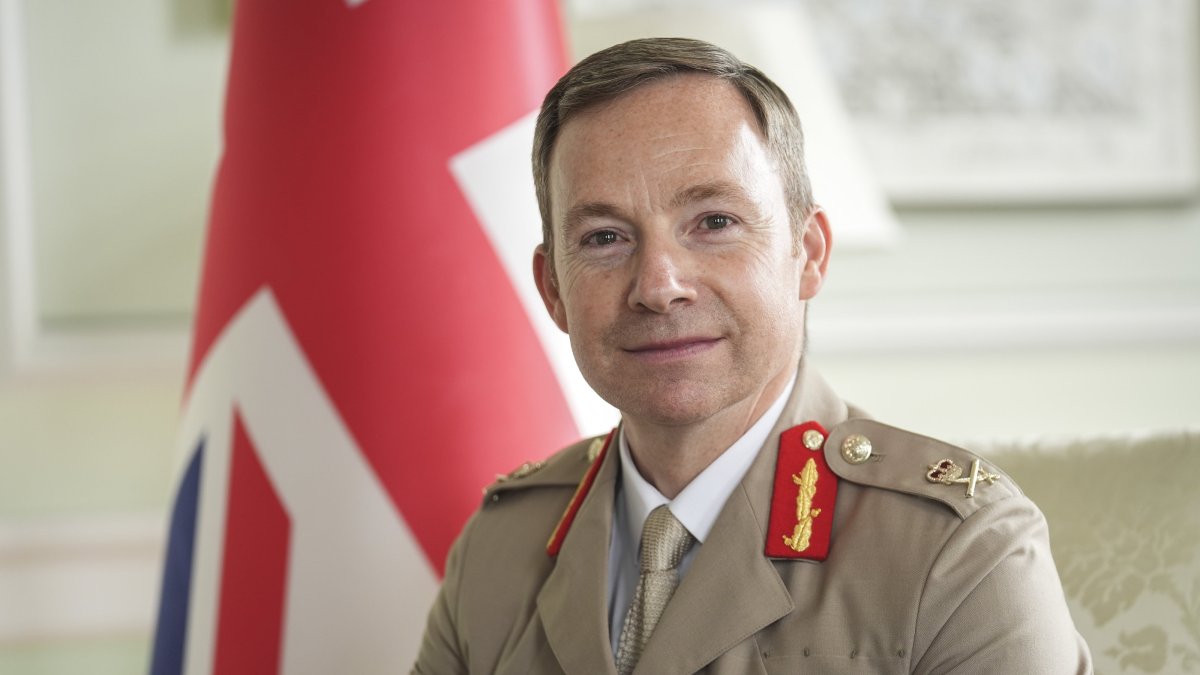
In a significant diplomatic gesture ahead of a critical summer summit, Britain’s NATO military representative has characterized the relationship between the United Kingdom and Türkiye as the foundational stability of the North Atlantic Treaty Organization. Lieutenant General Eldon Millar described the two nations as the “bookends of the alliance,” a metaphor that underscores the strategic weight and geographic necessity of both powers in maintaining Western security.
The remarks come as the alliance prepares for a high-stakes gathering in Ankara, scheduled for July 7-8, where member states will address escalating geopolitical tensions and the evolving nature of collective defense. During a visit to Türkiye, Lieutenant General Millar emphasized that Ankara’s role is not merely supportive but central to the alliance’s operational efficacy, citing the country’s unique capacity to link disparate global regions.
For the UK Türkiye NATO alliance, this alignment signals a renewed focus on the eastern flank of the alliance at a time when traditional security architectures are under extreme pressure. By framing the two nations as “bookends,” Millar highlighted a strategic symmetry: the UK providing a critical anchor in the North Atlantic and Western Europe and Türkiye serving as the indispensable gateway to the East and South.
The Strategic Bridge: Türkiye’s Geographic Imperative
Central to Lieutenant General Millar’s assessment is the geographic reality of Türkiye’s position. In an exclusive interview, Millar noted that Türkiye serves as “a vital bridge between so many different parts of the world” due to its strategic location. This bridge is not only physical but diplomatic and military, allowing NATO to project stability across the Mediterranean, the Black Sea, and into Central Asia.
From a security standpoint, this positioning allows the alliance to monitor and respond to threats in real-time across multiple theaters. The ability to coordinate movements and intelligence through Ankara is a primary reason why the UK views the partnership as a pillar of the alliance’s overall strength. This strategic depth is essential for maintaining the integrity of NATO’s borders and ensuring that the alliance can react swiftly to regional instabilities.
Addressing the ‘Imminent and Pressing’ Russian Threat
The current diplomatic warmth is framed against a backdrop of severe security concerns. Lieutenant General Millar was explicit about the primary driver of NATO’s current strategy, stating that the alliance’s starting point remains the “imminent and pressing threat” posed by Russia.
This framing suggests that the “bookends” strategy is a direct response to Russian aggression. By strengthening the bond between the UK and Türkiye, NATO aims to create a more resilient and unified front. The “imminent” nature of the threat necessitates a shift from theoretical deterrence to active, integrated readiness, where the military capabilities of the UK and Türkiye are synchronized to prevent escalation while maintaining a credible defense posture.
The urgency of this threat is expected to dominate the agenda of the NATO Summit in Ankara this July, as leaders seek to formalize new defense protocols and ensure that the alliance’s response to Russian activity is cohesive across all member states.
Shift Toward European Defense Responsibility
A recurring theme in Millar’s discourse is the expectation for European allies to shoulder a greater share of the NATO defense burden. This “burden sharing” is a critical point of contention and coordination within the alliance, as the United States has long encouraged European nations to increase their own military spending and operational capabilities.

Millar noted that there are positive developments in this area, with European allies increasingly taking responsibility for their own security. He specifically pointed to three key areas of progress:
- Defense Investments: A rise in capital expenditure toward modernizing military hardware and infrastructure.
- Military Capabilities: The development of “interesting developments in weapons” and new capabilities that enhance the alliance’s collective toolkit.
- Command Structures: The implementation of “new ways in which we’re commanding and leading the NATO forces,” which Millar described as a particularly interesting evolution in the alliance’s operational logic.
This shift toward regional autonomy within the NATO framework does not imply a move away from the alliance, but rather a maturation of it. By increasing their own capabilities, European nations—including the UK and Türkiye—ensure that the alliance is not over-reliant on a single power, thereby creating a more sustainable and distributed security model.
Looking Ahead: The Ankara Summit
The diplomatic groundwork laid by Lieutenant General Millar sets the stage for the upcoming NATO Summit on July 7-8 in Ankara. The event will likely serve as a litmus test for the “bookends” philosophy, as member states attempt to synchronize their defense strategies in the face of the Russian threat.
Observers will be watching for concrete agreements on command structure updates and specific commitments to defense spending. The summit represents a critical opportunity for Türkiye to showcase its leadership role within the alliance and for the UK to solidify its strategic partnerships on the eastern flank.
The next confirmed checkpoint for the alliance is the official commencement of the NATO Summit in Ankara on July 7, where official communiqués regarding the alliance’s stance on Russian threats and European defense burdens will be released.
Do you believe the “bookends” approach is sufficient to deter current threats to European security? Share your thoughts in the comments below or share this analysis with your network.
Keep reading