
British Prime Minister Keir Starmer is facing a significant political challenge after partial results from local elections in England revealed disastrous losses for the Labour Party and surprising gains for Reform UK. Despite the electoral setback, Starmer insisted on Friday, May 8, 2026, that he would continue to lead the government, resisting calls to step down following the poor performance of his party.
The 2026 England local election results signal a volatile shift in the political landscape, characterized by a decline in Labour support and a resurgence of right-leaning parties. While the full scope of the losses is still being tallied, the early data suggests a meaningful swing away from the current administration, leaving the Prime Minister to defend his leadership amidst a backdrop of mounting pressure.
The day’s events were marked by high-profile reactions across the United Kingdom, from the streets of London to the counting halls of Wales. As the results filtered in, the contrast between the celebratory atmosphere of Reform UK and the somber mood within Labour became starkly evident.
Labour’s Decline and Starmer’s Resolve
Prime Minister Keir Starmer spent Friday addressing the fallout of the elections, meeting with Labour Party members at Kingsdown Methodist Church Hall in Ealing, west London. During these interactions, he maintained a firm stance on his leadership, asserting that he would carry on as prime minister despite the “disastrous” nature of the local election results.
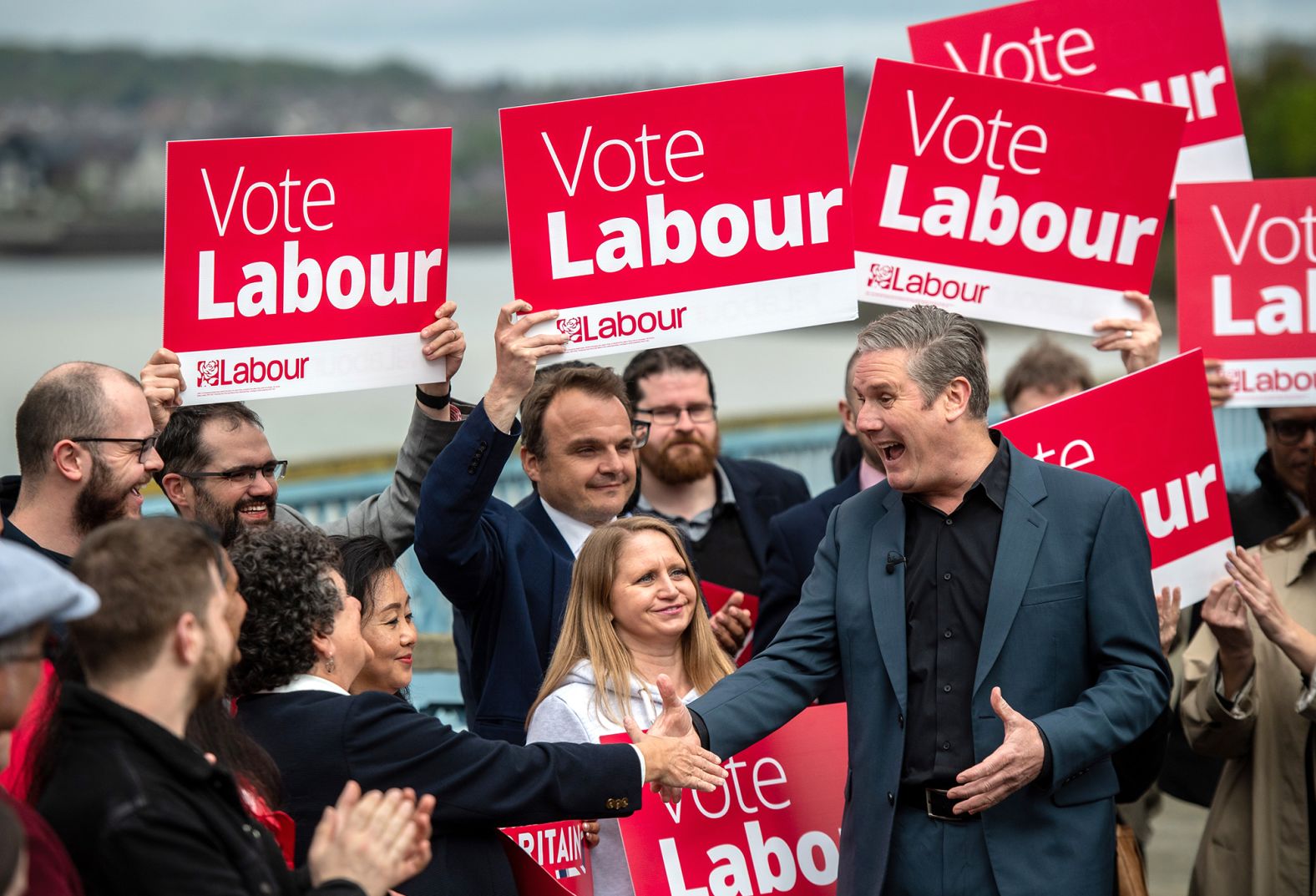
The losses for Labour are not limited to a few isolated districts but appear to be a broader trend across several English local authorities. This downturn puts Starmer in a precarious position, as local elections often serve as a barometer for national sentiment and a precursor to general election trends. The scale of the defeat has prompted internal questioning regarding the party’s current direction and its ability to connect with voters in key regions.
The Rise of Reform UK and Conservative Gains
While Labour struggled, Reform UK emerged as a primary beneficiary of the voter shift. Party leader Nigel Farage appeared triumphant, visiting Havering Town Hall in Romford, England, on Friday to acknowledge the gains made by his party. Farage later spoke to supporters at the Chelmsford City Racecourse in Essex, framing the results as a victory for his party’s platform.
The Conservative Party also found success in key areas. Party leader Kemi Badenoch met with supporters in Westminster after the Tories successfully took control of the Westminster City Council from Labour. This specific victory in the heart of the capital serves as a symbolic blow to the Labour administration, highlighting a return of Conservative influence in urban centers.
The combined gains of Reform UK and the Conservatives suggest a consolidation of right-wing sentiment, potentially squeezing the center-left coalition that Starmer has attempted to maintain. The ability of Reform UK to capture a significant share of the vote indicates that Farage’s influence remains a potent force in British local politics.
Political Crisis in Wales and the Senedd Elections
The political turmoil extended beyond England. On the same day, Wales held elections for the Senedd, the Welsh Parliament. The results there mirrored the struggles seen in England, with Welsh Labour suffering heavy defeats.
The fallout in Wales led to immediate leadership changes. Eluned Morgan announced her resignation as leader of Welsh Labour during an appearance at Ysgol Bro Teifi in Ceredigion, Wales, on Friday, May 8, 2026. Her resignation underscores the depth of the party’s crisis, as the losses in the Senedd elections stripped away significant influence for the party in the devolved government.
The simultaneous collapse of Labour’s standing in both the English local councils and the Welsh Parliament creates a dual-front crisis for the party’s national leadership. The resignation of a key figure like Morgan suggests that the party may be forced into a broader period of introspection and restructuring to stem the tide of losses.
Summary of Key Electoral Shifts
| Entity/Person | Outcome/Action | Location/Context |
|---|---|---|
| Keir Starmer | Insisted on remaining Prime Minister | Labour Party losses in England |
| Reform UK | Significant gains | England local elections |
| Conservative Party | Took control of Westminster City Council | London, England |
| Eluned Morgan | Resigned as leader of Welsh Labour | Senedd elections, Wales |
For those seeking official updates on the final vote tallies and seat distributions, the Electoral Commission provides the definitive records for all UK elections and referendums.
As the dust settles on the May 8 elections, the focus now shifts to how the Labour Party will respond to this electoral rebuke. With a wounded leadership in London and a vacant leadership post in Welsh Labour, the party faces an urgent need to redefine its appeal to a disillusioned electorate.
The next critical checkpoint will be the official final certification of all local council results and the subsequent internal Labour Party meetings to determine if any policy shifts or cabinet reshuffles will be implemented to stabilize the government’s standing. We will continue to monitor these developments as they unfold.
Do you believe these local results signal a permanent shift in British politics, or are they a temporary setback for the government? Share your thoughts in the comments below.
Keep reading