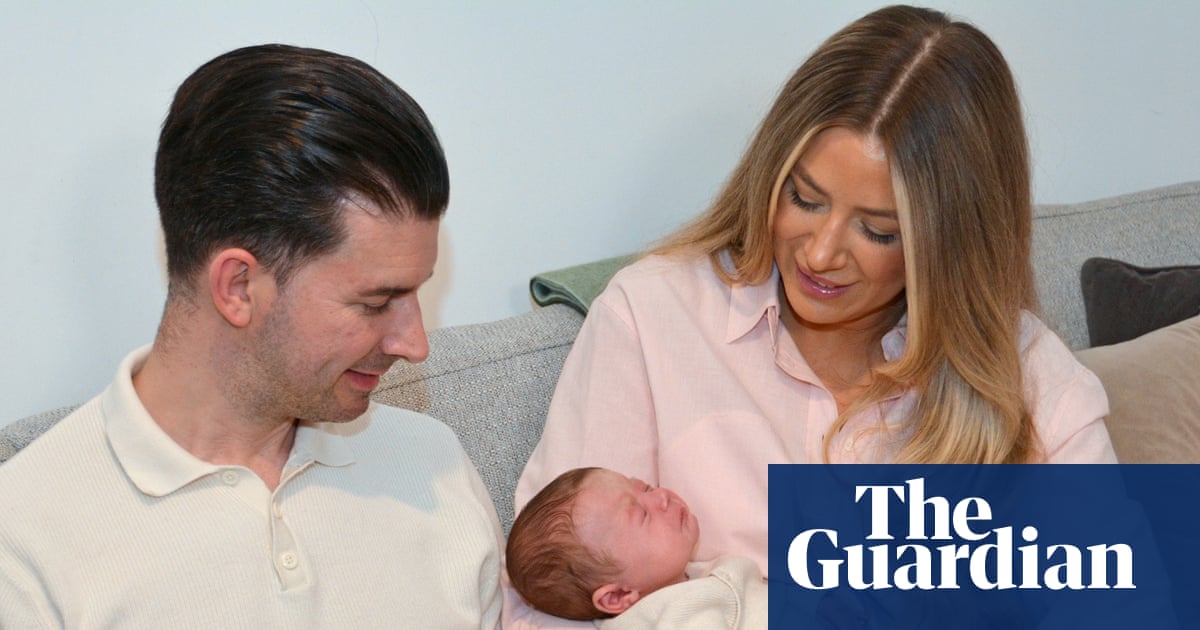
In a landmark achievement for reproductive medicine, a baby boy named Hugo Richard Norman Powell has become the first child born in the United Kingdom following a womb transplant from a deceased donor. The birth, which took place at Queen Charlotte’s and Chelsea Hospital in London in December 2025, offers renewed hope to women with uterine factor infertility, a condition affecting an estimated 5,000 women in the UK. This groundbreaking procedure represents a significant step forward in expanding access to womb transplantation, moving beyond the limitations of living donor options.
The mother, Grace Bell, was born without a womb, a condition known as Mayer-Rokitansky-Kuster-Hauser (MRKH) syndrome. MRKH syndrome results in the absence or underdevelopment of the uterus and vagina, but with functioning ovaries. Diagnosed at the age of 16, Bell was told she would likely never be able to carry a child. The successful birth of Hugo, weighing nearly 7lbs, is therefore described by Bell as “simply a miracle.” The complex surgery and subsequent pregnancy were made possible by the pioneering work of Womb Transplant UK and the generosity of a deceased donor and their family.
A Pioneering Procedure and the Gift of Life
Womb transplantation, while still relatively new, has been gaining traction as a viable option for women with uterine factor infertility. The first successful womb transplant was performed in Sweden in 2014, and since then, procedures have been carried out in several countries, including the United States. However, the reliance on living donors presents significant challenges, including the need for a compatible donor and the inherent risks associated with donation surgery. The employ of a deceased donor womb expands the pool of potential recipients and avoids the risks to a living donor.
The UK’s approved deceased donor womb transplant research programme, initiated and funded by the charity Womb Transplant UK, is unique in its approach. Unlike organ donation through the standard Organ Donor Register or the ‘opt-out’ system, womb donation requires specific consent. Registration on the Organ Donor Register does not automatically include consent for womb donation, and potential donors’ families are specifically asked about their willingness to approve a womb donation. This careful process underscores the ethical considerations surrounding this novel form of transplantation.
Hugo’s Story: A Dream Fulfilled
Grace Bell’s journey to motherhood was long and arduous. After receiving the life-changing news that a suitable womb had become available, she underwent the transplant procedure in 2024. Several months later, she began fertility treatment, and the pregnancy progressed successfully. Hugo Richard Norman Powell was born via Caesarean section in December 2025. Bell and her partner, Steve Powell, have expressed immense gratitude to the donor family, acknowledging their selfless act as the reason they were able to fulfill their dream of parenthood. “Their kindness and selflessness to a complete stranger is the reason I have been able to fulfil my lifelong dream of being a mum,” Bell stated.
The donor’s parents, in a poignant statement, expressed their profound grief at the loss of their daughter but likewise immense pride in the legacy she leaves behind. “Losing our daughter has shattered our world in ways we can barely set into words,” they said. “Through organ donation, she has given other families the precious gift of time, hope, healing and now life. As her parents, we perceive tremendous pride at the legacy she leaves behind – a legacy of compassion, courage and love that continues to touch lives even after her passing.”
The Medical Breakthrough and Future Implications
The successful birth of Hugo is not only a personal triumph for Grace and Steve Powell but also a significant milestone for the field of reproductive medicine. Professor Richard Smith, clinical lead at Womb Transplant UK and a consultant gynaecological surgeon at Imperial College Healthcare NHS Trust, described the birth as “an unbelievable journey.” He emphasized the dedication of the entire team involved in making this groundbreaking achievement a reality. The team has been working for years to refine the surgical techniques and immunosuppression protocols necessary for successful womb transplantation.
The transplant is not a permanent solution; the transplanted organ will be removed once the couple has finished having children. Here’s to avoid the need for lifelong immunosuppressant medication, which is necessary to prevent the body from rejecting the transplanted organ. Immunosuppressant drugs can have significant side effects, and removing the womb eliminates this long-term risk.
Expanding Access to Womb Transplantation
Prior to Hugo’s birth, the UK had already witnessed another successful womb transplant. In 2023, Grace Davidson became the first woman in the UK to give birth after receiving a womb transplant from her older sister, Amy, in a living donation. Imperial NHS Trust reported on this earlier success. The availability of deceased donor wombs significantly expands the possibilities for women with uterine factor infertility, offering a lifeline to those who may not have a suitable living donor.
Globally, approximately 25 to 30 babies have been born following deceased womb donation, with the majority of womb transplants still relying on living donors (more than two-thirds). This latest success in the UK contributes to the growing body of evidence supporting the feasibility and safety of womb transplantation as a treatment option for uterine factor infertility.
Ethical Considerations and Organ Donation
The unique nature of womb transplantation raises key ethical considerations. As previously mentioned, the womb is not automatically included in standard organ donation consent, and specific consent from the donor’s family is required. This highlights the need for public awareness and education regarding womb donation and the importance of discussing these wishes with family members. The process ensures that donation aligns with the donor’s values and respects the wishes of their loved ones.
The success of this procedure also underscores the critical importance of organ donation in general. The donation of five other organs from Hugo’s donor saved the lives of four other individuals, demonstrating the profound impact of a single act of generosity. Raising awareness about organ donation and encouraging people to register as donors can save countless lives.
Key Takeaways
- Hugo Richard Norman Powell is the first baby born in the UK following a womb transplant from a deceased donor.
- The procedure offers hope to women with uterine factor infertility, such as MRKH syndrome.
- Womb transplantation requires specific consent from the donor’s family, distinct from standard organ donation protocols.
- The UK’s pioneering research programme is expanding access to this life-changing treatment.
- The success highlights the importance of organ donation and the generosity of donors and their families.
Looking ahead, Womb Transplant UK plans to include a total of 10 transplants as part of their ongoing research programme. The team will continue to monitor the long-term outcomes of these transplants and refine the surgical techniques and immunosuppression protocols to further improve success rates. The next phase of research will focus on optimizing patient selection and minimizing the risks associated with transplantation.
This remarkable achievement marks a new chapter in reproductive medicine, offering hope and the possibility of motherhood to women who previously believed it was unattainable. The story of Grace Bell and Hugo Richard Norman Powell is a testament to the power of medical innovation, the generosity of organ donors, and the unwavering dedication of the medical teams involved.
The ongoing research and development in womb transplantation promise to further refine the procedure and expand access to this life-changing treatment for women around the world. We encourage readers to share this story and join the conversation about the future of reproductive medicine.